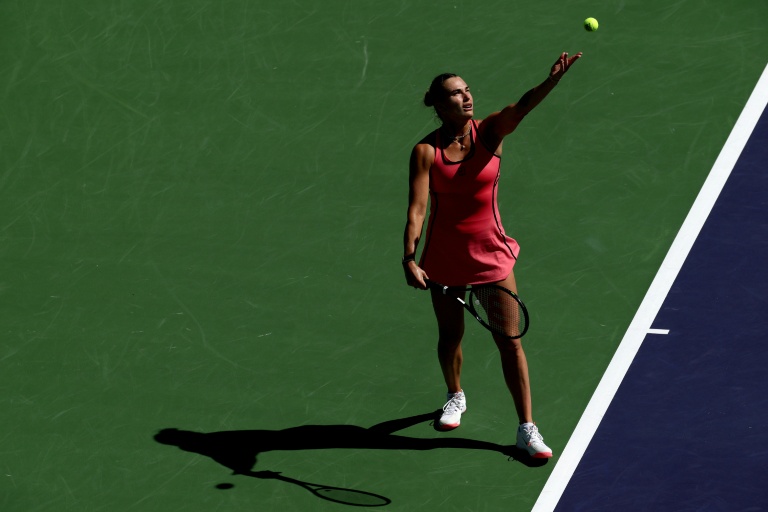
Sabalenka’s Power Play: World No. 1 Dismisses Osaka, Sets Sights on Indian Wells Quarter-Final
The desert air at Indian Wells is thick with narrative, but on Tuesday, Aryna Sabalenka delivered a performance of pure, unadulterated power to cut through it all. In a fourth-round blockbuster that promised a clash of titans, the world number one authored a definitive statement, overpowering former champion Naomi Osaka 6-2, 6-4 to storm into the quarter-finals. This was more than a victory; it was a masterclass in controlled aggression, a signal that Sabalenka’s reign at the summit is built on a foundation of relentless, evolving force.
A Commanding Statement on Stadium Court
From the first thunderous serve, the tone was set. Sabalenka, the reigning Australian Open champion, played with a palpable sense of mission, while Osaka, a four-time major winner on her inspiring comeback trail, searched for answers against an onslaught she could not contain. The match’s statistical profile tells a stark story: 31 winners, eight aces, and a relentless pressure that never truly abated from Sabalenka’s side of the net.
The first set was a showcase of Sabalenka’s peak form. She broke Osaka’s serve twice, her returns landing deep and heavy, robbing the Japanese star of time and opportunity. Sabalenka’s famed groundstrokes—particularly her punishing forehand—were dialed in, painting the lines and pushing Osaka far behind the baseline. “Overall I’m happy that I put so much pressure on her, that I brought variety today on the court,” Sabalenka remarked, hinting at the subtle evolution within her power game.
Sabalenka’s Evolved Arsenal: More Than Just Power
While the raw power of Sabalenka is her trademark, her victory over Osaka highlighted a more complete and tactically astute player. This was not a mindless ball-bashing session. Sabalenka expertly blended her booming baseline game with timely forays to the net, a tactic that kept Osaka off-balance and demonstrated growing confidence in her all-court skills.
- Strategic Net Play: Sabalenka won 10 of 13 points at the net, a high-percentage strategy that showcased her improved volleying and cut off angles for Osaka.
- Serve as a Weapon: Her serve was a consistent firestarter, delivering free points and setting up short returns to attack.
- Psychological Edge: “I think she was a little confused in the key moments, and I’m happy to see that,” Sabalenka observed, pointing to the mental toll her varied game plan exacted.
Osaka did find her rhythm in the second set, her own serve beginning to fire and her groundstrokes finding more depth. She fought valiantly, saving break points and forcing Sabalenka to serve out the match. But every time Osaka threatened to build momentum, Sabalenka had an answer—a crushing return, a perfectly placed ace, or a bold approach shot. This ability to snuff out hope is the hallmark of a true number one.
Quarter-Final Preview: The Unlikely Challenge of Marina Mboko
The path now takes a surprising turn for Sabalenka, as she sets up a quarter-final clash with Marina Mboko. The 17-year-old Canadian qualifier, ranked No. 259 in the world, has authored a stunning Cinderella run, becoming the youngest player to reach the last eight at Indian Wells since 2008. On paper, it is a monumental mismatch: the experienced, power-hitting world No. 1 versus a fearless teenager with nothing to lose.
However, this is precisely the kind of match that can be a trap. Mboko will play with free-swinging abandon, and the pressure of expectation rests solely on Sabalenka’s shoulders. The Belarusian must avoid any hint of complacency and impose her game from the outset. For Sabalenka, the key will be to use her experience and overwhelming firepower to disrupt the youngster’s rhythm early, treating the occasion with the same professional ruthlessness she displayed against Osaka.
Expert analysis suggests Sabalenka’s consistent depth and punishing serve will be too much for Mboko to handle over two sets. Yet, the occasion is a priceless opportunity for the young Canadian to test her mettle against the very best.
What This Victory Means for the Road Ahead
Sabalenka’s win over Osaka was a significant marker in the early season. It reinforced her dominance on tour and sent a clear message to her rivals that her game is not one-dimensional. Beating a player of Osaka’s pedigree and Grand Slam pedigree in such comprehensive fashion is a massive confidence booster as the tour moves towards the clay and grass court seasons.
For Osaka, the loss is a step in the process. She showed flashes of her brilliant best and competed hard in the second set. Her journey back to the elite is ongoing, and pushing the world number one is a data point that proves she is on the right track. The battle of Grand Slam winners lived up to its billing in narrative, if not in competitiveness, and tennis fans will eagerly await their next encounter.
For Sabalenka, the Indian Wells title is now firmly in her sights. She has navigated a tricky draw with authority, and her game is clicking at the right moment. The combination of her foundational power with newfound variety makes her an incredibly difficult out on any surface.
In conclusion, Aryna Sabalenka’s performance was a definitive declaration of her current status in women’s tennis. She didn’t just beat Naomi Osaka; she presented a blueprint of modern, aggressive, and intelligent tennis. As she prepares to face Marina Mboko, the focus shifts from a marquee matchup to a test of championship mentality. If Sabalenka maintains this level of focused intensity, she will not only be the favorite to lift the Indian Wells trophy but will continue to solidify her grip on the world number one ranking. The power, it seems, is now expertly channeled.
Source: Based on news from Yahoo Sports.