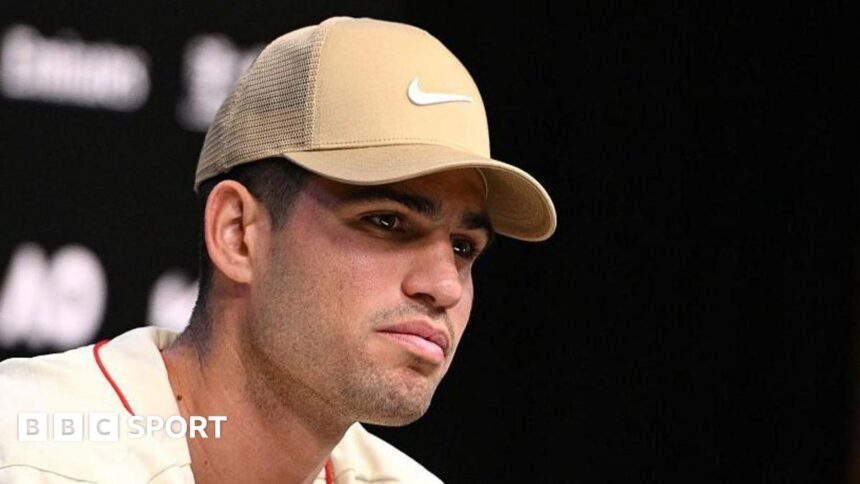
A Chapter of Life That Has to End: Inside Alcaraz and Ferrero’s Surprising Split
The world of tennis is built on partnerships. The player and the racket, the serve and the volley, the ambition and the grind. But few bonds are as sacred, or as scrutinized, as that between a phenom and the coach who shepherds him from prodigy to champion. For Carlos Alcaraz, that figure was Juan Carlos Ferrero. From a wiry 15-year-old to the reigning world number one and a two-time major champion, their journey was a masterclass in symbiotic success. Which is why the December announcement of their split sent shockwaves through the sport. Now, breaking his silence, Alcaraz has framed the monumental decision not with drama, but with a poignant, mature finality: it was, he said, “a chapter of life that has to end.”
The Foundation: From Protege to Champion
To understand the weight of this separation, one must first appreciate the depth of their union. Juan Carlos Ferrero, the 2003 French Open champion and former world number one, wasn’t just a tactical guide for Alcaraz; he was a blueprint. He saw in the teenage Alcaraz not just raw power and exuberance, but a canvas upon which to paint a complete, modern game. Under Ferrero’s meticulous guidance at the Equelite Academy, Alcaraz’s explosive athleticism was fused with a nuanced clay-court intelligence, a net-rusher’s instinct, and a competitor’s iron will.
The results were historic and rapid:
- 2022 US Open: A seismic breakthrough, making Alcaraz the youngest world number one in ATP history.
- 2023 Wimbledon: A stunning victory over Novak Djokovic, showcasing a fearless, all-court assault.
- 2023 French Open: Completing the career surface double, conquering Paris to affirm his status as an all-terrain force.
This was more than a coach-player relationship; it was a dynasty in the making. Ferrero was the architect, Alcaraz the living, breathing masterpiece. The tennis world settled in, expecting this partnership to define an era.
The Mutual Decision: Reading Between the Lines
This context makes Alcaraz’s recent explanation both revealing and carefully measured. Speaking to the media, the 20-year-old emphasized peace and mutual respect. “We closed this chapter in mutual,” he stated, adding that they remain friends with a “good relationship.” However, reports from outlets like BBC Sport suggest a more complex narrative, indicating that Ferrero did not want to leave his role. This discrepancy between “mutual” decision and reported reluctance is the heart of the story’s intrigue.
Expert analysis points to several potential, and often overlapping, factors for such splits at the pinnacle of the game:
- Evolution of Needs: The coach who builds a champion is not always the coach who maintains one. Alcaraz’s game, now dissected by every opponent, may require new technical or strategic perspectives.
- The Personal Growth Factor: At 20, Alcaraz is entering adulthood. The natural desire for independence, to steer his own ship after years under a singular, paternal influence, is a powerful and normal force.
- Logistical Strain: Ferrero, with his own academy and family, may have found the relentless travel of the ATP tour increasingly taxing, even if he loved the job.
Alcaraz’s “chapter of life” phrasing is telling. It acknowledges profound gratitude and a shared history, but also an inherent expiration date. Some chapters, no matter how brilliant, must conclude for the story to progress.
Navigating the Uncharted Path: What’s Next for Alcaraz?
The immediate question now shifts from “why” to “what next?” For the first time in his professional life, Carlos Alcaraz will step onto tennis’s grandest stages without Ferrero in his box. His team currently includes former world number one Juanjo Moreno and fitness coach Alberto Lledó, but the search for a new head coach will be the most consequential decision of his young career.
The speculation is already rampant. Will he seek a tactical guru specifically for the hard courts? A veteran mind to help manage the pressures of being the hunted? Or perhaps a more collaborative, less dominant voice than the one that guided his formative years? The risk is palpable. History is littered with examples of player-coach splits that led to periods of instability. The opportunity, however, is equally great. This could be the moment Alcaraz synthesizes everything Ferrero taught him with a new philosophy, emerging as an even more versatile and self-reliant champion.
His immediate performance will be under a microscope. Every early loss will invite questions about the split. Every moment of on-court frustration will be analyzed for signs of a missing guiding hand. The 2024 season, with its goal of defending the French Open crown and chasing Olympic gold, just became Alcaraz’s most profound test of mental fortitude.
A Legacy Defined, Not Diminished
While the future is unwritten, one thing is certain: the Alcaraz-Ferrero legacy is forever cemented. They achieved the dream. They took a kid from Murcia and placed him atop the tennis world, with a style that revitalized the sport. Ferrero’s imprint is indelible in Alcaraz’s heavy forehand, his drop shot touch, and his clay-court mastery. This split does not erase that; it is a testament to its completion.
In the end, Carlos Alcaraz’s mature handling of this transition may be the final lesson of the Ferrero chapter. By framing it as a natural, necessary conclusion, he honors the past without being shackled by it. He acknowledges the pain of change while embracing its possibility. The coach built the champion. Now, the champion must build himself. The “chapter of life” with Juan Carlos Ferrero is a closed book, its spine cracked from use, its pages filled with glory. The next volume, authored solely by Carlos Alcaraz, begins now. And the entire sporting world waits, breath held, to see how the story unfolds.
Source: Based on news from BBC Sport.