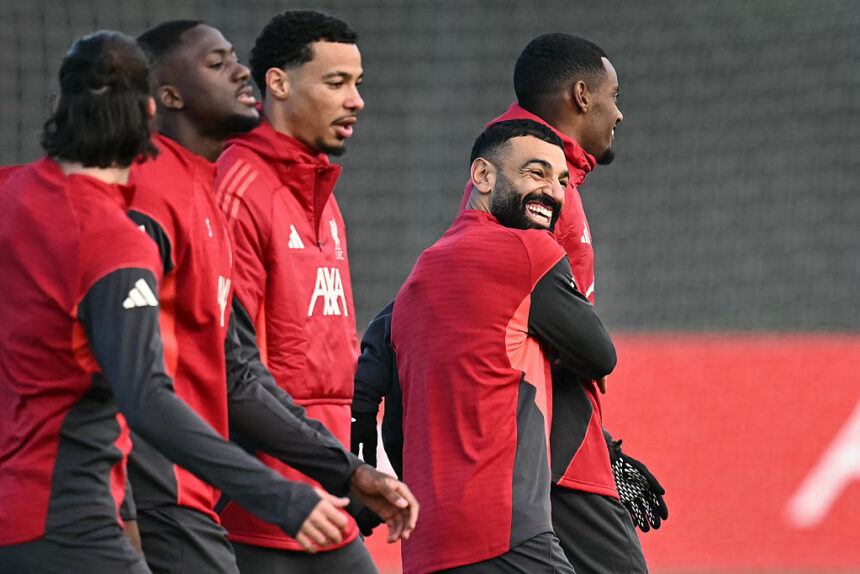
Salah’s Training Return Fuels Firestorm After Explosive “Thrown Under the Bus” Claim
The winds whipping through Liverpool’s AXA Training Centre this week carried more than just the chill of an English autumn. They carried the palpable tension of a simmering public rift, as Mohamed Salah, the club’s iconic forward, rejoined his teammates for drills just days after launching a stunning verbal broadside against the very institution that made him a global superstar. The sight of Salah in training gear, preparing for a pivotal Champions League clash with Inter Milan, is a study in contradiction: a picture of normalcy masking a period of profound uncertainty at Anfield.
A Mixed Zone Moment That Shook Anfield
The fuse for this crisis was lit not on the pitch, but in the stark, fluorescent-lit corridors of Elland Road. Following a chaotic and concerning 3-3 draw with Leeds United—a match where Liverpool’s defensive frailties were laid bare for a second consecutive weekend—Salah stopped in the infamous “mixed zone.” It is here where players, often with emotions still raw, speak to assembled journalists. What followed was not the usual platitudes. In a brief but devastatingly pointed exchange, Salah articulated a deep-seated grievance. “There’s been a lot said about me,” he stated. The crux of his complaint? A feeling of profound institutional betrayal. “I have been given the impression that it’s me who has been thrown under the bus,” he claimed, words that would instantly rocket around the football world.
This sentiment did not emerge from a vacuum. It is the culmination of a visible and tangible shift in his status within Jurgen Klopp’s system:
- Bench Role: Salah has been named on the bench for Liverpool’s last three matches across all competitions.
- Lack of Involvement: More tellingly, he was an unused substitute in two of those games, including the Leeds match. Watching from the sidelines as his team desperately sought a winner was a powerful, silent statement from the manager.
- Tactical Evolution: Klopp’s gradual shift towards a more central, fluid front line featuring Darwin Nunez, Diogo Jota, and Roberto Firmino has seemingly repositioned Salah, often starting from a wider berth, as a more peripheral figure.
Training Together, But Where Do They Go From Here?
The subsequent images of Salah training ahead of the Inter Milan fixture are therefore loaded with subtext. On the surface, it’s business as usual—a key player preparing for a crucial European night. But beneath that, every pass, every interaction, and every glance is being scrutinized. The fundamental question hanging over the session was not about fitness, but about psychology and diplomacy.
Can the relationship between player, manager, and club be mended when trust is publicly questioned? Jurgen Klopp is a master man-manager, famed for his familial “heavy metal football” ethos. Salah’s comments represent perhaps the most public challenge to that unity in Klopp’s triumphant tenure. The German’s response in his pre-Inter press conference will be dissected syllable by syllable. Will he dismiss it as frustration? Or will he acknowledge a deeper issue that needs resolving?
Furthermore, the reaction of the Liverpool dressing room is critical. Salah is a revered figure, a definitive part of the club’s modern golden era. His teammates, many of whom have fought alongside him for years, are now caught in the middle. Maintaining squad harmony while managing the expectations of a generational talent who feels wronged is Klopp’s most delicate task yet.
Contract Shadows and Tactical Crossroads
To view this situation in isolation is to miss its roots. The “bus” Salah feels he was thrown under may have been set in motion during the protracted and, at times, publicly awkward contract negotiations that finally concluded last summer. Salah signed a massive, club-record deal, making him the highest-paid player in Liverpool’s history. With that deal comes immense expectation—from the fans, the board, and undoubtedly from the player himself.
This season, Liverpool’s form has been wildly inconsistent. The midfield, an area neglected in the transfer market, has struggled for control and energy, directly impacting the service to the forwards. Yet, in times of crisis, clubs often look to their superstars for salvation. By leaving Salah on the bench, Klopp may have been sending a message about the collective, about work rate, or about tactical fit. But from Salah’s perspective, being sidelined while the team flounders could easily be interpreted as being made a scapegoat for wider systemic failures.
Tactically, a crossroads has been reached. Is Salah’s profile—a left-footed attacker cutting in from the right—still the apex of Klopp’s system? Or is the manager seeking a different, more physically direct approach? Salah’s comments force this conversation into the open, demanding a resolution that satisfies both sporting ambition and personal legacy.
Champions League Spotlight and What Comes Next
All of this converges on the visit of Inter Milan. The Champions League anthem has often been the backdrop for Salah’s and Liverpool’s redemption arcs. Will Klopp reinstate his number 11 to quell the noise and unleash a motivated “Pharaoh” on the European stage? Or will he see leaving Salah out again as a necessary, if brutal, assertion of managerial authority?
Prediction: The most likely outcome is a middle path. Salah may start on the bench but be introduced early in the second half, a solution that allows Klopp to maintain his tactical structure while offering Salah a platform to respond in the most powerful way he can: on the pitch. A game-changing goal or assist would instantly rewrite the narrative, at least temporarily.
However, the long-term forecast is more complex. This public airing of grievances has altered the landscape. Several potential outcomes now loom:
- A Fire Lit: Salah uses the frustration as rocket fuel, returning to his unplayable best and dragging Liverpool back into form, with the incident becoming a forgotten footnote in a successful season.
- A Slow Fade: The relationship is permanently frayed. Performance levels dip, and a summer transfer, once unthinkable, becomes a serious discussion as both parties consider a fresh start.
- A Managed Exit: The club and player agree the cycle is concluding, working towards a dignified, monumental departure at season’s end.
Conclusion: A Pivotal Moment for the Klopp Era
Mohamed Salah training with his Liverpool teammates is no longer just a routine photograph. It is a symbol of a club at a crossroads. This is more than a simple selection headache or a player’s frustrated outburst. It is a stress test on the very culture Jurgen Klopp has built. How this is managed will define the remainder of Liverpool’s season and could signal the beginning of the end of one of the club’s most fruitful player-manager partnerships. The ball is no longer just at Salah’s feet; it is firmly in Liverpool’s court. How they control it, and where they direct it next, will be their most important play of the season. The world is watching, waiting to see if this storm passes or if it leaves lasting damage on the Anfield fortress.
Source: Based on news from Yahoo Sports.