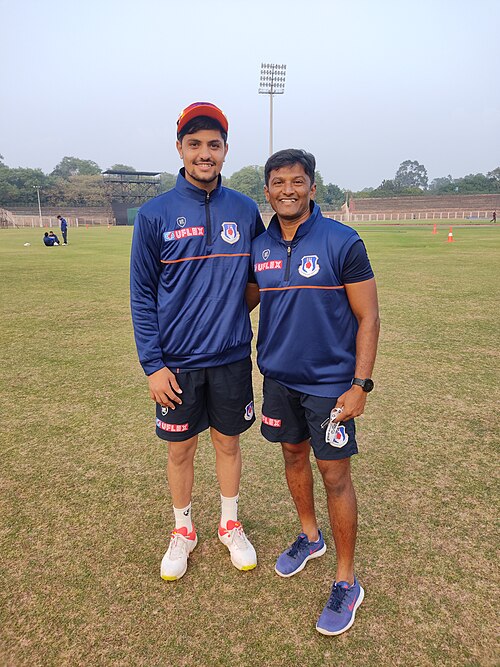
Sameer Rizvi’s DC Stardom: A Salute to the Unsung Grind of Indian Domestic Cricket
The roar of the Arun Jaitley Stadium had reached a fever pitch. The Delhi Capitals, chasing 163 against the Mumbai Indians, were reeling at 45 for 3. The pressure, a familiar specter in the IPL, was palpable. Then walked in a young man, not as a marquee starter, but as the strategic Impact Substitute. What followed was not just a match-winning innings; it was a validation of a system. Sameer Rizvi’s breathtaking 90 off 51 balls, a knock that single-handedly tilted the contest, has been hailed as more than just a young talent’s coming-of-age. For former India star Mohammed Kaif, it is a roaring salute to India’s domestic cricket machinery, a testament to the unseen miles traveled on dusty buses and the relentless grind that forges IPL-ready steel.
The Kaif Thesis: From State Buses to the Big Stage
In the aftermath of Rizvi’s heroics, Mohammed Kaif, a man who himself emerged from the robust domestic structure, offered a poignant analysis. He didn’t just praise the shots; he traced their origin. Kaif highlighted Rizvi’s journey, and that of his UP teammate Prashant Veer, painting a picture of the relentless schedule that defines the life of a domestic cricketer. “One day in Kolkata, the next day in Mumbai and again back to Kolkata,” Kaif noted, referencing the whirlwind of tournaments like the Syed Mushtaq Ali T20 and U23 competitions.
This, Kaif argues, is the crucible where confidence is built. The ability to adapt to different pitches, travel fatigue, and constant pressure in low-profile but high-stakes games is irreplaceable. “Rizvi’s IPL success – 58, 70 and now 90 against MI – is a salute to India’s domestic cricket,” Kaif stated. The domestic grind is not glamorous. It lacks the spotlight of the IPL, but it installs a software of resilience. When Rizvi walked in against Jasprit Bumrah and Co., he wasn’t just facing world-class bowlers; he was drawing from a reservoir of experience built in countless similar chases for Uttar Pradesh, where the crowds were smaller but the need to perform was just as acute.
Deconstructing a Match-Winning Knock: Composure Forged in the Furnace
Rizvi’s innings against MI was a masterclass in calculated aggression, a skill honed in the domestic arena. Let’s break down why this knock was a product of his upbringing in the system:
- Early Crisis Management: Walking in at 45/3 is a scenario domestic cricketers face often—a collapsing top order and the responsibility to rebuild. Rizvi didn’t panic. He absorbed the pressure, played out the threatening spells, and picked his moments. This situational awareness is a direct import from the domestic cricket system.
- Shot Selection Under Pressure: His innings wasn’t a blind slog. It was an array of cricketing shots—powerful pulls, elegant drives, and clever paddles. The confidence to play proper shots under IPL pressure stems from having played them repeatedly in crucial Mushtaq Ali T20 knockout games.
- Physical and Mental Stamina: A 51-ball vigil in a high-octane chase requires immense fitness and focus. The grueling travel and back-to-back matches in domestic cricket condition players for this exact endurance test.
This was not a fluke. It was the third substantial score in a growing portfolio—58 and 70 preceding this 90—indicating a pattern of consistency, the holy grail of the domestic grind.
The Domestic Pipeline: India’s Unbeatable Production Line
Rizvi’s story is not isolated. It is the latest chapter in a long-running saga written by the Board of Control for Cricket in India (BCCI)’s domestic structure. The IPL’s glitz often overshadows this engine room, but every season, a new batch of graduates announces itself. The system works because it is vast, competitive, and meritocratic.
Consider the pathway:
Age-Group Cricket → Ranji Trophy (for longer-format temperament) → Syed Mushtaq Ali T20 (for white-ball explosiveness) → Vijay Hazare Trophy (for 50-over prowess). A player like Rizvi is battle-tested across formats, facing diverse bowling attacks on varying pitches across India. By the time he gets an IPL cap, he has already faced hundreds of overs of spin on turning tracks and pace on green tops. The IPL stage is bigger, but the cricketing problems are familiar. This is why Indian youngsters often look more “ready” than their overseas counterparts—they have served a longer, more rigorous apprenticeship.
Predictions: The Rizvi Blueprint and the Future of Talent Scouting
Rizvi’s explosive entry with Delhi Capitals, underscored by Kaif’s commentary, signals a shift in how success in the IPL will be perceived and scouted. We can predict several outcomes:
- Increased Valuation of Domestic Pedigree: IPL auction strategies will increasingly weigh consistent domestic tournament performance over fleeting T20 league fame elsewhere. A robust Syed Mushtaq Ali T20 season will become a key metric.
- The “Impact Substitute” as a Domestic Graduate’s Gateway: The role could become a strategic entry point for in-form domestic players, allowing teams to inject a specialist like Rizvi at the perfect moment, based on his known ability to handle pressure from domestic games.
- Inspiration for the Next Grind: Thousands of cricketers traveling on state buses will look at Rizvi and see their potential future. His success validates their sacrifice, strengthening the pipeline further. He becomes the poster boy for the domestic cricket system.
We can expect Rizvi to be a mainstay for Delhi Capitals, potentially graduating from the Impact role to a permanent top-order fixture. His technique and temperament, praised by Kaif, suggest he is built for the long haul, not just a one-season wonder.
A Triumph of System Over Stardom
Sameer Rizvi’ match-winning 90 for the Delhi Capitals will be remembered for its sheer brilliance and the two points it secured. But its truest, most enduring significance lies in the narrative it reinforces. In an era of franchise globetrotting and flashy tournaments, the bedrock of Indian cricket’s dominance remains its unglamorous, sprawling domestic structure. Mohammed Kaif’s analysis cuts to the heart of this: true IPL success is not manufactured overnight; it is painstakingly assembled across seasons in places like Kolkata, Mumbai, and Indore, far from the IPL’s neon lights.
Rizvi’s knock was more than a display of clean hitting. It was a powerful statement—a salute from the center stage back to the proving grounds that built him. It is a reminder that for every superstar who graces the IPL, there is a caravan of talent moving from one city to another on the Indian domestic circuit, grinding away, waiting for their moment to turn a quiet bus journey into a stadium’s deafening roar. The system works. Sameer Rizvi is just the latest, compelling proof.
Source: Based on news from India Today Sport.
Image: CC licensed via commons.wikimedia.org