Scotland’s Pivotal Double-Header Against Israel Moves to Neutral Ground in Hungary: A Tactical and Logistical Breakdown
In a decision that underscores the volatile intersection of geopolitics and international sport, Scotland’s Women’s National Team will play their decisive Euro 2025 qualifying double-header against Israel behind closed doors at the Bozsik Arena in Budapest, Hungary. European football’s governing body, UEFA, has ruled that no matches in its competitions can be held on Israeli soil for security reasons, forcing this unique logistical pivot.
- Why Hungary? The Security Context and Neutral Venue Decision
- Scotland’s Group B4 Situation: Unbeaten, Top of the Table, and Hungry
- Expert Analysis: The Tactical Nuances of a Closed-Door Double-Header
- Prediction: How Scotland Can Secure Top Spot and Build Play-Off Momentum
- Conclusion: A Test of Character in the Shadow of Conflict
For head coach Melissa Andreatta and her squad, this is not merely a change of venue. It is a test of mental fortitude, tactical discipline, and the ability to manufacture momentum in a sterile, empty stadium. Currently sitting top of Group B4 and unbeaten, the Scots have already secured their place in the play-offs later this year. However, finishing the group stage with maximum points is a non-negotiable priority for seeding and momentum.
The double-header will see Scotland play both the ‘home’ and ‘away’ legs in Budapest. The first match kicks off on Friday, 5 June at 17:00 BST, followed by the final group game on Tuesday, 9 June at 18:00 BST. Here is the complete tactical, emotional, and competitive breakdown of this unprecedented scenario.
Why Hungary? The Security Context and Neutral Venue Decision
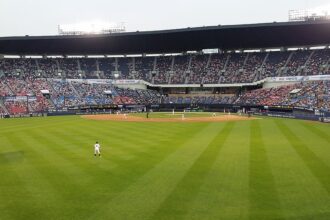
The decision to relocate the fixtures to the Bozsik Arena—the home of Hungarian club Budapest Honvéd—was not arbitrary. UEFA’s standing directive prohibits the hosting of any of its women’s or men’s competitions in Israel due to the ongoing security situation in the region. This ruling applies to both club and international fixtures, forcing the Israeli Football Association to seek neutral ground.
For Scotland, this creates a bizarre competitive environment. They are technically the ‘home’ team for the first match, yet they will be playing in a foreign country with no crowd support. The second match, nominally an ‘away’ fixture, will be played in the exact same stadium. This eliminates the traditional advantage of home soil—familiarity with pitch dimensions, weather conditions, and partisan crowd noise—but it also strips Israel of any home advantage they might have enjoyed in Tel Aviv.
- Neutral Ground: Bozsik Arena, Budapest, Hungary.
- Capacity: 8,000 (will be empty for both matches).
- Pitch Type: Natural grass, standard UEFA dimensions.
- Travel Impact: Scotland will base themselves in Budapest for the full week, avoiding back-to-back flights to different countries.
From a logistical standpoint, this is a blessing in disguise. The team can establish a consistent routine, sleep in the same hotel, train on the same pitch, and avoid the fatigue of international travel between fixtures. This continuity could be the decisive factor in a group where goal difference is razor-thin.
Scotland’s Group B4 Situation: Unbeaten, Top of the Table, and Hungry
As it stands, Scotland are the pace-setters in Group B4. They are unbeaten, level on points with Israel but sitting top of the group on goal difference. The mathematical reality is simple: two wins in Budapest guarantees they finish as group winners, securing a more favorable draw in the play-offs later this year. A stumble, however, could see them drop to second place, forcing a tougher path to Euro 2025.
Melissa Andreatta has instilled a resilient, possession-based style that has yielded results. The team has shown defensive solidity—conceding only a handful of goals in the campaign—while creating chances through quick transitional play. The key players to watch include:
- Midfield Engine: The Scottish midfield will need to dominate the second balls. Against a compact Israeli defense, recycling possession and dragging defenders out of position will be critical.
- Set-Piece Threat: In a behind-closed-doors match, concentration levels are paramount. Scotland’s height and physicality on set pieces give them a clear edge.
- Wide Speed: The tactical use of width to stretch Israel’s backline, particularly in the first 15 minutes of each half, will be a focal point of Andreatta’s game plan.
The psychological factor cannot be ignored. Playing in an empty stadium often leads to a slower tempo. There is no crowd to feed off, no roar to lift tired legs. Scotland must generate their own energy. This is where experienced internationals must act as on-field coaches, barking instructions and maintaining high intensity without the usual auditory cues.
Expert Analysis: The Tactical Nuances of a Closed-Door Double-Header
As a seasoned observer of the women’s game, I can tell you that a behind-closed-doors fixture is a fundamentally different animal than a standard match. The absence of crowd noise amplifies every shout from the coaching staff, every call from the goalkeeper, and every frustrated sigh from a player. This is an environment that rewards discipline and communication.
For Israel, playing in Budapest is a minor logistical inconvenience, but a major psychological blow. They lose the emotional fuel of a home crowd. Historically, Israel has been a difficult opponent for Scotland, often sitting deep and hitting on the counter. In an empty stadium, their defensive block will be easier to organize—they can hear every instruction from their own bench—but they will also lack the adrenaline spike that a home crowd provides when they win a corner or make a tackle.
My tactical prediction for the first match (June 5): Scotland will come out aggressively to impose dominance early. Expect a high press, with the full-backs pushing high to pin Israel’s wingers back. The first goal is crucial. If Scotland score within the first 25 minutes, Israel will have to open up, leaving space for the Scottish forwards to exploit. If the match remains 0-0 at halftime, the tension in the silent stadium could lead to uncharacteristic errors.
For the second match (June 9): This will be a mental grind. By this point, both teams will know exactly what they need from the result. Israel will likely adopt a more pragmatic approach, looking to frustrate Scotland and snatch a draw or a win on the break. Scotland must avoid complacency. Playing the same opponent twice in four days on the same pitch requires tactical variation. Expect Andreatta to rotate her squad slightly, introducing fresh legs to maintain the intensity.
Prediction: How Scotland Can Secure Top Spot and Build Play-Off Momentum
Scotland’s path to topping Group B4 is clear, but far from guaranteed. Israel is a resilient side that has proven it can absorb pressure. The key for Scotland is patience in possession and ruthless finishing. In a closed-door environment, wasted chances feel heavier. Every missed opportunity echoes in the empty stands.
Key Factors for Success:
- Early Goals: Scoring first in both matches will force Israel to abandon their low block.
- Midfield Control: Dominating the central third to dictate the tempo.
- Mental Resilience: Ignoring the eerie silence and maintaining self-motivation.
- Discipline: Avoiding unnecessary yellow cards or red cards that could impact the play-offs.
My Score Predictions:
- Match 1 (June 5): Scotland 2-0 Israel. A professional, controlled performance. Scotland scores once in each half.
- Match 2 (June 9): Scotland 1-1 Israel. A tense affair where Israel throws everything at the final group game. Scotland secures the point they need to top the group.
This double-header will not be remembered for the atmosphere or the venue. It will be remembered for how Scotland handled the unique pressure of a neutral, empty stadium. If they emerge with four points or more, they will enter the Euro 2025 play-offs with a head of steam, a strengthened squad bond, and the invaluable experience of winning when the only noise is the sound of their own determination.
Conclusion: A Test of Character in the Shadow of Conflict
The decision to play Scotland vs. Israel behind closed doors in Hungary is a stark reminder that football does not exist in a vacuum. Global events shape the calendar, the venues, and the conditions under which athletes compete. For Melissa Andreatta’s squad, this is not an excuse—it is a challenge to be conquered.
Scotland has already secured their play-off berth. Now, they have the chance to finish the group stage with authority, to prove that they can win in the most sterile of environments, and to send a message to their future play-off opponents: This team wins everywhere, with or without a crowd.
The Bozsik Arena in Budapest will be empty on June 5 and June 9. But if Scotland plays to its potential, the silence will be filled with the sound of a team clicking into gear at the perfect moment. The road to Euro 2025 runs through Hungary, and Scotland is ready to drive it.
Source: Based on news from BBC Sport.