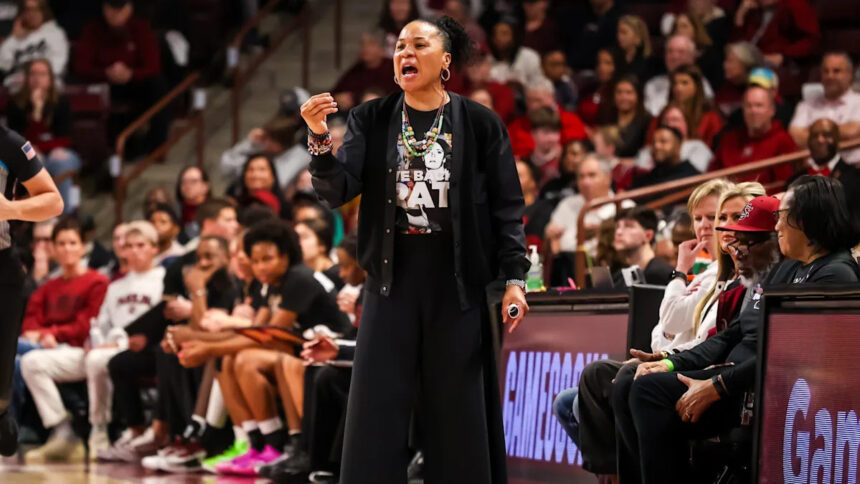
SEC Makes Unprecedented History: 10 Ranked Teams in Women’s AP Top 25
In a stunning testament to its depth and competitive fire, the Southeastern Conference has carved its name into the history books. The latest Associated Press women’s basketball poll, released Monday, is not just a ranking—it’s a seismic event. For the first time in the 50-year history of the women’s AP Top 25, a single conference has placed ten of its members in the poll, a record-shattering feat achieved by the SEC. This landmark moment underscores a dramatic power shift in the sport, where conference supremacy is no longer a fleeting notion but a week-to-week reality. While the UConn Huskies stand firm as the unanimous, undefeated No. 1 and UCLA ascends to No. 2, the story resonating from coast to coast is the unprecedented collective strength emanating from the South.
A Conference Like No Other: Dissecting the SEC’s Historic Depth
The numbers tell a compelling story. With Georgia entering the poll at No. 23 after a statement win over then-No. 11 Kentucky, the SEC officially broke a barrier many thought unbreakable. This surpasses any weekly total by any conference in the history of the women’s poll. The achievement mirrors the SEC’s own accomplishment in the men’s poll last season, highlighting the conference’s institutional commitment to basketball excellence across the board.
This isn’t a case of a few elite teams carrying the banner. The SEC’s ranked contingent spans the entire poll, creating a gauntlet unlike any other:
- National Contenders (South Carolina, Texas, Vanderbilt, LSU): Led by No. 3 South Carolina, this quartet forms the nation’s most formidable top-tier bloc. Even in defeat, the Gamecocks’ overtime loss to a surging Oklahoma team only highlighted the “any given night” nature of the league.
- Proven Power (Tennessee, Mississippi State, Alabama): Occupying the Nos. 11, 13, and 15 spots, these programs are perennial NCAA Tournament forces, capable of beating anyone. They provide the brutal middle layer that grinds down opponents.
- Rising Threats (Ole Miss, Georgia, Florida): At Nos. 12, 23, and 24, these teams embody the league’s depth. Georgia’s entry this week, fueled by its win over Kentucky, is the perfect example of the volatility and opportunity that defines the SEC schedule.
This structure means that a ranked SEC team faces another ranked opponent nearly every time they step on the court in conference play. There are no easy nights, which inherently prepares these teams for the single-elimination pressure of March.
UConn & UCLA Hold the Fort, But the Chase is On
While the SEC’s depth dominates the narrative, the top of the mountain remains occupied by familiar royalty. The UConn Huskies, the last unbeaten team in the nation, continue their reign as the unanimous No. 1. Their 37-game winning streak, dating back to last season, is a testament to their sustained excellence and championship pedigree under Geno Auriemma. However, the view from Storrs now includes a sprawling landscape of ten ranked SEC teams, any of whom could pose a unique challenge in a potential tournament matchup.
Moving into the No. 2 spot is UCLA, a team boasting its own blend of talent and toughness. The Bruins’ rise, coupled with the relentless pressure of the SEC pack, creates a fascinating dynamic at the top. Can the traditional powerhouses like UConn and UCLA maintain their separation from a historically deep conference that will be battle-tested like no other? The gap, at least on paper, appears to be narrowing.
The ripple effect of the SEC’s surge is felt nationwide. Michigan dropped after a loss to Vanderbilt. Oklahoma soared six spots to No. 10 after its monumental win over South Carolina. Every result involving an SEC team now carries significant weight in the national picture, influencing the rankings of teams from other conferences in profound ways.
Expert Analysis: What This Means for March Madness
As a sports journalist who has covered the women’s game for decades, this poll is more than a historical footnote; it’s a crystal ball for the NCAA Tournament. The implications are massive.
First, the NCAA Selection Committee will face an unprecedented challenge. With so many quality teams in one league, SEC records will be difficult to evaluate. A team finishing 8-8 in the SEC could be more tournament-ready than a team with a gaudy record from a less competitive conference. Strength of schedule metrics will be heavily skewed toward the SEC, likely leading to a historic number of at-large bids from a single conference.
Second, the tournament bracket itself could become an SEC minefield. We could see scenarios where SEC teams are matched up against each other in the early rounds, ensuring some highly-ranked squads have a brutally difficult path to the Final Four. Conversely, it also means other regions could open up for teams from conferences that avoided the weekly grind of the SEC.
Finally, this depth creates a paradox for the SEC’s championship hopes. While the conference is overwhelmingly likely to put multiple teams in the Sweet 16 and Elite Eight, the physical and emotional toll of the regular season and conference tournament is immense. Will the last SEC team standing be too battered, or will they be perfectly hardened for a title run? History offers a clue: deep, competitive leagues often produce the national champion.
Predictions and the Road Ahead
Looking forward, expect this historic number to fluctuate, but not collapse. The SEC’s depth is real. Key storylines to watch include:
- Can South Carolina reclaim the No. 1 spot? Their path is clear: navigate the SEC gauntlet with minimal losses.
- Will UConn or UCLA stumble under the pressure of being the hunted? Their non-conference schedules lack the nightly brutality of the SEC, but the target on their backs is enormous.
- Which SEC team will be the “last in, first out” of the rankings? The battle at the bottom of the Top 25 between SEC teams will be fierce, with each conference game carrying massive poll implications.
- Is a 10+ bid NCAA Tournament possible for the SEC? It is now a legitimate question. The previous record for bids by a single conference in the women’s tournament is 9 (SEC, 2022). That record is in serious jeopardy.
The 2023-24 women’s college basketball season has reached an inflection point. The record-setting AP Poll is not an anomaly; it is a declaration. The SEC has built a conference so deep, so competitive, that it has changed the fundamental geography of the sport. While UConn and UCLA rightfully hold the top spots, their throne is surrounded by a formidable and historic army of challengers from the Southeastern Conference. The road to the national championship no longer runs through one or two powerhouse programs; it runs through a gauntlet, and that gauntlet is colored in SEC hues. Buckle up. The second half of the season just became must-watch television, and March Madness promises to be the most unpredictable and consequential in history.
Source: Based on news from Yahoo Sports.