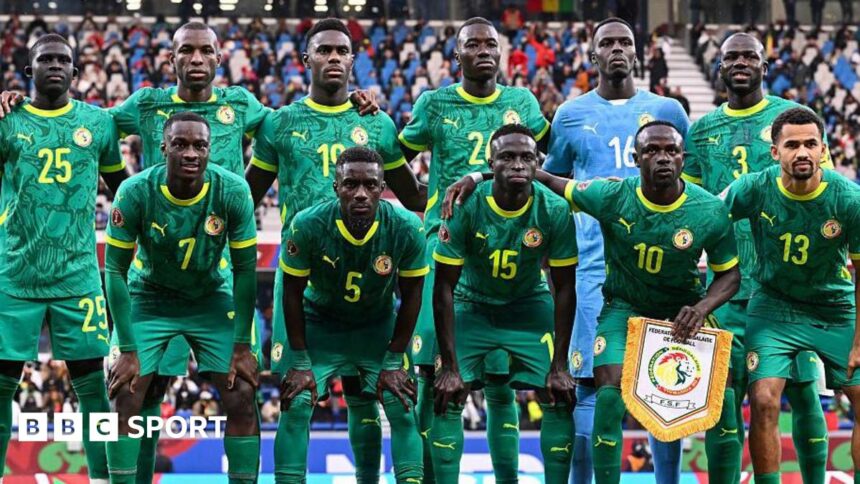
Senegal’s Afcon Final Preparations Marred by Security and Protocol Concerns in Morocco
The Africa Cup of Nations final should be a celebration of continental football’s pinnacle, a stage set for sporting excellence and national pride. Yet, for the Senegal national team, their arrival in Rabat for Sunday’s historic showdown against hosts Morocco has been overshadowed by a cloud of controversy and complaint. The Senegalese Football Federation (FSF) has launched a formal protest, voicing “serious concerns” over the treatment of their delegation, alleging security lapses, substandard accommodations, and procedural disrespect. This brewing diplomatic and sporting storm adds a tense, unpredictable layer to what was already a monumental final.
A Chaotic Arrival: Security Breach Mars Final Build-Up
The first sign of trouble emerged immediately upon Senegal’s arrival in the Moroccan capital. After traveling by train, the squad, including global stars like Sadio Mané and Kalidou Koulibaly, was met not with a secure, organized reception but with a swarm of fans. Players were mobbed by individuals attempting to take selfies, forcing the team to physically push their way through the crowd to reach their waiting bus. This complete breakdown of protocol and security for a visiting finalist is virtually unprecedented at this level of competition.
For a team of such stature, this incident represents more than a mere inconvenience. It is a significant security failure that could have led to player injury or worse. The mental impact is also tangible; instead of focusing on tactical preparations and rest, the squad’s first experience in the host city was one of chaos and vulnerability. The FSF’s statement pointedly highlighted this lapse, framing it not as an isolated oversight but as part of a pattern of concerning treatment.
Beyond the Scramble: A Litany of Formal Complaints
The chaotic arrival was merely the catalyst for a broader, more formal indictment from the Senegalese authorities. The FSF’s statement outlined a series of grievances that paint a picture of a visiting team feeling sidelined and disrespected on the eve of the continent’s biggest game.
- Substandard Hotel Accommodation: The federation expressed clear dissatisfaction with the hotel provided for the team, suggesting it falls below the expected standard for a finalist.
- Inadequate Ticket Allocation: A critical point of contention is the number of tickets allotted for Senegalese supporters. With a massive and passionate diaspora, the limited allocation is seen as stifling their ability to create a supportive atmosphere in the stadium.
- Training Pitch Controversy: Perhaps the most symbolic complaint concerns training facilities. Senegal was reportedly offered a pitch at the Morocco team’s base, the very heart of their opponent’s preparation. This is viewed as a profound lack of neutrality and a potential security risk, forcing Senegal to train in the shadow of their rivals.
Collectively, these issues transcend simple logistics. They are perceived in Dakar as a failure of the host nation and the Confederation of African Football (CAF) to uphold the principles of fair and equitable treatment for both finalists.
Historical Weight and the Psychology of Adversity
To understand the gravity of Senegal’s reaction, one must consider their history in this tournament. Senegal have played in three Africa Cup of Nations finals, carrying the burden of “nearly-men” for decades before their breakthrough victory in 2022. They lost finals in 2002 and 2019, experiences that have forged a team deeply aware of the fine margins between glory and heartbreak.
This context is crucial. The reigning champions did not travel to Morocco as novices, but as seasoned titans who expect a certain level of professionalism. The current disputes could psychologically galvanize the squad, fostering a powerful “us against the world” mentality. Coach Aliou Cissé, who captained the losing 2002 side, is a master of channeling collective resolve. These off-pitch battles may inadvertently unite and strengthen his team’s focus, transforming external discord into internal fuel.
Conversely, the concerns are legitimate distractions. Optimal preparation for a final involves meticulous control over environment, rest, and routine. The alleged failures in security, lodging, and facilities directly undermine that process, potentially leaving the team physically and mentally fatigued before a ball is kicked.
Final Forecast: Will Turmoil Derail the Lions of Teranga?
Sunday’s final is already a tactical chess match between two of Africa’s finest squads. Morocco, as hosts, carry the weight of a nation’s expectation. Senegal, as holders, possess the confidence of champions. Now, this new element of pre-match turmoil is an unpredictable variable.
Senegal are aiming to win the competition for a second time, a feat that would cement their current generation as an all-time great African dynasty. The question is whether the reported disruptions will hinder their quest or harden their resolve. History in sports is littered with examples of teams using perceived slights as powerful motivation. The Senegalese squad is packed with leaders who have experienced immense pressure at the highest levels of European football; they are not easily shaken.
However, Morocco is an exceptional opponent, and the cumulative effect of travel chaos, poor sleep, and disrupted training cannot be entirely dismissed. The hosts’ advantage now appears extended beyond the roaring crowd to the very infrastructure surrounding the match.
A Conclusion Demanding Resolution and Focus
The 2023 Africa Cup of Nations final is now a tale of two contests: one on the pristine pitch of the stadium, and one in the murky waters of sports diplomacy and protocol. The Senegalese Football Federation has forcefully laid down a marker, demanding respect and equitable treatment for its team. How CAF and the Moroccan organizers respond in the immediate hours before kickoff will be telling.
Ultimately, the hope is that the football itself rises above the fray. Both Senegal and Morocco have played spectacular, historic football to reach this point. They deserve a final defined by skill, passion, and fair competition. Senegal’s “serious concerns” are a stark reminder that the stage for such glory must be set with integrity, security, and respect for all participants. Whether the Lions of Teranga can roar past these adversities and secure a second star on their jersey will be the ultimate test of their champion mentality. The world will be watching, not just the match, but how the beautiful game’s administrators handle the beautiful game’s most pressured moments.
Source: Based on news from BBC Sport.