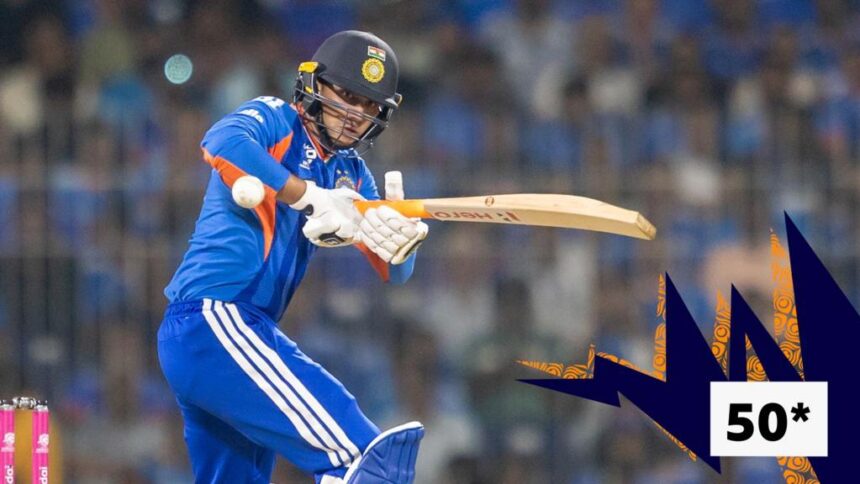
Abhishek Sharma’s Redemption: A Gritty Fifty Silences Doubters Against Zimbabwe
The weight of three consecutive zeros is a heavy burden for any cricketer, but for a young Indian opener on the grand stage of the T20 World Cup, it can feel like the world is caving in. For Abhishek Sharma, the journey from a hat-trick of ducks to a blistering, match-defining half-century was a masterclass in mental resilience. In India’s crucial Super 8s clash against Zimbabwe, Sharma didn’t just find runs; he authored a compelling narrative of personal redemption that underscored his undeniable talent and fierce determination.
From Zero to Hero: The Anatomy of a Comeback
Abhishek Sharma’s entry into the Super 8s was statistically alarming. Three innings, three dismissals without scoring. For a player whose domestic and IPL pedigree is built on explosive starts, this was an unprecedented drought. The whispers had begun. Was the stage too big? Had international bowlers decoded his technique? The pressure was a tangible entity as he walked out to face Zimbabwe’s attack.
What followed was a calculated explosion. Sharma’s fifty off just 26 balls was not a reckless, pressure-induced slog. It was an innings of intelligent aggression. He respectfully saw off the initial probing deliveries, his first few runs like a dam slowly cracking. Then, the release. A characteristic loft over extra cover, a savage pull shot, and the signature flourish through the leg side—the full repertoire was on display. Each boundary seemed to shed a layer of doubt, not just for him, but for every fan watching. This was the real Abhishek Sharma, announcing his arrival on the World Cup stage with emphatic authority.
Expert Analysis: The Technical and Mental Tweaks
From a technical standpoint, Sharma’s innings revealed crucial adjustments. During his lean run, he was often caught on the crease, playing away from his body with hard hands. Against Zimbabwe, his footwork was decisive. He moved forward to negate swing and back to carve room with equal conviction. His head position was still at the point of contact, allowing him to pick his gaps with surgical precision rather than relying purely on power.
However, the greater battle was won between the ears. The mental fortitude required to overcome such a public slump cannot be overstated.
- Simplified Intent: He visibly shifted from worrying about survival to focusing on scoring. His first thought was positive.
- Embracing Aggression: Instead of shrinking from his natural game, he leaned into it, using his attacking instincts as a shield against pressure.
- Support System: The role of the team management and senior players in keeping faith and providing a calm environment would have been instrumental in this turnaround.
This innings proved Sharma is not just a flat-track bully; he is a learner, capable of introspection and rapid evolution under the harshest spotlight.
Strategic Implications for India’s Campaign
Sharma’s return to form is a seismic development for India’s T20 World Cup aspirations. It rebalances the team’s dynamics in several key ways:
Powerplay Dominance: With Sharma firing, India now possesses two genuine, in-form aggressors at the top. This puts immediate scoreboard pressure on opponents and allows the sublime anchor, Virat Kohli, to play his preferred role of constructing an innings from the other end without the burden of forcing the pace.
Depth and Fear Factor: A confident Sharma lengthens India’s batting lineup phenomenally. It allows the middle order of Suryakumar Yadav, Rishabh Pant, and Hardik Pandya to play with even more freedom, knowing a platform has been set. For opposing captains, planning for a Sharma-Rohit opening duo becomes a nightmare scenario.
Left-Right Combination: His left-handedness continues to provide the invaluable left-right combination at the crease, disrupting bowlers’ lines and rhythms from the very first over. This strategic advantage is maximized only when both partners are scoring, a box now emphatically ticked.
Looking Ahead: Predictions for the Knockout Stages
Based on this watershed knock, expectations for Abhishek Sharma will justifiably skyrocket. The prediction here is not just for sporadic flashes, but for him to become a consistent catalyst. Having faced and conquered his inner demons on the global stage, he now plays with liberated clarity.
In the high-pressure semi-finals and a potential final, his role will be even more critical. We can anticipate:
- Continued Aggression: He will likely maintain his attack-on-the-mindset, viewing the powerplay as a non-negotiable period of domination.
- Match-Up Exploitation: His ability to take down spin in the middle overs will be a key weapon against teams with potent slow-bowling attacks.
- X-Factor Confidence: This innings has granted him the intangible currency of self-belief. In tight knockout games, that confidence can be the difference between a cautious 20 and a match-winning 70.
The challenge will be managing expectations and maintaining process over outcome. If he can do that, Sharma has the potential to be the tournament’s breakout star in its most crucial phase.
Conclusion: More Than Just Runs
Abhishek Sharma’s half-century against Zimbabwe will be recorded in the scorebook as 57 runs off 26 balls. But its true value transcends statistics. It was a statement of character, a lesson in perseverance, and a timely reminder of his devastating potential. In a team of established superstars, the journey of its youngest opener from profound struggle to glorious resurgence adds a rich, human layer to India’s World Cup campaign. He didn’t just overcome Zimbabwe’s bowlers; he overcame a trial by fire that would have broken lesser talents. As India marches into the knockout rounds, they do so not just with a powerful opener, but with a battle-hardened warrior whose greatest struggle may already be behind him. The cricketing world has been put on notice: Abhishek Sharma is here, and he is ready to shine when it matters most.
Source: Based on news from BBC Sport.