Olympic Dreams Meet Copyright Law: Spanish Skater’s Minions Routine Banned from Milan 2026
The Olympic stage is a canvas for athletic brilliance, personal storytelling, and, occasionally, pure, unadulterated joy. Spanish figure skater Tomas-Llorenc Guarino Sabate has built his brand on the latter, carving a niche with his infectiously fun routines set to the manic melodies of the Minions. But in a collision of sport, pop culture, and intellectual property law, Sabate has announced his signature program will be silenced at the 2026 Winter Olympics in Milan. Universal Pictures, the rights holder to the beloved yellow henchmen, has not granted permission for the music’s use on the Olympic stage, forcing the flamboyant skater to rewrite his Olympic narrative just months before the Games.
The Heart of the Performance: More Than Just a Gimmick
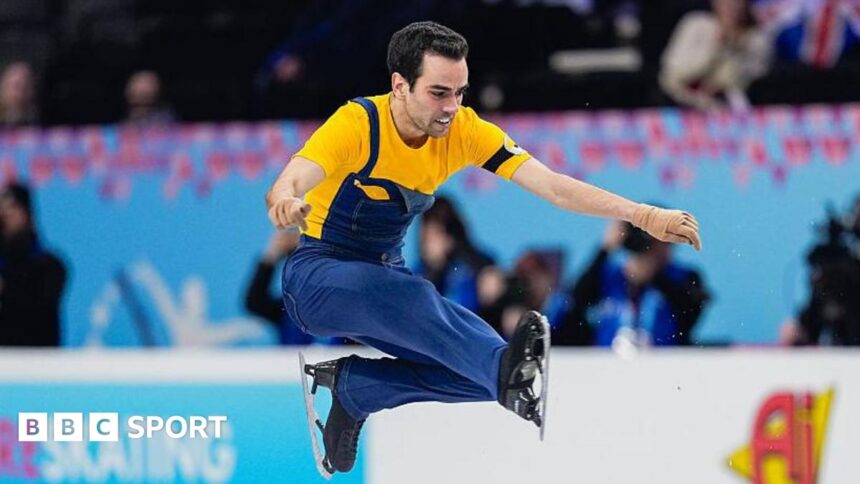
For the entirety of the 2025-26 season leading to the Olympics, Sabate has been a viral sensation on the ice. His routine is a full-immersion experience: a frenetic mix of Minions soundbites and music, perfectly synchronized to his energetic footwork and jumps, all while donning the character’s iconic blue overalls and yellow T-shirt. This is not a throwaway exhibition act; it’s his competitive short program. In a sport often associated with classical scores and dramatic ballads, Sabate’s choice is a deliberate statement of individuality and accessibility.
His best finish of 20th at the Figure Skating World Championships indicates an athlete on the cusp of the world elite, using personality and performance artistry to stand out. The Minions program is his weapon of distinction. “It connects with the audience in a different way,” explains former Olympic choreographer Elena Petrova. “It breaks the fourth wall. While others are telling a story, Tomas-Llorenc is inviting you to a party. In a high-pressure environment, that genuine joy can be a huge asset, both in scoring presentation marks and in managing his own nerves.”
Understanding the Olympic Copyright Iceberg
The abrupt cancellation of the routine highlights a complex, often unseen, aspect of Olympic competition: broadcast and licensing rights. The International Olympic Committee (IOC) sells exclusive broadcasting rights for billions of dollars. Any music performed during competition becomes part of that broadcast product, subject to global distribution and potential future use in highlights and promotions.
- Rights Clearance is Mandatory: Skaters and their federations are responsible for securing synchronization rights for any copyrighted music used in competition, clearing it for global television broadcast.
- Corporate Caution: For a massive entity like Universal Pictures, granting rights for the Olympic broadcast is a significant decision. They may have concerns about brand alignment, future licensing opportunities, or simply the administrative burden for a one-off use.
- The Precedent Factor: Allowing use could set a precedent for other athletes, diluting the commercial value of their intellectual property. A flat “no” is often the simplest corporate policy.
“This is a classic case of grassroots sport meeting multinational corporate policy,” says sports intellectual property lawyer David Chen. “The skater sees it as a tribute and a key part of his identity. The studio sees a high-profile, commercial usage request that doesn’t necessarily fit their strategic plan. There’s no villain, just a fundamental mismatch in scale and objective.”
Pivoting Under Pressure: What’s Next for Sabate?
Announcing the change via Instagram, Sabate now faces a monumental creative and athletic challenge. Crafting a new Olympic-ready program is a holistic endeavor. The music is the foundation; every jump, spin, and step sequence is timed to its accents and phrasing. Changing it is akin to an actor learning a new, word-perfect script for a Broadway play just before opening night.
Expert analysis suggests several paths forward:
The “Sound-Alike” Solution: Commissioning original music that captures the anarchic, playful spirit of the Minions score without infringing copyright. This is costly and risky, as the emotional connection to the original is lost.
The Radical Reinvention: Abandoning the concept entirely for a more traditional program. This could project a “serious competitor” image but risks stripping Sabate of the unique energy that earned him his Olympic spot.
The Negotiation Hail Mary: A public campaign or behind-the-scenes diplomacy to appeal to Universal. The narrative of a “dream denied” could generate enough sympathetic publicity to make the studio reconsider, framing permission as a celebration of joy rather than a commercial transaction.
“His preparation timeline is now severely compressed,” notes sports psychologist Dr. Anya Sharma. “The mental hurdle is huge. He must mourn the loss of a program that’s part of his identity, then immediately build excitement for a new one, all while maintaining peak physical conditioning. It’s a test of resilience that goes beyond sport.”
Predictions for Milan and the Lasting Impact
This incident casts a spotlight on a growing tension in figure skating. As the sport seeks younger audiences, skaters are increasingly turning to contemporary pop culture music. Yet, the Olympic copyright issue presents a formidable barrier.
Predictions for Sabate’s Olympic moment are now fraught with “what-ifs.” Will he find a suitable replacement that preserves his essence? Or will the disruption affect his performance? Ironically, this setback may galvanize fan support, turning him into a sympathetic figure battling faceless corporate forces. The audience in Milan may cheer louder for his new routine, whatever it is, in a show of solidarity.
Furthermore, this case will likely force national federations to implement stricter music clearance protocols much earlier in the Olympic cycle. We may see a rise in skaters using royalty-free libraries or commissioning original works to avoid similar heartbreak. The Minions mix, therefore, may have a legacy far beyond its runtime: as the catalyst that changed how the sport handles its soundtrack.
The conclusion is bittersweet. The Olympic Games, a celebration of human achievement, are also a meticulously managed global business. Tomas-Llorenc Guarino Sabate’s journey to Milan 2026 is now a poignant lesson in that reality. His yellow T-shirt and blue overalls may still make an appearance, but the soundtrack of his Olympic dream has been abruptly switched. His performance will now be measured not only by technical merit but by his ability to overcome an unprecedented off-ice obstacle. In the end, his greatest triple axel may be the leap he makes from disappointment to a new, uncharted, and still-hopefully-joyful Olympic beginning.
Source: Based on news from BBC Sport.