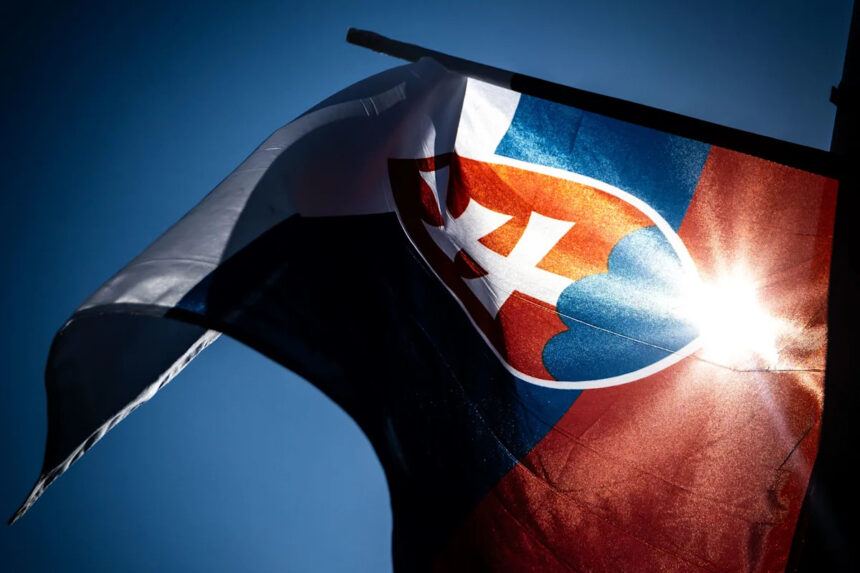
The Puck Stops Here: Slovak Hockey Fan’s 16-Year Run Ends at Milan Olympics
For sixteen years, he was a ghost in the system, a man with an old warrant and a passion for hockey. His freedom, a delicate balance of anonymity and normalcy, lasted through countless seasons. It finally, and poetically, evaporated in the electric atmosphere of the Winter Olympics. The 2026 Milan Cortina Games, a celebration of human athletic pursuit, became the final arena for a 44-year-old Slovak national whose own marathon run from Italian justice ended not with a bang, but with a hotel check-in. His crime? Alleged shopping thefts from 2010. His undying wish? To see Slovakia’s ice hockey team compete on the Olympic stage. This is the story of a fugitive fan, a tip-off, and a puck that dropped without him in the stands.
A Warrant on Ice: The 16-Year Chase
The timeline of this case reads like a slow-burn thriller. In 2010, Italian prosecutors issued a warrant for the Slovak man, alleging involvement in a series of shopping thefts. The details of the alleged crimes remain sparse, but their consequence was a legal shadow that would follow him across Europe. For nearly six thousand days, he evaded capture. How he managed this—whether through a quiet life, movement across borders with relaxed scrutiny, or sheer luck—is a testament to the challenges of continental law enforcement before enhanced data-sharing protocols.
Italian Carabinieri, the country’s renowned gendarmerie, had long since filed the case, a persistent but cold entry in their system. The fugitive, meanwhile, seemingly lived a life where major international events were off-limits, the very places where biometric checks and heightened security pose the greatest risk. Yet, the call of national pride and the sheer magnitude of the Olympic hockey tournament proved too powerful to resist. This miscalculation underscores a critical point: modern policing often relies on the convergence of old-fashioned human tips and digital trails, especially during globally significant events.
Check-In, Checkmate: The Arrest in Milan
The man’s journey to incarceration began, ironically, with his search for lodging. According to a statement released by the local Carabinieri police force and reported by Reuters, he checked into a guest house outside Milan, presumably buzzing with the anticipation of the upcoming game. It was here that his sixteen-year illusion of security shattered. Hotel staff, likely following standard protocol for verifying guest identities against official databases, became suspicious and alerted the authorities.
This tip was the linchpin. It transformed him from just another enthusiastic fan into a target. Police moved swiftly, apprehending him without incident. The sequence is rich with irony:
- His Crime: Petty theft, not violent felony.
- His Passion: Ice hockey, a team sport built on structure and rules.
- His Mistake: Underestimating the networked vigilance of a host city during the world’s most watched sporting event.
He was not arrested at a raucous arena checkpoint or while celebrating a goal. He was taken in the quiet mundane act of settling into his accommodation, a stark contrast to the roaring crowds he hoped to join.
The Game Goes On: Victory and Vacant Seats
The cruelest twist was yet to come. The day after his arrest, the Slovak men’s ice hockey team took to the Olympic ice against Finland. Without their most dedicated—and legally beleaguered—fan in attendance, they delivered a commanding performance. Slovakia won its opener with a decisive 4-1 victory over the Finns. The news of the win would have surely reached the man in his cell, a bittersweet echo of the celebration he had traveled to witness.
His Olympic experience was reduced to the four walls of the San Vittore prison in Milan, a historic facility known for housing high-profile detainees. There, he began serving a sentence of 11 months and seven days. Had his luck held for just 72 more hours, he could have potentially seen Slovakia face the host nation, Italy, in a charged group-play matchup. That possibility highlights the razor-thin margin of his freedom. Sixteen years of evasion were undone by a three-day timing error in his personal itinerary.
Expert Analysis: The Security Net of Mega-Events
From a security and law enforcement perspective, this arrest is a textbook case of success, but also a window into evolving strategies. Dr. Elena Vespari, a professor of International Security at Bocconi University, notes: “Major events like the Olympics are no longer just about securing venues. They are about creating an integrated security ecosystem that encompasses transportation hubs, accommodation networks, and financial transactions. A fugitive from a non-extraditable crime might slip through border controls, but the moment they engage with the formal infrastructure of the host city—especially hospitality—they trigger multiple layers of verification.”
This incident underscores several key points about modern fugitive recovery:
- The Human Element is Key: Automated systems flag data, but trained hotel staff acting on suspicion often provide the crucial, actionable tip.
- Events as Magnets: High-profile gatherings act as unintentional fugitive magnets, drawing individuals out of hiding for a cause they cherish, thereby increasing their exposure.
- The Penalty of Passion: This case is a stark reminder that emotional drives (like national pride) can override rational risk assessment, even after years of successful evasion.
Predictions: The Legacy of a Caught Fan
What does this mean for the future? Firstly, we can expect international law enforcement to further study and promote the “Milan Model” of community-business cooperation during mega-events. Training for hospitality staff on identity verification may become more standardized globally in the lead-up to such events.
Secondly, the story itself enters the realm of sports and legal folklore. It’s a tale that will be recounted in Slovak pubs and Italian police academies alike. For the average fan, it’s a bizarre cautionary tale about the long arm of the law. For authorities, it’s a validation of persistent, connected policing. We may also see a subtle but perceptible tightening of fan identity checks for high-stakes knockout round tickets, moving beyond mere ticket authenticity to basic identity confirmation.
Conclusion: Freedom’s Final Buzzer
The Slovak fan’s story is a poignant paradox. It intertwines the grandeur of the Olympic dream with the grinding reality of justice delayed. He evaded capture for 5,840 days, only to be caught on the one day he dared to step into the spotlight for a love of country and sport. His arrest denied him the roar of the crowd, the swell of national anthem, and the sight of a Slovak victory. Instead, he traded the chill of the ice rink for the cold reality of a prison cell. His sentence, just shy of a year, is a fraction of the time he spent looking over his shoulder. Yet, it serves as a definitive full-stop to his run. The puck of his freedom, which he kept in play for sixteen remarkable years, was finally gloved by the system. In the end, the Olympics, a symbol of fleeting glory and human achievement, provided the backdrop for his own personal game—one that ended with the most definitive of losses.
Source: Based on news from Yahoo Sports.