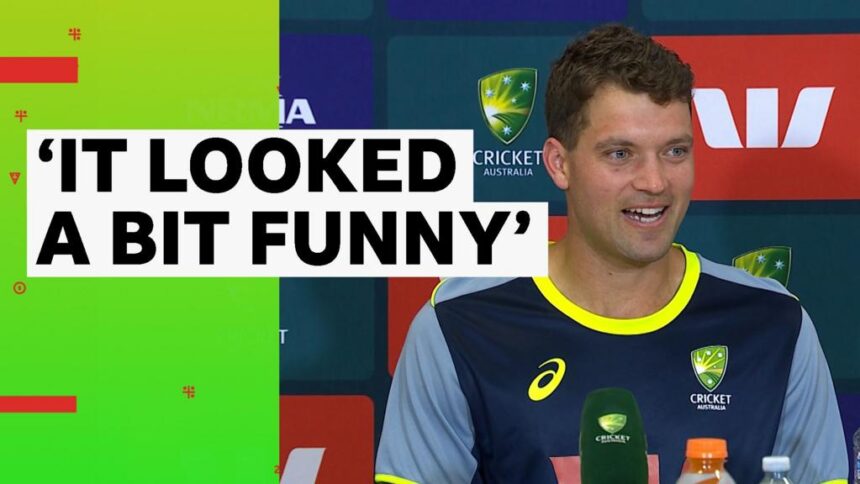
‘Sometimes You Have a Bit of Luck’: How a Tech Error Saved Alex Carey and Ignited a Firestorm
The line between sporting glory and gut-wrenching failure has always been razor-thin, but in the modern game, that line is increasingly drawn by technology. In a dramatic twist during the pivotal third Ashes Test in Adelaide, Australia’s Alex Carey received a monumental reprieve not from an umpire’s howler, but from a rare and admitted failure of the very system designed to eliminate such doubt. The incident, a ‘Snicko’ malfunction on a potential catch, gifted Carey a second life and he seized it with a match-shaping century, leaving England to ponder a cruel twist of fate and reigniting the eternal debate about technology’s role in the sport’s soul.
The Moment of Chaos: A Spike, A Snick, and Silence
The stage was set on a tense opening day. Australia, seeking to solidify their dominance in the series, were building a partnership when Alex Carey, on 21, attempted a cut shot off the bowling of England’s Ollie Robinson. The ball passed the bat, and wicketkeeper Jos Buttler lunged to his left, claiming a low catch. The on-field umpires, uncertain, sent the decision upstairs. The protocol was clear: check for the catch, but also for an edge.
As the world watched the replays, the crucial UltraEdge (Snicko) graphic appeared. There was a clear, audible sound as the ball passed the bat, but crucially, no corresponding spike on the waveform display. The Third Umpire, bound by the visual evidence on his screen, had no choice. With the lack of a spike, and no conclusive evidence to overturn the soft signal of not out for the catch, Carey was given a reprieve. The English players were visibly stunned. Carey, who later admitted he thought he was out, played on.
The revelation came only after stumps. The operator of the technology system disclosed that the display seen by the Third Umpire and the broadcast was an “error.” The sound had registered; the spike was present in the data but failed to render on the graphical overlay. It was a pure technological glitch that altered the course of a Test match.
Expert Analysis: Luck, Legacy, and the Limits of DRS
This incident is more than a simple case of a batter getting lucky. It cuts to the core of cricket’s complicated relationship with the Decision Review System (DRS).
- The Human Element in a Digital System: DRS was implemented to correct “clear and obvious” errors. Yet here, the error was within the technology itself, a layer of fallibility that administrators rarely discuss. The umpire made the “correct” decision based on the flawed evidence he was provided. This exposes a critical vulnerability.
- Psychological Warfare: Carey’s subsequent century was a masterclass in mental fortitude. Knowing he had enjoyed a massive slice of fortune could have led to a tentative, nervous innings. Instead, it seemed to liberate him. For England, the opposite was true. The emotional drain of being denied a key wicket by a system they trust was palpable and likely contributed to their fading momentum in the field.
- The Precedent of “The Error”: Unlike a marginal LBW where ball-tracking shows “umpire’s call,” this was a binary event – either an edge or not. The post-match admission, while transparent, offers England no consolation. It sets a troubling precedent where the correctness of a decision is known only in hindsight, stripping the game of real-time finality.
Former players have been vocal. Many Australian legends acknowledge the fortune, while English greats point to it as a symbol of their tour’s hard luck. The key takeaway is that technology is an aid, not an infallible oracle. It requires constant calibration, transparency, and an acceptance that absolute perfection is unattainable.
Broader Implications for the Ashes and Beyond
The ramifications of this single event stretch far beyond the Adelaide scorecard. In a series as storied as the Ashes, momentum is everything. Carey’s century helped Australia post a formidable first-innings total, fundamentally changing the tactical landscape of the Test and forcing England to bat under scoreboard pressure.
Looking ahead, this incident will inevitably cast a shadow:
- Increased Scrutiny on Tech Protocols: Expect immediate reviews from the ICC and technology providers. Questions will be asked about redundancy systems, real-time data verification, and whether operators can intervene during a review if they spot a display error.
- Player and Public Trust: The bedrock of DRS is player buy-in. Glitches like this, though rare, can erode faith in the system. Players may start to question not the umpire’s interpretation of the tech, but the tech itself.
- The “Spirit of the Game” Debate: While Carey was within his rights to stand his ground, the incident fuels the debate about batters walking. In an era of hyper-technical scrutiny, does the old-fashioned notion of personal integrity when you know you’re out hold any weight? For most modern professionals, the answer is a pragmatic ‘no.’
Predictions: A Catalyst for Change or a Forgotten Blip?
Will this moment be remembered as the turning point of the 2023/24 Ashes, or a curious footnote? The likely outcome is a hybrid of both.
In the immediate term, it has handed Australia a significant psychological and practical advantage in this crucial Test. England must now overcome not just a talented bowling attack, but a sense of profound injustice. Their ability to compartmentalize this setback will define their resilience.
For the future of the sport, however, this is a landmark event. We predict:
- Enhanced Transparency: Broadcasters may begin showing a more “raw” data feed alongside the polished graphics to provide a fuller picture to viewers and, potentially, umpires.
- Protocol Adjustments: There may be calls for a “technical failure” clause, allowing a review to be restarted if a systemic error is identified immediately. This is fraught with complexity but will be debated.
- Unending Debate: This “Snicko-gate” will join a list of controversial DRS moments, cited whenever the system comes under fire. It is the ultimate case study for those who argue technology introduces new problems as it solves old ones.
Conclusion: Fortune Favors the Brave, and Sometimes the Bugged
Alex Carey’s century will be recorded in the scorebooks without an asterisk, but it will forever be coupled with the story of the technological error that made it possible. His admission of luck is a refreshing nod to cricket’s capricious gods. This episode is a stark reminder that in the quest for perfect fairness, cricket has woven a complex web of technology that, while overwhelmingly beneficial, is still spun by human hands and susceptible to human (and digital) error.
The Ashes, a contest built on a century of human drama, has now been irrevocably stamped with a digital drama. It underscores that cricket, at its heart, remains a game of glorious uncertainties—even if those uncertainties now sometimes come in the form of a missing pixel on a screen. The challenge for the sport is not to abandon technology, but to humbly accept its flaws, learn from them, and ensure that the pursuit of accuracy never completely overshadows the game’s enduring, and beautifully unpredictable, human spirit.
Source: Based on news from BBC Sport.