Formula 1 on High Alert: Sources Indicate Bahrain and Saudi Arabian Grands Prix Face Cancellation
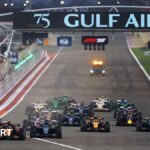
The high-octane world of Formula 1, a sport built on precision and global spectacle, is facing a formidable and unpredictable opponent: geopolitical instability. According to sources who spoke to ESPN, the 2025 Formula 1 calendar is poised for a major, late-season shock. The Grands Prix in Bahrain and Saudi Arabia, scheduled for back-to-back weekends in April, are reportedly set to be canceled due to the escalating regional tensions stemming from the ongoing conflict involving Iran. This potential double cancellation would send immediate shockwaves through the championship, forcing a dramatic re-evaluation of logistics, security, and the very nature of F1’s ambitious global expansion.
The Geopolitical Red Flag: Safety Trumps All
Formula 1 has navigated regional tensions before, but the current climate presents a uniquely volatile challenge. The reported decision to cancel these races underscores the paramount, non-negotiable priority: driver, team, and personnel safety. The Gulf region, while historically a stable hub for major sporting events, finds itself in a precarious position. The threat of escalated conflict, including potential for wider regional spillover, creates an unacceptable risk profile for an event that moves thousands of people, hundreds of tons of sensitive equipment, and commands a global live audience.
F1’s reliance on intricate, just-in-time logistics means that uncertainty is the sport’s greatest enemy. The freight alone—entire garages, hospitality units, and car parts—travels via air and sea routes that could be directly impacted. Furthermore, the immense on-site security apparatus required for a modern Grand Prix, while robust, may be deemed insufficient against broader regional threats. As one veteran team principal (speaking on background) noted, “We race on the edge, but we prepare in an environment of total control. When the geopolitical landscape becomes the dominant variable, the calculation changes entirely.”
Immediate Calendar Chaos and Financial Repercussions
The cancellation of two races, particularly two that are foundational to the early season, creates an instant logistical and sporting vacuum. The potential impacts are severe and multifaceted:
- Calendar Contraction: Losing two rounds from a 24-race schedule is a significant blow. Finding replacement venues at such late notice is virtually impossible, meaning the 2025 championship would likely run as a 22-race season, affecting television contracts and fan engagement.
- Financial Shockwaves: Both Bahrain and Saudi Arabia are understood to pay among the highest race hosting fees on the calendar. Their loss represents a direct, nine-figure hit to Formula 1 Group’s commercial revenue. This trickles down to teams, whose prize fund payouts are directly tied to the commercial rights holder’s income.
- Testing Disruption: Bahrain’s Sakhir Circuit is not only a race venue but the traditional home of pre-season testing. A cancellation calls into question the viability of holding the crucial test session there, potentially forcing an 11th-hour scramble to relocate winter testing, possibly to European circuits like Barcelona.
- Team Operational Strain: For the ten teams, a canceled race weekend means lost sponsorship activation, hospitality revenue, and a disruption to the development rhythm of the season. The budget cap era makes absorbing such financial shocks more complex.
Expert Analysis: A Pivotal Moment for F1’s Strategy
This crisis is more than a simple scheduling headache; it is a stress test for Formula 1’s long-term business model. “The sport has aggressively pursued a ‘grand prix in every key market’ strategy,” explains Dr. Liana Maris, a professor of sports geopolitics. “Events in the Middle East, with their significant financial backing, have been cornerstones of that growth. However, this situation exposes the inherent vulnerability of tying the sport’s financial health to regions with complex political fault lines.”
The potential cancellations will reignite the debate about the balance between sporting integrity, financial necessity, and ethical considerations. Can, or should, a sport that positions itself as a global peacemaker and unifier continue to race in areas of active geopolitical conflict? While both Bahrain and Saudi Arabia have used F1 as a central pillar of their nation-branding and “sportswashing” initiatives, the uncontrollable actions of neighboring states present a risk too great to ignore.
Furthermore, the chain reaction effect must be considered. The eyes of the sporting world will immediately turn to other regional events. Could the later-season Abu Dhabi Grand Prix, the traditional season finale, also be under threat if tensions persist? The decision regarding Bahrain and Saudi Arabia will set a powerful precedent for how F1 manages risk in an increasingly unstable world.
Predictions and Potential Scenarios for the 2025 Season
Based on the source reporting and the sport’s historical behavior, we can forecast several likely outcomes:
- Official Announcement Imminent: F1 and the FIA will likely make a joint statement within weeks, confirming the cancellations and outlining contingency plans. They will cite “force majeure” and “the best interests of the sport.”
- European Season Starter: With the Middle Eastern openers in doubt, the championship could revert to a more traditional start. The Australian Grand Prix in Melbourne may become the season opener, or F1 could attempt to bring forward the Chinese Grand Prix, though that presents its own logistical hurdles.
- Double-Headers Elsewhere: To recoup lost race count, F1 may attempt to add a second race at another willing venue. Could we see an unprecedented third race in the United States, or a return to a classic European circuit like Imola or Hockenheim for a second weekend?
- Long-term Calendar Re-think: This event will force F1’s commercial rights holder to seriously consider building more geographic flexibility and political risk assessment into future calendar planning. The era of announcing a 24-race calendar three years in advance may be over.
Conclusion: A Defining Moment at 200 MPH
The reported cancellation of the Bahrain and Saudi Arabian Grands Prix is a stark reminder that even the most meticulously engineered sport cannot outrun global realities. For Formula 1, this is a defining moment that pits its commercial ambitions against its fundamental duty of care. The decisions made in the coming weeks will reveal much about the sport’s priorities and its resilience. While fans may lament the loss of two thrilling night-race spectacles, the sport’s leadership must now navigate a tight corner at full speed, balancing the safety of its community with the stability of its future. The 2025 season, before a single car has turned a wheel, is already shaping up to be one of the most consequential in modern F1 history.
Source: Based on news from ESPN.
Image: CC licensed via commons.wikimedia.org