Hamilton’s Joyride: Why the F1 Legend Finds 2026’s Radical Cars “More Fun”
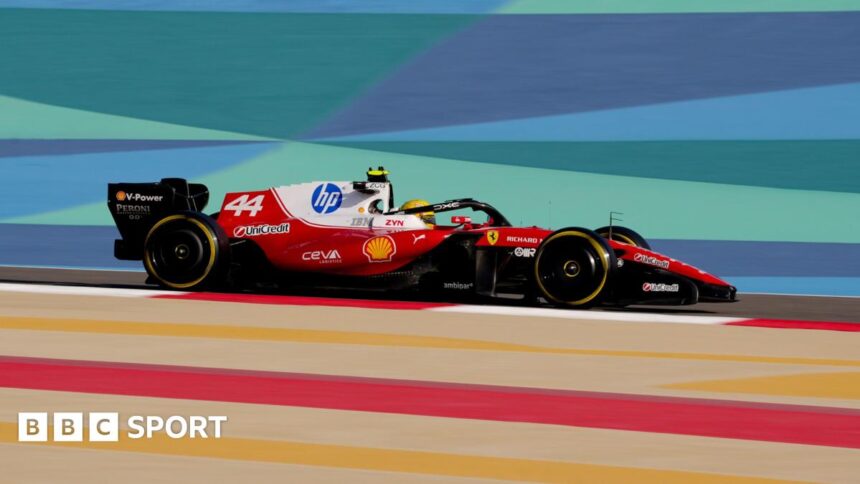
The air in the Formula 1 paddock is thick with the scent of revolution and, depending on whom you ask, a hint of discontent. As the sport embarks on its most radical regulatory overhaul in history—rewriting the rulebook on chassis, aerodynamics, hybrid power units, tires, and fuel—a clear divide has emerged. While rivals like Max Verstappen bemoan the complexity, seven-time world champion Lewis Hamilton, now embarking on his second season with the iconic Ferrari team, is wearing a smile. Against the grain of criticism, he has declared the challenging new machines simply “more fun” to drive.
A Clash of Philosophies: Driver Joy vs. Engineering Marvel
The 2026 regulations were conceived with multiple goals: to level the playing field, promote closer racing, and embrace a more sustainable future with fully sustainable fuels and increased electrical energy deployment. However, the initial driver feedback has been sharply polarized. Reigning champion Max Verstappen has been vocal in his criticism, particularly of the demanding energy management required from the next-generation hybrid units, suggesting it over-complicates the driving experience. Fernando Alonso, another veteran champion, has echoed concerns about the cars feeling more like a technical exercise than a pure driving challenge.
Hamilton’s perspective stands in stark contrast. “We just have a less downforce,” the Ferrari driver explained, cutting to the heart of the matter. “But you still have to discover the grip. There’s still so many elements completely under our control.” For Hamilton, the reduction in aerodynamic reliance is not a loss but a liberation. It shifts the emphasis back towards mechanical grip, car balance, and raw driver skill—elements that defined earlier eras of F1. Where some see a limitation, Hamilton sees a fresh challenge and a purer form of racing craft.
- Verstappen/Alonso Viewpoint: Focus on the increased technical burden, particularly energy management, which can feel like a strategic distraction from outright driving.
- Hamilton’s Viewpoint: Focus on the tactile, hands-on challenge of a less planted car, celebrating the return of driver input over aerodynamic dominance.
Unpacking Hamilton’s Ferrari Renaissance
Hamilton’s positive outlook cannot be separated from his seismic move to Ferrari. After a final, frustrating season with Mercedes where he finished sixth in the standings, the switch to Maranello has injected a palpable new energy into his career. The 2026 regulatory reset perfectly coincides with his mission to rebuild Ferrari into a championship-winning force. For Hamilton, these new rules represent a blank slate—a chance to shape a car’s development philosophy from the ground up and potentially outmaneuver teams that had mastered the previous era.
His enjoyment of the reduced grip and different aerodynamic philosophy suggests Ferrari’s early interpretation of the rules may be aligning with his driving style. A car that is more responsive to driver adjustment and less dependent on perfect aerodynamic conditions could play to Hamilton’s legendary racecraft and feel for a car’s limits. This symbiotic relationship between a driver seeking a visceral experience and a team building a new identity is a powerful narrative that could fuel Ferrari’s resurgence.
Expert Analysis: “Lewis’s comments are profoundly telling,” says former F1 technical director Gary Anderson. “He’s not looking at the telemetry sheets first; he’s talking about the seat-of-the-pants feel. In a season of immense change, that driver-centric focus could be a strategic advantage. While others fight the car, he’s seeking to harmonize with it. At Ferrari, with its historic emphasis on driver emotion, that mindset is priceless.”
The 2026 Rulebook: What Actually Changed?
To understand the drivers’ reactions, one must grasp the scale of the changes. This isn’t a tweak; it’s a fundamental reimagining.
- Active Aerodynamics: Cars now feature movable front and rear wings (aero maps) that adjust automatically on straights to reduce drag and in corners to increase downforce. This dramatically alters cornering philosophy.
- Lighter, Smaller Cars & Powertrains: A significant weight reduction and a more compact hybrid power unit aim to create nimbler, more agile machines.
- Power Unit Revolution: The MGU-K becomes the primary power source, with the internal combustion engine running on 100% sustainable fuel. Managing this electrical energy deployment is the complex task Verstappen references.
- Reduced Downforce: As Hamilton highlighted, overall downforce levels are lower, placing a premium on mechanical grip from the tires and suspension.
These changes collectively create a car that behaves fundamentally differently. The driver must now manage a dynamic aerodynamic platform, a complex power delivery curve, and a car that is inherently more slide-prone. For some, it’s a headache. For Hamilton, it’s an engaging puzzle.
Predictions: Will Fun Translate to Ferrari Success?
Hamilton’s public optimism is a strategic asset for Ferrari, projecting confidence and unity. However, the critical question remains: can this “fun” factor be translated into a championship-contending package?
Short-Term (2026 Season): Expect a volatile and unpredictable start to the season. Teams that adapt their simulation tools and driver feedback quickest will gain an early advantage. Ferrari, with Hamilton’s positive and exploratory mindset, could be well-positioned to iterate development rapidly. His ability to extract performance from a tricky car could yield surprise podiums early on.
Long-Term Championship Impact: Hamilton’s career has been built on an almost supernatural symbiosis with his car. If he genuinely connects with the 2026 machine’s characteristics, it could prolong his peak performance years. A motivated, happy Hamilton in a car he loves driving is a formidable prospect for any rival, including Verstappen. This regulatory shift may have inadvertently extended the Hamilton-Verstappen rivalry era, but now with Ferrari red as the backdrop.
The ultimate success will depend on Ferrari’s engineering execution. Hamilton can provide the best feedback in the world, but the Scuderia must translate it into a reliable and fastest car. The early signs, however, suggest the partnership is approaching this unprecedented challenge from a uniquely aligned and optimistic perspective.
Conclusion: The Soul of a Racer Rekindled
In an era where Formula 1 risked becoming a contest of aerodynamic efficiency above all else, the 2026 regulations have, intentionally or not, reignited a debate about the soul of a racing driver. Lewis Hamilton’s embrace of the “more fun,” less predictable car reveals the heart of a competitor who thrives on feel and challenge, not just computational perfection. His stance is a powerful reminder that at its core, Grand Prix racing is about the human battling the machine and the elements.
While Verstappen and Alonso’s concerns about over-complication are valid and reflect the immense technical hurdle, Hamilton’s viewpoint offers a different, perhaps more romantic, vision of the sport’s future. As he dons the Ferrari red for this new dawn, he isn’t just chasing an eighth title; he is championing a driving experience. In the battle between man and machine that defines F1, Hamilton’s joy suggests that for 2026, the “man” might just have been given a more decisive role. And for a legend in the twilight of his career, that may be the most thrilling prospect of all.
Source: Based on news from BBC Sport.