Springboks’ Ntlabakanye Handed 18-Month Doping Ban: World Cup Dream Dashed
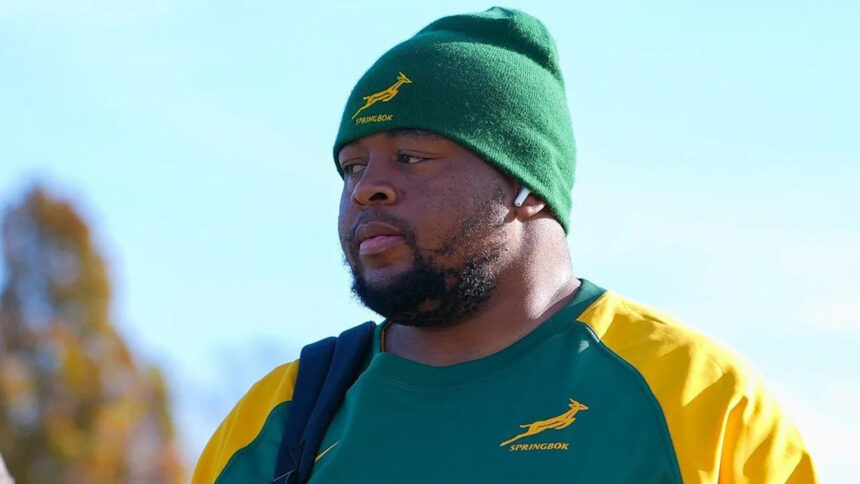
The rugby world was rocked on Tuesday as South African rugby’s rising star, Lions prop Asenathi Ntlabakanye, was slapped with an 18-month suspension for violating anti-doping regulations. The ruling, handed down by an independent tribunal of the South African Institute for Drug-Free Sport (SAIDS), effectively ends the 27-year-old’s hopes of representing the Springboks at the 2027 Rugby World Cup in Australia. This is a devastating blow to a player who was on the cusp of international stardom, and a stark reminder of the unforgiving nature of modern anti-doping rules.
Ntlabakanye, a powerful tighthead prop known for his scrummaging prowess and explosive ball-carrying, tested positive for Dehydroepiandrosterone (DHEA), a banned substance classified under the World Anti-Doping Agency (WADA) prohibited list. The substance, a natural hormone that boosts testosterone, is strictly forbidden for its performance-enhancing capabilities, including accelerated muscle growth and improved recovery times. The ban, backdated to 13 May 2025, will keep him sidelined until November 2026—just as the Springboks are preparing for their title defence in Australia.
The Doping Case: What Went Wrong for Ntlabakanye?
The details surrounding Ntlabakanye’s case are both troubling and revealing. According to SAIDS, the player “self-declared” his use of DHEA, admitting he ingested the substance under the mistaken belief that it was permitted. This is a critical detail: Ntlabakanye did not attempt to hide his use of the substance. He continued to play for the Lions in the United Rugby Championship (URC) and other competitions while the investigation was ongoing, a decision that has now backfired spectacularly.
The independent doping tribunal panel ruled that Ntlabakanye had committed an anti-doping rule violation (ADRV) under the SAIDS rules. While the panel acknowledged his admission and cooperation, the rules are clear: ignorance is no defence. DHEA has been on the WADA banned list for years, and any professional athlete, especially one with international ambitions, is expected to know what goes into their body.
Key facts of the case:
- Substance: Dehydroepiandrosterone (DHEA), a testosterone-boosting hormone.
- How it was discovered: Self-declaration by the player after a positive test.
- Ban length: 18 months, backdated to 13 May 2025.
- Consequence: Ends on 13 November 2026, missing the entire 2027 Rugby World Cup.
- Appeal window: Ntlabakanye has 21 days to appeal the decision.
This case highlights a growing issue in professional sport: the reliance on supplements and the dangerous gap between what athletes think is safe and what is actually banned. DHEA is often found in over-the-counter supplements marketed for “natural” testosterone support, but it is a red-flag substance for any elite athlete. For Ntlabakanye, this mistake could define his career.
Impact on Springboks and Lions: A Career on Hold
For the Springboks, this is a significant setback. Ntlabakanye was viewed as a long-term successor to veteran props like Frans Malherbe and Vincent Koch. At 27, he was entering his physical prime, and his performances for the Lions had caught the eye of national selectors. He was widely expected to be part of the Springboks’ plans for the 2027 World Cup cycle, providing depth and power in the front row.
Now, the Springboks will have to look elsewhere. The 18-month ban means Ntlabakanye will not be available for selection until the end of 2026, effectively ruling him out of the 2027 tournament. Even if he returns to form immediately after his ban, building match fitness and regaining the trust of the coaching staff in time for a World Cup is a near-impossible task. The Springboks’ front-row stocks remain deep—with players like Thomas du Toit, Ox Nché, and the emerging talent of younger props—but Ntlabakanye’s absence removes a unique physical presence.
For the Lions, the impact is immediate. The Johannesburg-based franchise loses a cornerstone of their pack for the next 18 months. Ntlabakanye was a key figure in their set-piece dominance, and his absence will be felt in the URC and any potential playoff runs. The Lions will now need to accelerate the development of younger props or look to the transfer market to fill the void. This ban also raises questions about the club’s medical and nutritional support systems—how did a player of his profile end up taking a banned substance without proper guidance?
Expert analysis from a former Springbok player (anonymous): “This is a tragedy for Asenathi. He’s a good man, a hard worker. But in modern rugby, you cannot afford to be naive. The moment you take something that boosts your testosterone, you are playing with fire. The Springboks will move on. They have to. But for him, this is a career-altering moment. He will be 29 when he returns, and he will have to prove himself all over again.”
What is DHEA and Why is it Banned?
Understanding the substance at the centre of this controversy is crucial. Dehydroepiandrosterone (DHEA) is a naturally occurring hormone produced by the adrenal glands. It is a precursor to both male and female sex hormones, including testosterone and estrogen. In the body, DHEA levels peak in early adulthood and decline with age. Athletes often turn to DHEA supplements in an attempt to boost testosterone, which can lead to increased muscle mass, strength, and recovery—all obvious advantages in a physically demanding sport like rugby.
However, DHEA is on the WADA Prohibited List for a reason. It is classified as an anabolic agent, and its use can lead to serious side effects, including hormonal imbalances, liver damage, and increased risk of heart disease. More importantly for athletes, it provides an unfair performance edge, which is why it is banned in and out of competition.
Why athletes still use DHEA:
- Misinformation: Many believe it is a “natural” supplement and therefore safe.
- Availability: It is sold over-the-counter in many countries, often in health stores.
- Lack of education: Some athletes, particularly those at lower levels, are not fully aware of WADA’s strict rules.
In Ntlabakanye’s case, the tribunal accepted that his use was not intentional to cheat but rather a result of ignorance. However, under the strict liability principle of anti-doping rules, the athlete is responsible for everything that enters their body. The 18-month ban reflects a middle ground—shorter than the standard four-year ban for intentional doping, but long enough to send a clear message. DHEA is not a mistake you make twice at the elite level.
Predictions and the Road Ahead for Ntlabakanye
So, what happens next for Asenathi Ntlabakanye? He has 21 days to appeal the decision. An appeal could potentially reduce the ban if new evidence emerges—such as proof that the substance was contaminated or that he received poor medical advice. However, given that he self-declared his use, an appeal is unlikely to overturn the ban entirely. A reduction to 12 months is possible, but even that would keep him out until May 2026, still leaving him with little time to reclaim a World Cup spot.
Prediction 1: Ntlabakanye will not play at the 2027 World Cup. Even with a successful appeal, the timeline is too tight. The Springboks will name their World Cup squad in mid-2027, and selectors will prioritise players who have been consistently available and tested in high-pressure matches. Ntlabakanye will have been out of competitive rugby for at least two years. That is a mountain too high to climb.
Prediction 2: His return to the Lions will be difficult. When he comes back in November 2026, he will be 28 or 29, and the Lions may have moved on. He will need to rebuild his reputation, both as a player and as a professional. Clubs are wary of signing players with doping records, and his market value has dropped significantly.
Prediction 3: This will become a cautionary tale. The Ntlabakanye case will be used by SAIDS and World Rugby to educate young players about the dangers of supplements. Expect stricter protocols at South African franchises, including mandatory testing of all supplements by independent labs. The Springboks’ management will also reinforce their zero-tolerance policy, ensuring that no player is ignorant of the rules again.
Expert prediction from a rugby analyst: “I think we will see a reduction on appeal to 12 months. But even then, Ntlabakanye’s international career is effectively over. The Springboks have a conveyor belt of talent. They will not wait for him. His best hope is to return to the Lions, play well for a season, and maybe earn a contract in Europe. The World Cup dream is gone.”
Conclusion: A Costly Lesson in Professionalism
Asenathi Ntlabakanye’s 18-month doping ban is a harsh but necessary reminder of the standards required in elite sport. The 27-year-old prop had the world at his feet—a powerful scrummager with a bright future in the green and gold. Now, he faces a long road back from a mistake that could have been avoided with a single phone call to a team doctor or a quick check of the WADA database.
For the Springboks, the search for front-row depth continues. For the Lions, the rebuild begins. And for Ntlabakanye, the next 18 months will be a test of character. He can either fade into obscurity, or he can use this as a catalyst to become a better athlete and a wiser professional. Rugby has a history of second chances, but they are earned, not given.
The 2027 Rugby World Cup in Australia will go ahead without him, but the story of Asenathi Ntlabakanye is not over. It is simply paused. Whether he writes a redemption arc or a cautionary tale depends entirely on what he does next. One thing is certain: the rugby world will be watching.
Source: Based on news from Yahoo Sports.