Spurs Answer Tudor’s Defiant Call With a Show of Fight at Anfield
The air around Tottenham Hotspur had grown thick with the scent of crisis. Four consecutive Premier League defeats, a Champions League humiliation in Madrid, and a manager under fire for his handling of a young goalkeeper. The visit to Anfield, a fortress where Liverpool had lost just once all season, loomed not as a challenge but as a potential funeral march. Then, Igor Tudor gathered his players and issued a stark, binary ultimatum that would define their season: “You can stay and cry or you can fight.” On a raucous Merseyside night, Spurs, against all odds and logic, chose the latter.
A Point That Feels Like a Victory Amidst the Storm
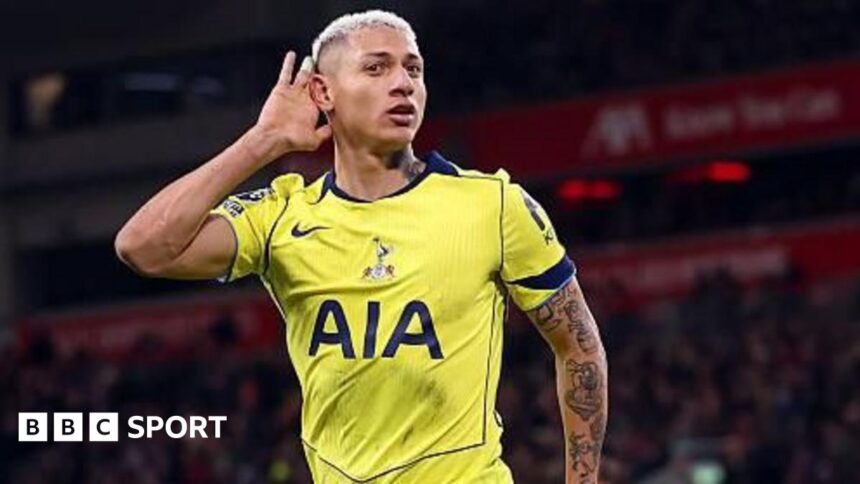
When Richarlison, a figure of frustration for much of the campaign, rose to thump a header home in the 94th minute, snatching a 2-2 draw, the celebration was pure, unadulterated catharsis. It wasn’t just a goal; it was a pressure valve release. The smart money was on more tears after a run that saw Spurs plummet towards the relegation conversation. The 5-2 home defeat that preceded this match was a defensive calamity, but it was overshadowed by Tudor’s controversial substitution of 22-year-old goalkeeper Antonin Kinsky after 17 minutes and two errors. The Croatian’s decision to blank the dejected keeper as he trudged off sparked a media firestorm, painting a picture of a cold, divisive leader losing his grip.
Yet, at Anfield, that same steely demeanor translated into a remarkable resilience. This was not a flawless Tottenham performance—Liverpool dominated possession and carved out far clearer chances—but it was a performance brimming with the fight Tudor demanded. They were organized, gritty, and, crucially, they believed until the very last second. The point does little to change their precarious league position, but it may just change the psychological landscape of their season.
Dissecting Tudor’s Ultimatum and Tactical Adjustments
Tudor’s pre-game message was a masterstroke in crisis management. In a situation where tactical talks could fall on deaf ears, he appealed directly to pride and professionalism. The choice was simple: succumb to the narrative or rewrite it. The players’ response was evident in their defensive shape and work rate.
- Structural Discipline: Unlike the porous display the previous week, Spurs maintained a compact mid-block for large periods, frustrating Liverpool’s intricate passing lanes through the middle.
- Pragmatic Approach: Tudor seemingly conceded the flanks, focusing on packing the central areas and challenging Liverpool to produce perfect crosses, a gamble that largely paid off until Mohamed Salah’s brilliance.
- Emotional Resilience: After going behind early, then conceding a second-half goal that could have shattered them, Spurs kept playing. This mental fortitude, so absent in recent weeks, was the most significant takeaway.
However, the Kinsky incident remains a shadow. Expert analysis suggests that while the substitution may have been tactically justifiable to prevent a collapse, the public shunning was a severe managerial misstep. It risked alienating not just the player but the squad. At Anfield, the focus was necessarily on the collective, but Tudor must still address that individual wound to fully unite his dressing room.
Key Performers and Turning Points at Anfield
Several Spurs players embodied the fight their manager called for, turning in season-defining performances under intense scrutiny.
Pierre-Emile Hojbjerg was a monster in midfield, covering space, breaking up play, and providing a rarely-seen defensive leadership. His interception and driving run led to the move for Spurs’ first goal, a moment of sheer will. Cristian Romero returned from suspension with a commanding, if occasionally reckless, display, throwing his body into every challenge and organizing the back line. And then there was Richarlison. Often criticized for his output, the Brazilian’s relentless running and never-say-die attitude were finally rewarded with the towering header that delivered a priceless point. His celebration, rushing to the traveling fans, symbolized a shared release of pent-up frustration.
The turning point, however, may have come before a ball was kicked. Tudor’s stark ultimatum reset the stakes. It was no longer about systems or selection; it was about character. By framing the match in such primal terms, he simplified the objective and gave his players a clear, unifying purpose: prove you are not the broken team everyone says you are.
What This Means for Tottenham’s Fight for Survival
One result does not solve a crisis, but it can provide the blueprint to escape it. The draw at Liverpool must be the foundation, not the pinnacle. The immediate predictions for Spurs’ season now hinge on their ability to replicate this intensity and belief.
The positives are clear: The squad showed they have not quit on the manager or the season. The spirit at Anfield proves the baseline quality exists to get results against any opponent. The upcoming fixture list, while still tough, now looks less daunting with this renewed confidence.
The concerns remain: The attacking play was still largely reactive. The dependency on moments of individual brilliance or set-pieces is unsustainable for a club with Tottenham’s ambitions. Furthermore, Tudor’s man-management style will continue to be scrutinized; a single positive result does not erase the Kinsky incident.
Looking ahead, the prediction is one of cautious optimism. If Tudor can channel this newfound fight into a consistent identity—and perhaps soften his edges in private—Spurs have the talent to climb the table. If they view this as a one-off and revert to passive, error-strewn football, the relegation battle will become a grim reality. The fight has been shown. Now, the fight must continue.
Conclusion: A Glimmer of Hope Forged in Defiance
Igor Tudor did not solve all of Tottenham Hotspur’s deep-rooted problems on the Anfield pitch. But in the face of a deepening crisis, he provoked a response. His “cry or fight” ultimatum was a gamble that paid off, yielding a performance of grit that had been desperately missing. The Richarlison injury-time strike was more than a equalizer; it was a symbol of a team choosing to fight back against its own demise.
The road ahead is long and fraught with difficulty. But for the first time in weeks, there is a glimmer of hope at Tottenham. It is a hope forged not in pretty football or tactical genius, but in the raw, uncompromising defiance that their manager demanded. The tears have stopped, for now. The fight, as Tudor intended, has begun.
Source: Based on news from BBC Sport.