Why Frank at Tottenham Was a Gamble That Ended in Bitter Failure
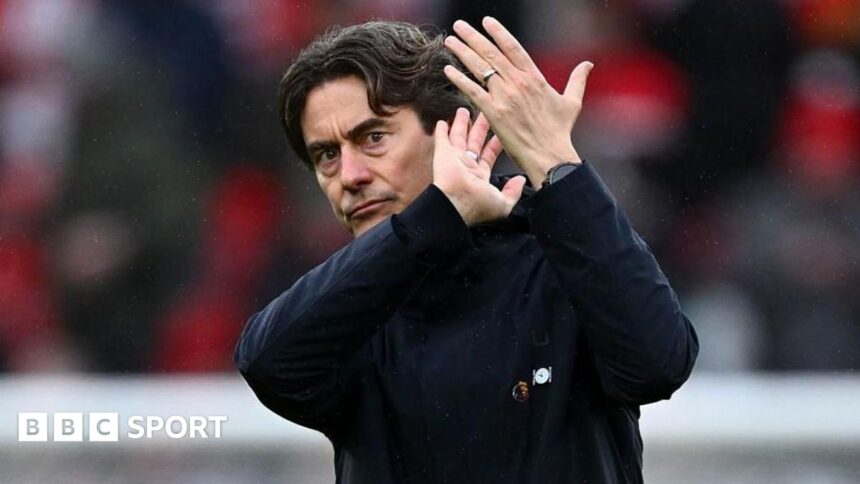
The appointment of Thomas Frank as Tottenham Hotspur head coach was heralded by some as a logical, progressive step. Here, finally, was a modern tactician with Premier League pedigree, plucked from a well-run club to instill a clear identity at one perpetually searching for one. Yet, barely a season later, the experiment lies in ruins, a scorched-earth policy of fan vitriol and broken promises. The union between the meticulous Dane and the chaotic North London giant was not just a mismatch; it was a high-stakes gamble that both parties lost spectacularly, leaving behind a legacy of toxicity and a stark lesson in footballing culture clash.
The Allure of the Gamble: Stability for Chaos
To understand the depth of the failure, one must first appreciate the magnitude of the gamble. For Thomas Frank, the move represented a conscious departure from the ecosystem that made him. At Brentford, he operated within a revolutionary structure built on data, alignment, and long-term planning. Owner Matthew Benham and director of football Phil Giles provided not just players, but a philosophical bedrock. Frank was the cultivator in a perfectly designed greenhouse, producing results that far exceeded resource expectations.
Spurs, by stark contrast, represented the volatile open market. The club’s modern history is a tapestry of fleeting promise and chronic inconsistency, where managerial reigns are measured in months, not years. The sacking of Ange Postecoglou—who delivered the club’s first trophy in 17 years with a Europa League win—was the ultimate warning sign Frank chose to ignore. He swapped a defined project for a desperate, trophy-hungry institution where past success guarantees nothing. For Spurs, the gamble was on a manager unproven in the cauldron of elite expectation, a coach whose admirable work came with the protective cushion of underdog status.
A Fish Out of Water: The Systems Collapse
Almost immediately, the signs of strain were evident. Frank’s Brentford was synonymous with tactical clarity, whether in a robust 4-3-3 or a fluid 3-5-2. At Tottenham, that clarity evaporated. Attempts to implement a similar structure exposed a squad ill-suited to his demands, leading to a disjointed, risk-averse style that pleased no one.
The hostile spotlight of Tottenham magnified every misstep. Where at Brentford a narrow defeat was framed as a brave effort, at Spurs it was a crisis. Frank’s press conferences, once viewed as intelligent and thoughtful, began to sound like excuses to a fanbase with zero appetite for context. Key failures included:
- Defensive Disintegration: Brentford’s defensive solidity was a hallmark. At Spurs, the backline became error-prone and porous, lacking the drilled cohesion of his former side.
- Misfiring Attack: Star forwards appeared shackled by restrictive instructions, their creative instincts dimmed in a system that prioritized caution.
- Transfer Market Misalignment: New signings, reportedly chosen with Frank’s input, struggled to adapt, suggesting a fatal flaw in the club’s recruitment strategy post his arrival.
Frank quickly appeared out of his depth, not necessarily tactically, but in managing the immense, unrelenting pressure that comes with a job of this stature. The “bedrock” of Benham and Giles was gone, replaced by a board facing its own fury from the stands.
The Unforgiving Chorus: A Relationship Broken Beyond Repair
The most defining, and damning, feature of Frank’s tenure was the rapid and total breakdown in his relationship with the supporters. This was not the gradual erosion of goodwill Postecoglou experienced; this was an immediate and visceral rejection.
The vast majority of Spurs supporters decided early that Frank was not their man. The atmosphere at the Tottenham Hotspur Stadium turned from one of hopeful anticipation to one of constant, simmering hostility. Chants turned against him, social media became a wall of anger, and every substitution was met with exasperated groans. It became a joyless, miserable spell for all involved.
This environment is toxic to performance. Players sense the discontent, the tension transmits onto the pitch, and a vicious cycle ensues. Frank’s attempts to rally the fanbase fell on deaf ears; the disconnect was absolute. In leaving Brentford’s supportive embrace, Frank had walked into a maelstrom he was psychologically and professionally unequipped to handle. The gamble had failed because the very foundation of any manager’s success—a connection, however fragile, with the fans—was incinerated before it could ever be built.
Lessons Learned and a Bleak Future
The fallout from this failed experiment will resonate for years. For Thomas Frank, the road back to a top-tier job is now steep. His stock, so carefully built over years in West London, has plummeted. He must rebuild his reputation, likely away from the Premier League’s glaring lights, and prove that his success was not entirely system-dependent.
For Tottenham Hotspur, the consequences are even more severe. The club’s reputation as a managerial graveyard is cemented. The sacking of a trophy-winning coach for a project that imploded in one season speaks to a profound lack of footballing intelligence at the executive level. Who would want to step into this breach now? The next appointment will be made under a cloud of deep skepticism and immediate, immense pressure.
Key predictions for the aftermath include:
- A prolonged period of instability as Spurs struggle to attract a top-tier, proven winner.
- A necessary, painful squad overhaul that could take multiple windows, led by a new football director.
- Intense scrutiny on Chairman Daniel Levy, with fan protests likely if the next appointment falters.
Conclusion: A Cautionary Tale of Modern Football
The Thomas Frank era at Tottenham Hotspur will be remembered not for what it achieved, but for what it represented: the dangers of ignoring cultural fit in the desperate pursuit of progress. It was a gamble founded on a superficial reading of a manager’s credentials, ignoring the ecosystem that created them. Frank traded stability for chaos and found himself consumed by it. Spurs, in turn, hired a coach for the club they wished to be, not the club they actually are—a institution of heightened expectations and minimal patience.
This ill-starred alliance serves as a stark, modern cautionary tale. In football’s data-driven age, the human elements of expectation, pressure, and cultural alignment remain the most volatile and decisive variables. Both parties rolled the dice, believing they could bend the other to their will. The result is a bitter failure, a poisoned atmosphere, and two wounded reputations struggling to see a way forward. The gamble is over. The reckoning has just begun.
Source: Based on news from BBC Sport.