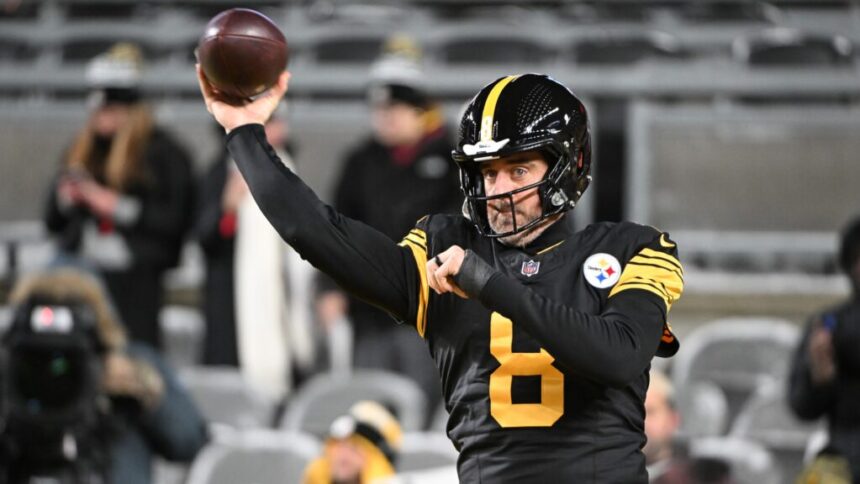
Aaron Rodgers Advocates for Fan Code of Conduct After DK Metcalf Incident
The relationship between NFL players and the fans who pay to see them is a complex, often volatile, symbiosis. It’s built on passion, loyalty, and immense pressure, but the line between spirited fandom and personal vitriol is increasingly blurred. This tension erupted into a national conversation last week when Pittsburgh Steelers wide receiver DK Metcalf, after a tough loss in Detroit, swiped at a Lions fan’s phone as he walked off the field. The incident sparked debate, and now, a veteran voice has weighed in with a nuanced perspective. Steelers quarterback Aaron Rodgers, no stranger to controversy and criticism, is calling for a new standard of stadium decorum.
The Incident and Rodgers’ Measured Response
Following the Steelers’ narrow defeat to the Lions, video captured DK Metcalf appearing to knock a phone out of a fan’s hand as he exited the field. The fan, later identified as being part of a group that was reportedly heckling players throughout the game, celebrated the reaction. While the NFL may discipline Metcalf for the physical act, the conversation quickly shifted to the provocation. Enter Aaron Rodgers, whose 21 seasons have made him a connoisseur of fan interaction, both good and bad.
Rodgers addressed the situation not with fiery defense of his teammate, but with a seasoned analysis of the broader environment. “There’s always a lot of different things that are said. Some things that are benign, and some things that aren’t,” Rodgers stated. He pinpointed the core issue: a pervasive belief that “you pay for a ticket, you say whatever the hell you want.” Rodgers directly challenged this notion, advocating for a cultural shift. “I think there should be some sort of code of conduct. Obviously, that was intentional, and I think there was some celebration afterwards on (the fan’s) part.”
The Digital Age Disconnect and the “Keyboard Warrior” in the Stands
Rodgers’ analysis went beyond the single event, drawing a sharp parallel between stadium heckling and online behavior. He suggested that the anonymity and distance provided by the internet have bled into the live game experience. Fans, shielded by the crowd and the perceived safety of their ticket stub, feel emboldened to launch personal attacks they would never dare utter in a one-on-one setting.
This “stadium keyboard warrior” phenomenon is a critical point. Rodgers contrasted these experiences with most of his in-person fan interactions, which he described as “cordial,” even in hostile road environments. The difference, he implies, is the veil of the mob. When individuals feel lost in a sea of 70,000, accountability vanishes, and the darkest corners of fandom can emerge. This creates a uniquely challenging workplace environment for players, who are expected to perform at peak physical and mental capacity while absorbing deeply personal insults often related to family, appearance, or tragedy.
- Anonymity in a Crowd: The group setting emboldens individuals to cross lines they wouldn’t alone.
- Lack of Immediate Consequence: Unlike a social media comment, a screamed insult faces no direct reply or repercussion from the target.
- The Provocation Goal: As Rodgers noted, the fan’s celebration indicated the goal was reaction, not support—a trolling mentality made physical.
Implementing a Code: Practical Challenges and Cultural Shifts
Advocating for a fan code of conduct is one thing; implementing it effectively is another. The NFL and its teams already have policies against abusive language and disruptive behavior, but enforcement is notoriously inconsistent and reactive. Rodgers’ comments bring the discussion to a forefront, forcing a question: What would a meaningful, enforceable code look like?
It would likely require a multi-pronged approach. First, a clear, specific, and highly publicized standard of unacceptable behavior—beyond vague terms like “abusive language”—would need to be communicated at ticket purchase, on stadium signage, and during broadcasts. Second, training for stadium security and ushers to identify and de-escalate situations before they reach a Metcalf-level boiling point is crucial. Third, establishing a streamlined, confidential reporting system for players and officials to flag repeat offenders or severe incidents could help identify problematic fans.
The ultimate challenge is cultural. Sports culture, particularly in the NFL, has long celebrated the “hostile environment” for visiting teams. The league must navigate carefully to protect players from genuine abuse without sanitizing the passionate, loud, and edgy atmosphere that makes game day electric. The target isn’t the boisterous fan cheering a sack; it’s the individual hurling vile, personal attacks with the intent to incite rather than support.
Predictions: How the NFL and Player-Fan Dynamics Evolve
The Metcalf incident, amplified by Rodgers’ high-profile commentary, will have repercussions. We can expect several developments in the coming seasons:
1. League-Mandated Clarification: The NFL will likely issue a memo to all 32 teams reinforcing existing conduct policies and encouraging uniform enforcement. This is a standard first step in addressing a public relations flashpoint.
2. Enhanced Player Security Protocols: Look for teams to re-evaluate entry and exit routes for players, potentially increasing buffer zones or security presence in known “hot spots” like tunnel exits. The focus will be on prevention.
3. A Player Empowerment Shift: Rodgers speaking out signals that veteran players, with significant platforms, are no longer willing to silently accept certain behaviors. More players may follow suit, using their media sessions to call out specific incidents and pressure teams and the league to act.
4. The “Celebration” Reckoning: The fan’s reaction Rodgers highlighted—celebrating successfully provoking a professional athlete—may become a focal point. Stadiums may begin treating such provocation as its own form of disruption, similar to how they handle fights in the stands.
Aaron Rodgers’ call for a fan code of conduct is more than a defense of his teammate; it’s a veteran’s treatise on the changing social contract in professional sports. He correctly identifies the toxic blend of entitlement and digital-age detachment that fuels the worst fan behaviors. While the roar of the crowd will always be a fundamental part of football, distinguishing that roar from a targeted, malicious attack is the new frontier of stadium management. The NFL thrives on emotion, but it must now decide where the boundary lies between passionate intensity and harmful abuse. The league that markets its players as gladiatorial heroes must now also protect them as human employees. How it responds will define the game-day experience for a generation.
Source: Based on news from Yahoo Sports.