‘Paul Not in Good Shape’: Lennox Lewis Leads Scathing Critique After Joshua Demolition
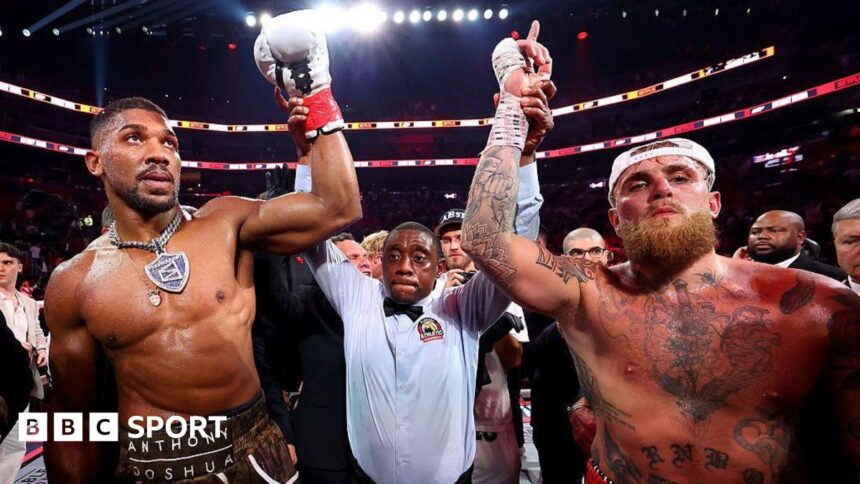
The spectacle was global, the hype was immeasurable, but the reality inside the ring was brutally one-sided. Jake Paul’s ambitious leap into the deep end of heavyweight boxing against Anthony Joshua ended in a predictable, yet starkly revealing, sixth-round knockout. In the aftermath, while social media buzzed with memes and hot takes, the most damning analysis came from the pinnacle of the sport. Hall of Fame former undisputed world heavyweight champion Lennox Lewis delivered a concise, technical autopsy, pinpointing a fundamental flaw: Jake Paul’s physical conditioning was catastrophically inadequate for the task at hand.
A Legend’s Verdict: Lewis Dissects the Defeat
Speaking to Netflix, which streamed the event, Lennox Lewis cut through the narrative of a brave challenge. His critique wasn’t about celebrity boxing; it was about the basic tenets of heavyweight combat. “Paul wasn’t in good shape, especially for a big heavyweight like that,” Lewis stated. This simple observation from a man who conquered the era of Holyfield and Tyson carries immense weight. He elaborated, noting the fight’s rapid decline: “After a couple rounds it showed, he was basically sitting there waiting to get hit.”
This analysis frames the entire fight. Paul, known for his athleticism and dedication in previous bouts against mixed martial artists and fellow influencers, appeared a step slower, a thought behind, and crucially, unable to muster the engine to survive against an elite athlete like Joshua. The statistics scream in support of Lewis’s claim. According to official compubox numbers, Jake Paul landed just 16 punches in nearly six rounds of action—a startlingly low output that underscores a fighter in survival mode from the opening bell.
The Anatomy of a Mismatch: Where the Fight Was Lost
Lewis’s comment about “good shape” transcends mere cardio. For a heavyweight facing a concussive puncher like Joshua, it encompasses everything:
- Ring Mobility: To avoid Joshua’s punishing jab and right hand, Paul needed constant, alert movement. After a brief initial flurry, his feet became cemented, making him a stationary target.
- Core Strength & Recovery: Even blocked shots from a 250-pound champion sap energy and compromise posture. Paul’s inability to absorb and recover from these impacts, even from defensive positions, pointed to a physical deficit.
- Explosive Capacity: Any offensive game plan requires the ability to launch attacks in bursts. Paul’s singular, looping shots lacked the snap or combination work needed to earn Joshua’s respect, a direct result of fading energy reserves.
The fight’s trajectory followed Lewis’s diagnosis to the letter. The early rounds saw a tentative but present Paul. By the middle rounds, he was “sitting there,” as Lewis said, increasingly reliant on a high guard while Joshua systematically broke him down to the body and head. The knockout in the sixth was a formality, the culmination of a physical erosion that began much earlier.
Big-Name Reaction: A Chorus of Reality
Lewis’s voice led a chorus of professional fighters and analysts who echoed similar sentiments, shifting the conversation from the spectacle to the sport’s harsh standards.
Tyson Fury, the current WBC champion, remarked in a post-fight interview, “It was always a tall order. AJ is a top-three heavyweight in the world. You need more than confidence; you need a lifetime of craft and the condition to go to war. It was a learning experience for Jake.” Fury’s words, while less pointed than Lewis’s, reinforce the conditioning gap.
Former cruiserweight king and prominent analyst Tony Bellew was more blunt on social media: “You can’t buy experience. You can’t shortcut fitness at this level. AJ is a monster who fights monsters. The levels were painfully obvious tonight.” The term “levels” has become boxing shorthand for the vast gulf between a dedicated prospect, which Paul arguably is, and a seasoned, world-class operator.
Even within the influencer boxing sphere, the reaction was sobering. KSI, Paul’s longtime rival and business partner in the PFL, posted a succinct message: “The heavyweight division is no joke. Respect for getting in there, but damn.” The message was clear: the experiment revealed a ceiling.
What’s Next for Jake Paul? Crossroads After Reality Check
This loss represents a pivotal crossroads for Jake Paul’s boxing enterprise. The “Problem Child” narrative, built on defeating aging MMA stars and athletes from other sports, has hit a definitive wall named Anthony Joshua. The path forward is now fraught with difficult questions.
Option 1: The Return to “Influencer” Tier. The most likely path is a reset. Fights against the winner of KSI vs. Alex Pereira in MMA, or a long-anticipated bout with Tommy Fury in a rematch, suddenly become pragmatic and financially lucrative. These are winnable fights that protect his brand but acknowledge the limits exposed by Joshua.
Option 2: The Serious Heavyweight Pursuit. If Paul is genuinely committed to being a “real” heavyweight, Lewis’s critique becomes his blueprint. It would require:
- A complete, 18-24 month dedicated camp with elite, traditional boxing trainers.
- Fights against legitimate, ranked cruiserweights before even considering another heavyweight.
- A physical transformation focused on the specific, grueling demands of the heavyweight division—the very “good shape” Lewis cited.
This path is long, dangerous, and offers no guarantee of success. The Joshua fight proved that his current model does not translate to the top tier.
Conclusion: A Lesson Etched in the Ring
The headline “Paul not in good shape” will sting more than any punch Jake Paul absorbed. Coming from Lennox Lewis, it is not an insult but a clinical fact—a diagnosis from the sport’s highest authority. The fight against Anthony Joshua was ultimately a referendum on the difference between being in shape for a boxing match and being in world-class heavyweight fighting condition.
Jake Paul deserves credit for his audacity and for bringing unprecedented eyes to the sport. However, the ring remains the ultimate truth-teller. On this night, it told a story of ambition colliding with a cold, physical reality. Lewis’s analysis ensures that story isn’t about a mere loss, but a vivid lesson in the non-negotiable fundamentals of boxing at its most brutal and elite level. Whether Paul treats it as a final chapter or a painful first lesson in a longer, harder book is the next great question of his unconventional career.
Source: Based on news from BBC Sport.