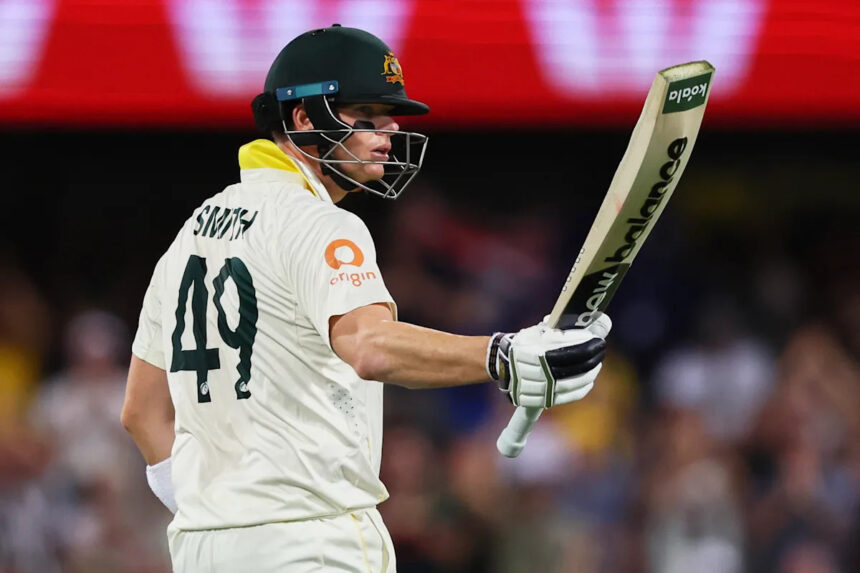
Steve Smith’s Boxing Day Target: Australia’s Ashes Hopes Hinge on Inner Ear Battle
The Ashes, cricket’s most storied rivalry, is as much a war of attrition as it is of skill. On the eve of the crucial day-night third Test in Adelaide, Australia’s campaign was jolted by a medical mystery, not a fast bowler’s blow. Steve Smith, the linchpin of the Australian batting order, was dramatically ruled out minutes before the toss, sending shockwaves through the home camp and altering the tactical landscape of the entire series. The diagnosis? Not a broken bone or torn muscle, but a debilitating bout of dizziness and nausea stemming from a potential vestibular issue—a problem rooted deep within the inner ear. Now, with Australia leading the series 2-0, the nation holds its breath, hoping its premier batter can win his personal health battle in time for a Boxing Day return at the hallowed MCG.
The Adelaide Agony: A Late Scratch Sends Shockwaves
The scene on the Adelaide Oval outfield was one of intense, last-minute drama. As the pink ball sat waiting and England’s bowlers warmed up, Steve Smith was deep in conversation with coach Andrew McDonald. Their body language told the story: this was no casual chat. For nearly an hour, they deliberated, with Smith undergoing final fitness tests. The collective hope was that the champion batter had shaken off the vertigo-like symptoms that had plagued him since Tuesday. Ultimately, the decision was one of extreme caution. Rushing him back risked exacerbating the issue and, in a five-Test series, protecting a player of Smith’s caliber for the long game was paramount. The late withdrawal triggered an unexpected recall for Usman Khawaja, who stepped into the crucial No. 4 role, a testament to Australia’s batting depth but a undeniable downgrade in psychological pressure on England.
The Australian medical team moved quickly to quell speculation, explicitly ruling out concussion from a net session. By pinpointing a vestibular issue, they identified a complex problem. The vestibular system, located in the inner ear, is our primary source of balance and spatial orientation. When it malfunctions, it can cause severe vertigo, nausea, and an inability to focus—catastrophic symptoms for a batter requiring pinpoint hand-eye coordination and a stable head position to face 90mph deliveries. This wasn’t about pain tolerance; it was about fundamental physiological function.
Decoding the Vestibular Issue: A Batter’s Nightmare
For a layperson, dizziness might seem a minor inconvenience. For an elite athlete, especially a batter, it’s a career-halting condition. Expert analysis suggests this goes far beyond simply “feeling off.”
- Balance and Stability: The core of batting is a still head and a balanced base. A compromised vestibular system directly attacks this foundation, making the world feel like it’s tilting. Tracking a swinging, seaming cricket ball becomes nearly impossible.
- Focus and Concentration: The nausea and vertigo associated with these issues are profoundly distracting. The intense concentration required to bat for sessions at a time is unsustainable when the body is sending urgent, erroneous signals about its position in space.
- Risk of Aggravation: The violent, sudden movements inherent in batting—ducking bouncers, quick singles, dynamic stroke play—could worsen the symptoms, potentially leading to a longer-term problem.
“This is a smart move by the Australian medical staff,” notes a veteran sports physiotherapist. “Pushing him out in Adelaide could have turned a 3-4 day recovery into a 3-4 week ordeal. They are managing the asset. The Boxing Day Test is the logical target, giving him over a week of targeted rehab and rest.”
The Khawaja Gambit and Australia’s Tactical Reshuffle
Smith’s absence forced an immediate and significant tactical reshuffle. Usman Khawaja’s recall was a surprise, given he was not initially in the squad, but a logical one. His experience and class at No. 4 provided stability. More intriguing was the decision not to open with him, keeping the in-form pairing of David Warner and Marcus Harris intact. This indicated a desire to minimize disruption to the top order, slotting Khawaja into the middle-order role he has often occupied for Queensland.
However, Smith’s void is about more than just runs. It’s about aura. His presence at the crease is a psychological weight on opposing captains and bowlers. His unorthodox style and freakish ability to score in any situation change field placements and bowling plans. Khawaja, while supremely talented, does not command that same psychological territory. England’s attack, demoralized after the first two Tests, would have felt a palpable lift seeing Smith’s name absent from the team sheet. Australia’s first-innings batting in Adelaide will be the first true test of their resilience without their superstar.
The Road to Melbourne: Predictions for Boxing Day and Beyond
All eyes now turn to Melbourne and the iconic Boxing Day Test. The prognosis for Smith’s return is cautiously optimistic. Vestibular issues, if treated promptly and correctly, can resolve relatively quickly with rest and specific vestibular rehabilitation exercises. The Australian medical team will be meticulously monitoring his progress through a graduated return to training: first light activity, then fielding drills, then net sessions facing throwdowns, and finally, full-paced bowling.
Prediction 1: Smith will play at the MCG. Barring a significant setback, the extra days of recovery will be sufficient. The symbolic importance of Boxing Day and the chance to potentially seal the Ashes will see every effort made to get him fit.
Prediction 2: His return will be monumental. A fit and focused Steve Smith, returning after the frustration of watching from the sidelines, is a terrifying prospect for England. Expect a determined, big-scoring performance if he walks out to bat on December 26th.
Prediction 3: This episode highlights sport’s fragility. The Ashes narrative was flipped not by a blistering spell or a monumental century, but by a tiny, delicate system in the inner ear. It’s a stark reminder that athletes, for all their superhuman feats, are subject to the same human vulnerabilities as anyone else.
Conclusion: A Test of Depth and Resolve
The 2021-22 Ashes series has added an unexpected subplot: the health of Steve Smith’s inner ear. His late withdrawal in Adelaide was a masterclass in prudent sports medicine, prioritizing a player’s long-term well-being over short-term gain. It immediately became a test of Australia’s depth and a potential lifeline for a reeling England. The coming days will be a race against time, with Smith and the medical team working towards that singular goal: a walk onto the MCG on Boxing Day. If he makes it, the roar will be for more than just his return; it will be a celebration of resilience. For Australia, a 3-0 lead with Smith back in the fold would be an almost insurmountable position of strength. For England, it’s a fleeting glimpse of hope that may slam shut just as the Melbourne Cricket Ground gates open. The Ashes, once again, hangs in a delicate balance.
Source: Based on news from Yahoo Sports.