Elana Meyers Taylor’s Final Olympic Quest: The Brakeman Battle Before the Glory
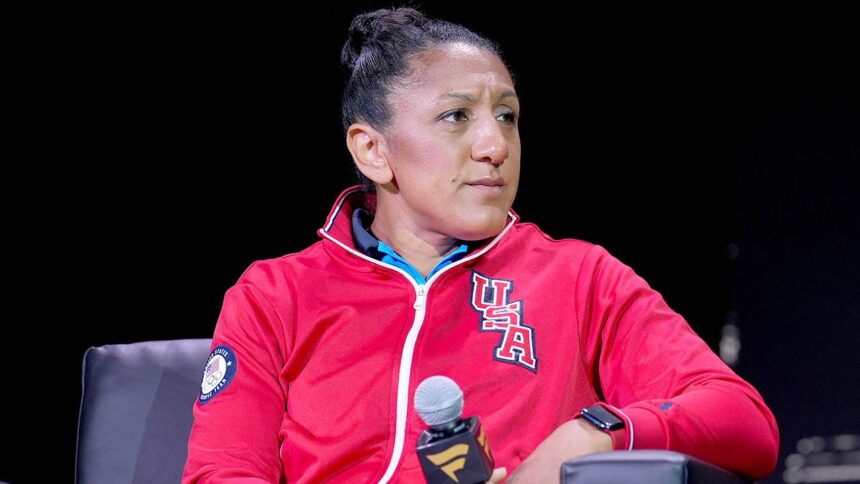
The road to a fifth Olympic Games is never smooth, but for Team USA bobsled legend Elana Meyers Taylor, the final ascent toward the Milan-Cortina 2026 Winter Olympics has hit an unexpected and grueling curve. Just months before what is anticipated to be her farewell appearance on the world’s biggest stage, the most decorated U.S. bobsledder in history is locked in a critical fight not on the ice, but in the hearing room. The challenge? Securing the right brakeman for her sled—a decision so pivotal it has escalated to not one, but two arbitration cases. This pre-Games drama underscores a fundamental truth in bobsled: the driver may be the pilot, but the pusher is the engine. For Meyers Taylor, finding the perfect synergy for her final push is a quest that could define her legacy.
The Weight of Legacy: A Champion’s Unfinished Business
Elana Meyers Taylor’s resume is the stuff of American Olympic legend. With five Olympic medals—three silver and two bronze—spanning four consecutive Games, she has been the bedrock of U.S. women’s bobsled for over a decade. Her transition to the new monobob event was seamless, capturing a silver medal in its debut at Beijing 2022. Yet, that collection of hardware, historic as it is, carries a subtle, driving narrative: she is the most decorated U.S. Olympic bobsledder without a gold medal.
This fact is not lost on the fiercely competitive athlete. At 40 years old, heading to her fifth Games, Milan-Cortina represents her last, best chance to ascend to the top of the podium. The monobob competition offers a direct shot, but the two-woman event, where chemistry with a brakeman is paramount, remains a coveted prize. The arbitration cases reveal just how seriously Meyers Taylor is taking this final chapter. She isn’t just looking for a pusher; she is searching for a partner who can help rewrite the final line of her career story from “most decorated” to “Olympic champion.”
Decoding the Brakeman Battle: More Than Just a Pusher
To the casual observer, a brakeman’s job seems simple: push as hard as possible, then jump in. In reality, the role is a complex blend of raw power, precise technique, and intangible synergy. The selection process is both art and science, often leading to difficult choices and, as we see now, formal disputes.
The arbitration cases likely center on the selection criteria and process used by the national governing body. Key factors at play include:
- Push Times: Objective, clocked data from combine testing and on-ice start ramps.
- Race Performance: Results and consistency in World Cup and other international competitions.
- Driver Preference: The subjective but crucial element of feel, trust, and in-sled communication.
- Team Strategy: Balancing the best pairings across multiple sleds to maximize overall medal potential for Team USA.
With three powerhouse pilots—Meyers Taylor, Kaillie Humphries (the reigning monobob gold medalist), and rising star Kaysha Love—vying for a limited pool of elite push athletes, the competition for talent is intense. Meyers Taylor’s decision to pursue arbitration signals a profound disagreement over which athlete gives her sled the best chance to win. It’s a high-stakes calculation where hundredths of a second at the start can determine Olympic glory.
The Contenders and the Chemistry Equation
While specific names involved in the arbitration are not public, the pool of elite U.S. women’s brakemen includes powerful athletes like Sylvia Hoffman, Emily Renna, and perhaps newer faces emerging from the development pipeline. Each brings a different profile.
Meyers Taylor’s history shows she values more than just power. Her most successful partnerships have been built on relentless work ethic and seamless teamwork. The ideal candidate for her final campaign must possess:
- Explosive Starting Power: To gain a critical early advantage on the field.
- Technical Consistency: To execute perfect load-ins under immense pressure.
- Proven Partnership Pedigree: Experience in big moments is invaluable.
- Unshakeable Mental Fortitude: The Olympics test nerves as much as physical skill.
This situation is further complicated by the presence of Kaillie Humphries, another driver with the clout of a champion and her own strong preferences. The federation’s task is to optimize the entire team’s output, which can sometimes conflict with an individual driver’s desire. Meyers Taylor, by forcing the issue through arbitration, is making it unequivocally clear that she believes her gold-medal pursuit should be a paramount consideration.
Predictions: Turbulence Now, Focus for the Final Run
How will this unprecedented pre-Games drama resolve, and what does it mean for Team USA’s medal hopes?
First, the arbitration process, while distracting, will force a definitive resolution. This clarity, though arrived at through conflict, may ultimately benefit Meyers Taylor by removing any doubt about her crew. She will know she has the brakeman deemed correct by the final arbiter, allowing total focus on training.
Second, expect Meyers Taylor to channel this adversity into fuel. Her career has been marked by overcoming obstacles, from being a trailblazer in a power sport to returning to peak form after motherhood. This legal battle is another hurdle, and her history suggests she emerges stronger. The 2026 Winter Olympics monobob and two-woman events will be must-watch television, with the narrative of her “last dance” amplified by this early struggle.
Finally, for Team USA, this public airing of selection strife is a double-edged sword. It reveals a deep competitive intensity that can drive excellence but also risks team cohesion. The federation’s handling of the outcome will be critical to ensuring all pilots and push athletes can unite under the American flag in Italy.
Conclusion: The Final Push for History
Elana Meyers Taylor’s journey to a fifth Olympic Games has become about more than just training runs and weightlifting. The brakeman challenge she now faces is a testament to her unwavering pursuit of perfection. In fighting for the right partner, she is fighting for the final, missing piece of her iconic legacy: an Olympic gold medal.
This arbitration saga underscores the microscopic margins that define Olympic bobsled. It highlights the profound human element within a technologically driven sport—the trust, rhythm, and shared purpose between driver and brakeman. As the winter of 2026 approaches, all eyes will be on Meyers Taylor, not just for her driving prowess but for the resolution of this partnership puzzle. One thing is certain: when she settles into the sled at Cortina, the athlete behind her will have been chosen through the fiercest of scrutinies. And for a champion with unfinished business, that may be exactly the foundation needed for one final, historic push into the light.
Source: Based on news from Fox Sports.