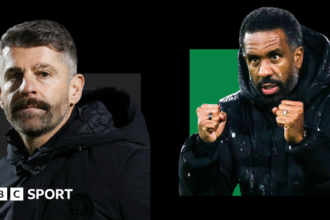
Tears & a Tactical Tweak: How Stephen Robinson Hatched St Mirren’s Historic Triumph
On the morning of what would become a legendary chapter in St Mirren’s history, the air inside their Hampden Park dressing room was thick with a surprising emotion: tears. Not of fear, but of profound, raw motivation. As the football world outside buzzed with the inevitable coronation of Celtic, Stephen Robinson, the man orchestrating a quiet revolution in Paisley, was preparing his final, masterful stroke. It wasn’t a complex set-piece or a defensive drill. It was a video montage of smiling children, proud partners, and beaming parents. This is the untold story of how a manager’s emotional intelligence, fused with a critical tactical adjustment, forged one of Scottish football’s greatest modern cup shocks.
The Emotional Catalyst: Playing for More Than a Trophy
In the high-pressure cauldron of a cup final, especially against a domestic giant, managers often resort to fiery speeches or tactical ultimatums. Stephen Robinson chose a path of profound connection. In a move that caught every player off guard, he had secretly compiled messages and photographs from the families of his squad. The reveal was devastatingly simple and effective.
“We had a little moment before the game, where the manager showed us a video of all our families and we were all emotional,” revealed young defender Miguel Freckleton. “None of us knew about it, so he stuck on a family photo and then he started going around and everyone was ready for their family.”
This was not mere sentimentality; it was a calculated psychological masterstroke. The message, “This is who you’re doing it for,” redirected the players’ focus. The weight of the occasion was transformed from a burden into a purpose. The 90 minutes ahead were no longer just about defying odds; they were about honoring the sacrifices of those who supported them through lower-league loans, injuries, and doubt. It created an unbreakable bond and a visceral reason to fight for every ball. This emotional priming was the essential foundation upon which the tactical battle could be won.
The Tactical Masterstroke: Neutralizing the Celtic Threat
While the heart was being fortified, Robinson’s mind was solving a complex tactical puzzle. Celtic, under Ange Postecoglou, were synonymous with relentless, wide attacking play and overwhelming possession. The conventional wisdom was to sit deep in a low block. Robinson, however, devised a plan of aggressive containment.
The key was St Mirren’s midfield shape and disciplined press. Robinson set his team up in a compact 5-3-2 that morphed into a 3-4-3 out of possession. The critical instructions were:
- Aggressive Middle Third Press: Saints did not retreat to their box. Instead, they pressed Celtic ferociously in the middle third, disrupting the rhythm of Callum McGregor and forcing hurried passes.
- Wing-Back Discipline: The wing-backs, Marcus Fraser and Scott Tanser, had the monumental task of tucking in to deny space for Celtic’s inverted wingers, while being ready to spring forward on the counter. Their positional intelligence was flawless.
- Dual Striker Threat: In Curtis Main and Jonah Ayunga, St Mirren possessed a physical, combative duo who pinned Celtic’s centre-backs, preventing them from stepping into midfield comfortably. They were the first line of defence and the focal point of every clearance.
The most crucial tactical tweak came in the second half. Sensing Celtic’s increasing desperation and width, Robinson subtly shifted his midfield line five yards deeper. This small adjustment further clogged the central channels and forced Celtic into increasingly predictable and hopeful crosses, which the colossal centre-back trio of Joe Shaughnessy, Charles Dunne, and Richard Tait repelled with authority.
Expert Analysis: The Robinson Blueprint for Success
What Robinson has built at St Mirren is a testament to modern, holistic management. This victory was not a fluke; it was the culmination of a long-term project built on clear identity. Robinson’s Saints are defined by extraordinary fitness, unwavering organization, and a collective spirit that is palpable.
Football analysts point to the “marginal gains” philosophy. Robinson’s family video is a psychological marginal gain. The subtle midfield shift is a tactical marginal gain. The development of players like Ethan Erhahon and the leadership of experienced heads like Joe Shaughnessy are cultural marginal gains. In a final decided by a single goal, these increments become the difference.
Furthermore, Robinson’s man-management must be highlighted. He has created an environment where youth team graduates like Jay Henderson share a dressing room with seasoned pros, all united by a common, emotionally-charged cause. He makes every player understand their role, and more importantly, feel valued in executing it. This final was the ultimate validation of that culture.
Legacy and Predictions: What’s Next for St Mirren and Robinson?
This victory eternally secures Stephen Robinson’s status as one of St Mirren’s greatest managers. The question now turns to legacy and what comes next. The immediate prediction is a surge of belief that can propel their Premiership campaign. European football is now a realistic target, not a fantasy.
For Robinson, the victory brings inevitable attention. He has proven he can construct a team capable of beating the best with limited resources—a coveted skill. However, the project in Paisley seems unfinished. The board’s challenge is to support him with the means to build on this success, potentially resisting interest from elsewhere.
- Short-Term (Rest of Season): A confident push for a top-six finish and a historic European qualification spot.
- Medium-Term (Squad Building): The task will be to refresh the squad while maintaining its core identity and spirit. Holding onto key assets will be crucial.
- Long-Term (Legacy): Robinson has the chance to establish St Mirren as a consistent top-half force, changing the club’s perception permanently.
A Victory Forged in Heart and Mind
St Mirren’s Premier Sports Cup triumph will be remembered for a resolute defensive display and a clinical finish. But its true origins lie in a tearful morning meeting and a manager’s courageous tactical conviction. Stephen Robinson understood that to slay a giant, his players needed a reason bigger than tactics, bigger than the club, even bigger than themselves. He gave them that reason in the faces of their families.
He then equipped them with a plan that turned stifling pressure into a platform for victory. This was a win for emotional intelligence, for meticulous preparation, and for the enduring power of collective will over individual talent. In Paisley, they will speak of this day for generations. And at the heart of the story will be a manager who knew that to make his team invincible, he first had to make them cry.
Source: Based on news from BBC Sport.