Texas Star Azeez Al-Shaair Fined for “Stop the Genocide” Eye Black Message
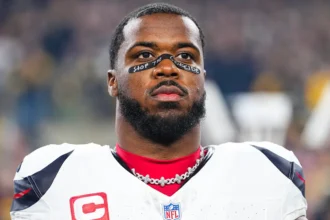
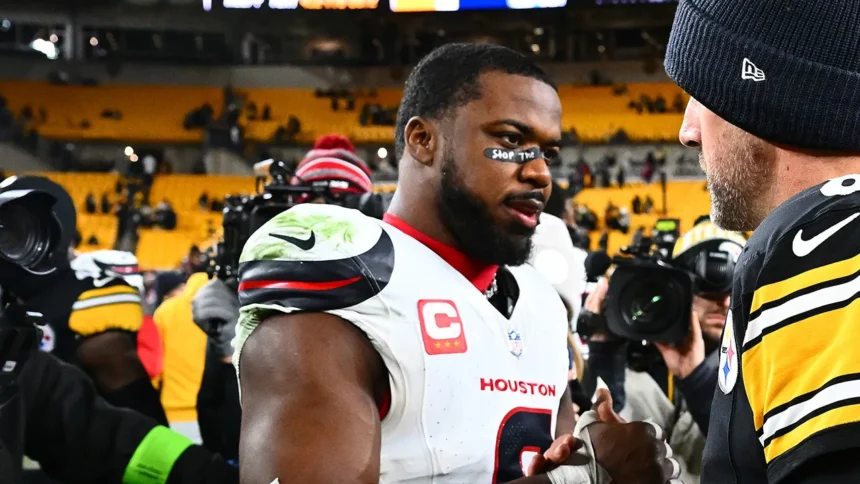
The NFL playoffs are a crucible of pressure, where every play is magnified and every detail scrutinized. For Houston Texans linebacker Azeez al-Shaair, a personal statement made in this high-stakes arena has sparked a national conversation that extends far beyond the gridiron. During the Texans’ dominant 30-6 Wild Card victory over the Pittsburgh Steelers, al-Shaair took the field with a message scrawled on his eye black: “Stop the genocide.” This act of silent protest, a likely reference to the ongoing conflict in Gaza, has now resulted in a reported $11,593 fine from the NFL for violating league uniform policy, placing the athlete at the center of a complex debate about sports, politics, and personal expression.
The Fine Line: NFL Uniform Policy vs. Player Expression
The National Football League maintains a strict and detailed policy regarding player uniforms and equipment. The rules are designed to promote a consistent team and league image, maintain safety standards, and prevent unauthorized commercial endorsements or messages. According to reports from ESPN, al-Shaair’s fine was levied specifically for wearing a “personal message,” a clear breach of these regulations.
This incident is not without precedent. The league has a long history of enforcing its uniform code, with fines for everything from sock length to cleat color. However, fines for socio-political messages carry a heavier symbolic weight. The NFL’s stance was famously crystallized in 2016 when then-San Francisco 49ers quarterback Colin Kaepernick began kneeling during the national anthem to protest racial injustice. The league subsequently instituted a policy—later walked back—requiring players to stand or remain in the locker room.
Key aspects of the NFL’s uniform policy relevant to this case include:
- Prohibition of Personal Messages: Equipment or uniform items cannot display personal messages, logos, or symbols unless approved by the league for a specific cause or initiative (like My Cause My Cleats).
- Consistency and Team Identity: The policy emphasizes that players must present a uniform appearance as a team, minimizing individual alterations.
- Enforcement Through Fines: Violations are typically met with escalating fines, starting at a set amount for a first offense.
By the letter of the law, the NFL’s action is straightforward. Al-Shaair modified his uniform in an unapproved manner and was fined. Yet, the context transforms a routine administrative penalty into a flashpoint.
Azeez Al-Shaair: A Player with a Purpose
To understand the significance of this act, one must look at the man behind the helmet. Azeez al-Shaair is more than a standout linebacker having a career year with the Texans; he is a player deeply connected to his faith and heritage. His first name, Azeez, is of Arabic origin meaning “powerful and beloved.” While he has not made extensive public comments on the Israel-Gaza conflict, his choice of message suggests a deep personal conviction.
This season, al-Shaair has emerged as a defensive leader for Houston, a key free-agent signing who brought toughness and production. His performance on the field has given him a platform. Using that platform, even in a way that incurs a penalty, aligns with a growing trend of athletes who see their role as extending beyond sport. For al-Shaair, the nearly $12,000 fine may represent the cost of conscience—a financial penalty weighed against the value of raising awareness for a cause he believes in.
This moment also highlights the evolving role of the athlete-activist. In an era where social media provides a direct channel to the public, on-field gestures remain uniquely powerful due to their visibility during major events. Al-Shaair’s message reached millions of viewers in real-time, a stark, silent contrast to the roaring spectacle of playoff football.
Expert Analysis: The Unwritten Rules of Protest in Pro Sports
Sports sociologists and media analysts note that professional leagues like the NFL walk a perpetual tightrope. “The league wants the cultural relevance that comes from players being authentic and engaged citizens, but it desperately wants to control the narrative and avoid alienating any segment of its vast fanbase,” explains Dr. Lena Michaels, a professor of sports media. “The uniform policy is the primary tool for that control. It’s a content-neutral justification that allows the league to manage messages without always having to debate the politics themselves.”
The “Stop the genocide” message is particularly potent because of its terminology and timing. It is a direct, unequivocal phrase that cuts through the often-ambiguous language of sports diplomacy. By wearing it during a playoff game—the NFL’s most-watched product—al-Shaair guaranteed maximum impact and, consequently, a guaranteed league response.
This incident also raises questions about selective enforcement and allowable causes. The NFL actively promotes initiatives like Salute to Service (military appreciation) and Crucial Catch (cancer awareness), allowing modified gear. The line between a league-approved cause and a player’s personal cause is the demarcation of acceptable speech. Al-Shaair’s protest fell outside that boundary, testing its limits.
Predictions: Ripple Effects and Future Protests
The fallout from this fine will likely manifest in several ways:
- Appeal and Quiet Payment: Al-Shaair may appeal the fine through the NFL Players Association, but such appeals are rarely successful for uniform violations. He may choose to pay it quietly, letting the act speak for itself.
- Increased Scrutiny: League officials and team equipment managers will likely be more vigilant in checking players’ gear before games, particularly in high-profile contests.
- Inspiration for Subtler Methods: Other players with strong views may be deterred from direct uniform modifications but could be inspired to express themselves through other means: post-game interviews, social media, or community actions. The “My Cause My Cleats” week may see more participants choosing causes related to international humanitarian issues.
- Fan and Sponsor Reaction: The divide in public reaction will follow broader societal lines. Some will laud al-Shaair’s courage; others will believe he should “stick to sports.” The Texans and the NFL will monitor this closely, as sponsor sentiment often follows fan sentiment.
Ultimately, this event signals that the era of athlete activism is not over but adapting. In a politically charged climate, the playing field remains a contested space for symbolic statements.
Conclusion: More Than a Fine—A Symbolic Moment in Sports
Azeez al-Shaair’s $11,593 fine is a footnote in the NFL’s ledger, but the message he wore is indelible. This episode underscores the tension at the heart of modern professional sports: leagues are cultural institutions that thrive on the personalities and passions of their players, yet they seek to commodify and control that passion within the bounds of commercial interests. Al-Shaair, in a moment of silent protest, exposed that tension on one of sports’ biggest stages.
His action transcends a simple uniform violation. It is a case study in calculated advocacy, where the cost of the fine was presumably factored into the value of the statement. It reminds us that athletes are multifaceted individuals who carry the weight of the world with them, even onto the field. Whether one agrees with his message or not, al-Shaair’s decision highlights the enduring power of the athlete’s platform and the complex, often costly, choices they face when deciding to use it. As the Texans continue their playoff run, the conversation sparked by their linebacker’s eye black will continue long after the final whistle, proving that some messages cannot be contained by league policy.
Source: Based on news from Fox Sports.