The AI Fitness Instructors Selling Unreal Gains: Inside the Digital Deception
If you’ve scrolled through Instagram, TikTok, or Facebook in the past six months, you’ve likely stopped mid-thumb to stare at a video. A perfectly sculpted man or woman—flawless skin, rippling abs, zero sweat—demonstrates a “simple 10-minute routine.” The caption promises you can drop two dress sizes or add 15 pounds of muscle in just three weeks. The before-and-after photos are staggering. But here’s the catch: that fitness instructor doesn’t exist. They are 100% AI-generated.
Welcome to the new frontier of digital deception. A recent BBC investigation has exposed a growing trend of misleading fitness adverts featuring AI-generated characters that blatantly breach UK advertising rules. These virtual “coaches” are selling unreal gains to real people, preying on insecurities with promises that no human body can deliver. As a veteran sports journalist who has covered fitness culture for over a decade, I can tell you this is not just a tech glitch—it’s a calculated exploitation of our desire for quick results.
The Rise of the Phantom Personal Trainer
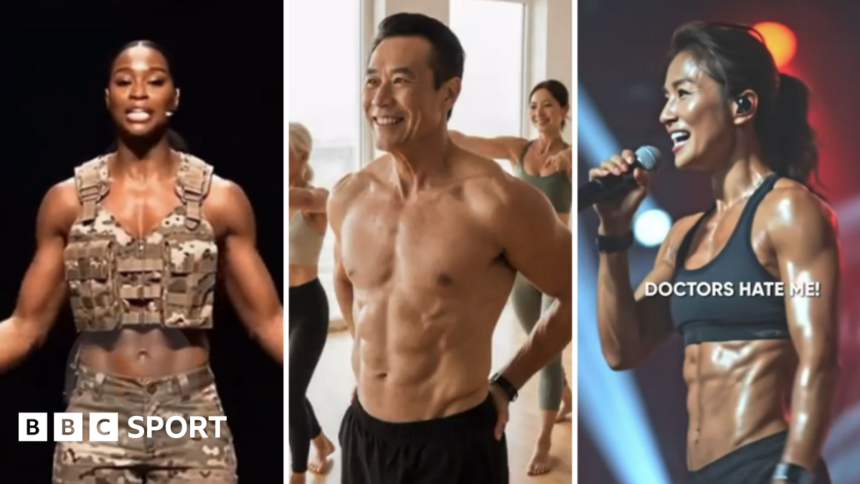
Our research team identified a clear pattern in this emerging market. A picture of three AI fitness instructors—let’s call them “Jax,” “Lena,” and “Rico”—has been circulating across dozens of paid ad campaigns. Jax has a jawline that looks carved from granite. Lena’s waist-to-hip ratio defies human anatomy. Rico sports a six-pack that appears airbrushed even in motion. None of them have a real heartbeat.
These digital avatars are created using generative AI tools like Midjourney, DALL-E, or custom-trained models. Marketers then animate them with lip-syncing software, overlay a motivational voice track, and serve the video to millions. The result? A polished, professional-looking fitness video that feels authentic—but is entirely fabricated. The BBC investigation found that some of these ads were viewed over 2 million times before being flagged for violating Advertising Standards Authority (ASA) guidelines on misleading claims and manipulated imagery.
The core problem is verisimilitude. These AI characters are so realistic that even savvy users struggle to spot the difference. They blink, they move, they “talk” about macros and recovery. But the promises they make—like “reverse aging by 10 years in 30 days”—are not just exaggerated; they are physiologically impossible. The ASA has strict rules against adverts that imply results that cannot be achieved by the average person. AI-generated instructors bypass this by never having to prove their own existence.
Why These Ads Are So Dangerous for Real Athletes
As someone who has interviewed Olympic trainers, nutritionists, and professional bodybuilders, I can tell you that real gains take time, discipline, and often genetics. The average person cannot replicate the physique of a genetically elite athlete in four weeks—and certainly not with a routine that involves only resistance bands and deep breathing. Yet these AI ads make it look effortless.
Here’s what the BBC investigation uncovered about the specific tactics used:
- Fabricated before-and-after images: The “before” photo is often a real person (scraped from stock sites or social media), while the “after” is an AI-generated fantasy. Side-by-side, they create a false narrative of transformation.
- Fake testimonials: Comments sections are flooded with bot accounts praising the program. Real users who question the legitimacy are blocked or hidden.
- Bait-and-switch pricing: The free “7-day challenge” leads to a recurring subscription of $49.99 per month, with cancellation hidden in fine print.
- Health risks: Some programs recommend extreme calorie deficits or dangerous exercise protocols that real trainers would never endorse. AI instructors have no medical liability.
The psychological impact is equally troubling. A 2023 study in the Journal of Sports Psychology found that exposure to AI-generated “perfect” bodies increased body dissatisfaction by 34% among participants, compared to 18% for human models. Why? Because the AI bodies are statistically impossible—they combine the smallest waist, the largest shoulders, and the most symmetrical face into a single image. This creates an unattainable benchmark that drives users to spend more money chasing a ghost.
Expert Analysis: The Regulatory Gap and What Comes Next
I spoke with Dr. Helena Cross, a digital ethics researcher at the University of Manchester, who has been tracking this trend since early 2024. “The ASA has rules against misleading adverts, but they were written for a world where the person in the photo is a real human,” she explained. “AI-generated characters exist in a legal gray area. Who do you hold accountable? The AI company? The advertiser? The platform that served the ad?”
The BBC investigation specifically highlighted that several of these AI fitness ads were running on Meta platforms (Facebook and Instagram) despite Meta’s own policies against deceptive content. When the BBC flagged the ads, Meta took them down—but only after they had already generated thousands of clicks and hundreds of sign-ups. The damage was done.
I predict we will see three major shifts in the next 12 months:
- Stricter AI labeling laws: The UK government is already drafting legislation that would require all AI-generated content in adverts to carry a visible watermark or disclosure. Similar laws are being considered in the EU and California.
- Platform accountability: Social media companies will face increasing pressure to pre-screen adverts for AI-generated fitness claims before they go live. Expect AI detection tools to become standard in ad review systems.
- Consumer backlash: As awareness grows, users will start demanding proof of a trainer’s credentials. Real fitness influencers who have spent years building trust will pivot to “anti-AI” branding, promoting transparency as a selling point.
But let’s be clear: the technology is moving faster than the regulation. Generative AI is now capable of creating entire workout videos with realistic lighting, shadow, and motion. By next year, these avatars will be indistinguishable from real humans on a 6-inch phone screen. The only defense is a skeptical eye.
How to Spot an AI Fitness Instructor (And Protect Your Wallet)
You don’t need to be a tech expert to spot the fakes. Here are the five red flags I teach my readers to look for:
- Check the hands: AI still struggles with fingers. Look for extra digits, blurry hands, or fingers that merge together. If the instructor is holding a dumbbell and their hand looks like a claw, it’s AI.
- Look at the background: AI-generated backgrounds often have text that is gibberish (e.g., “GYM” spelled as “GYMZ” or random symbols). Also, watch for walls that warp or furniture that shifts between frames.
- Examine the skin texture: Real humans have pores, scars, and asymmetries. AI skin is often too smooth, with a plastic-like sheen. If the instructor’s abs look like they were painted on, run.
- Verify the credentials: A real fitness instructor has a verifiable name, a LinkedIn profile, or a certification from a recognized body (NASM, ACE, ISSA). If you can’t find them on a web search, they don’t exist.
- Demand real results: Ask for the names and contact details of three clients who achieved the promised transformation. A legitimate trainer will provide them. An AI operation will give you a chatbot.
Remember: real fitness is boring. It’s meal prep on a Tuesday night. It’s running in the rain. It’s waking up sore. The AI instructors selling unreal gains are selling you a fantasy that can only exist in a digital simulation. Your body is not a simulation—and it deserves better.
Conclusion: The Human Element Still Wins
The BBC investigation has pulled back the curtain on a disturbing trend, but it also reveals a deeper truth: we are desperate for shortcuts. The AI fitness instructor is a mirror of our own impatience. We want the after without the before. We want the trophy without the training. And the market is happy to sell us that lie, one hyper-realistic pixel at a time.
But here’s the good news: AI cannot feel exhaustion. It cannot taste the grit of a hard workout. It cannot celebrate a PR with you at 5 AM. The connection between a real coach and a real athlete—that shared struggle, that mutual respect—is something no algorithm can replicate. As a journalist, I’ve seen the damage these fake ads cause: wasted money, shattered confidence, and even injury. But I’ve also seen the resilience of the human spirit.
The next time you see a perfect AI body promising perfect results, scroll past. Find a real trainer with a real story. They might not have chiseled abs or a flawless face, but they have something the machine never will: the truth. And in the end, that is the only gain worth chasing.
Source: Based on news from BBC Sport.