The Battle for Sixth: Why Premier League Teams Might Need to Lose on the Final Day to Win the Champions League
The Premier League table is a strange beast in May. Usually, by this point, the top four are settled, the title race is a foregone conclusion, and the relegation scrap is the only source of genuine drama. But not this season. Not in 2024.
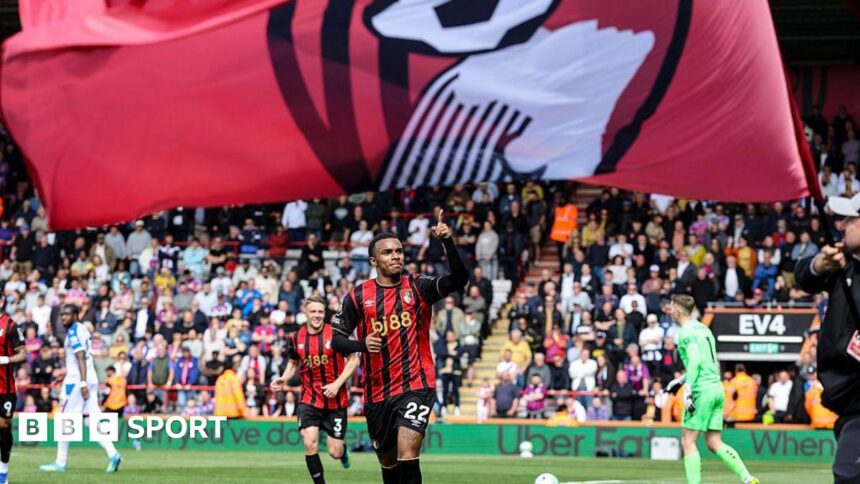
As the final whistle blew at the Vitality Stadium on Sunday, Bournemouth’s Junior Kroupi had just put the finishing touch on a resounding 3-0 victory over Crystal Palace. The win was clinical, impressive, and utterly transformative. It propelled the Cherries into sixth place, leapfrogging a stunned Brentford side who had been holding that coveted position for weeks.
But here is where the story gets truly bizarre. In the race for what is technically a Europa League spot—and potentially a Champions League berth—we are entering a reality where teams might actively need to lose on the final day to secure their ticket to Europe’s elite competition. Yes, you read that correctly. Lose to win. It sounds like a paradox, but in the labyrinthine world of Premier League coefficient calculations and domestic cup final results, it is a very real possibility.
The Stakes: More Than Just a Europa League Ticket
Let’s start with the basics. Sixth place in the Premier League traditionally guarantees a spot in the UEFA Europa League. For clubs like Bournemouth, Brentford, or even a resurgent Brighton, that alone would be a historic achievement. These are teams that have, for the most part, never tasted European football in their modern history. The prospect of a Thursday night trip to Istanbul or a cold winter game in Norway is tantalizing.
However, the landscape has shifted dramatically thanks to England’s performance in European competitions this season. The Premier League is almost certain to secure an extra Champions League place via the UEFA coefficient rankings. This fifth spot usually goes to the team finishing fifth in the league. But there is a catch that creates the perverse incentive we are talking about.
If the winners of the FA Cup (Manchester City or Manchester United) and the winners of the Carabao Cup (Liverpool) have already qualified for the Champions League via their league position, those European spots do not simply disappear. They trickle down. The FA Cup winner’s Europa League spot goes to the next highest-placed team in the league. But the real twist comes if a team wins a European trophy.
Consider this: if an English club wins the Champions League or Europa League this season and finishes outside the top four, they take a spot. If that team is already in the top four, the spot goes to the league. This creates a domino effect where sixth place could actually become a Champions League spot if enough cup winners are already qualified.
And here is the kicker: on the final day, a team sitting in seventh might look at the table and realize that winning their match would push them into sixth—but that sixth place might actually be a Europa Conference League spot instead of the Champions League, depending on who wins the FA Cup final. Conversely, staying in seventh might mean they get the Champions League spot if a specific cup result goes their way. It is a strategic nightmare, and it is entirely real.
How Bournemouth and Brentford Are Caught in the Middle
Let’s focus on the current protagonists. Bournemouth’s win against Crystal Palace was a masterclass in controlled aggression. Junior Kroupi’s goal—a composed finish after a slick counter-attack—was the cherry on top of a dominant display. The Cherries are flying. Andoni Iraola has turned them into a side that presses with fury and attacks with purpose. They are in-form and hungry.
Brentford, meanwhile, are looking over their shoulder. Thomas Frank’s men have been the model of consistency, but they have hit a rough patch at the worst possible time. They now sit in seventh, one point behind Bournemouth with two games left. The Bees have a tougher run-in on paper, facing teams fighting for survival.
But here is the nightmare scenario for both clubs. Let’s say the final day arrives. Manchester City beat Manchester United in the FA Cup final. City are already in the top four. That means the Europa League spot for the FA Cup winner goes to the league. Sixth place gets the Europa League. Seventh gets nothing.
Now imagine a different outcome. Manchester United win the FA Cup. United are currently outside the top four. That means United take the Europa League spot. The league then gets the Europa Conference League spot for sixth place. Suddenly, finishing sixth is a downgrade from last year’s Conference League spot, while finishing seventh might actually get you the Champions League if a European trophy winner bumps things up.
This is why teams might need to lose. A club like Brighton or Newcastle, sitting in eighth or ninth, could look at the math and realize that a loss on the final day keeps them in a position where they are more likely to inherit a Champions League spot from a cup winner’s ripple effect. Winning could push them into a lower European tier or out of Europe entirely.
It sounds absurd. It is absurd. But it is the mathematics of modern football.
Expert Analysis: The Perverse Incentive of the Final Day
As a journalist who has covered the Premier League for over a decade, I can tell you that this is unprecedented. We have seen teams tank for better draft picks in American sports, but in English football, the idea of intentionally losing to secure a better European competition is a new frontier.
The key variable is the UEFA coefficient. England is likely to get a fifth Champions League spot next season. But that spot is not simply handed to fifth place. It is a fluid allocation that depends on the results of the Champions League and Europa League finals. If an English team wins the Champions League (say, Arsenal or Manchester City) and they finish in the top four, the extra spot goes to the league. But if a team like Aston Villa wins the Europa Conference League and finishes fifth, the spot shifts.
Here is the brutal reality for Bournemouth and Brentford:
- If you finish sixth, you are almost guaranteed a European spot. But it might be the Europa Conference League—a competition that, while prestigious, is a financial and logistical burden for a small club.
- If you finish seventh, you might get nothing. Or you might get the Champions League if a series of cup upsets occur.
- The risk of winning on the final day is that you lock yourself into a lower-tier European competition when a loss could have opened the door to the big time.
I spoke to a Premier League data analyst this week who ran the simulations. He told me that if Manchester United win the FA Cup and an English team wins the Europa League, the team in seventh place on the final day could find themselves in the Champions League. That is not a conspiracy theory. That is a mathematical probability.
Managers will never admit to wanting to lose. It is against the ethos of the sport. But behind closed doors, the calculators will be out. Do you risk a historic European campaign for the Europa League, or do you gamble on a loss that might, just might, gift you a place among the elite?
Predictions: Who Wins the Battle for Sixth (and Who Might Lose on Purpose)?
Let’s look at the remaining fixtures. Bournemouth have the momentum. They face a mid-table side with nothing to play for and then a team fighting relegation. Brentford have a tougher road, including a trip to a top-four contender. I predict Bournemouth will hold onto sixth place. They have the form, the manager, and the belief.
But the real drama will be in the chasing pack. Look at Brighton. They are a club that prides itself on data-driven decisions. If their analysts tell Roberto De Zerbi that a loss on the final day gives them a 40% chance of the Champions League versus a 10% chance if they win, what do they do? They won’t throw the game, but they might rest key players. They might play a weakened side. They might “manage the result.”
Similarly, Newcastle United are desperate for European football after missing out this season. Eddie Howe knows that a win could mean a trip to Kazakhstan in the Conference League. A loss could mean a glamour tie against Real Madrid in the Champions League. The temptation to prioritize the latter is enormous.
My prediction? The final day will be a mess. We will see teams celebrating draws as if they were wins. We will see managers making substitutions that look bizarre until you realize the context. And we will see at least one team that, deep down, is relieved to have lost.
Conclusion: The Strangest Champions League Race in History
The Premier League has always been about drama, but this is a new kind of madness. The battle for sixth place is no longer just about pride or a Europa League spot. It is about the potential for a Champions League miracle—a miracle that might require a defeat to achieve.
For Bournemouth, the immediate task is clear: keep winning. Junior Kroupi and his teammates have given themselves a golden opportunity. But for the teams just behind them, the calculus is far more complicated. They must weigh the glory of a European campaign against the chance of an even greater one. They must decide if losing is actually winning.
As the final day approaches, keep your eye on the tables, the cup finals, and the coefficient rankings. And remember: in the strangest season we have ever seen, the team that loses might just be the one that ends up dancing with the giants. The battle for sixth is over. The battle for the soul of the final day is just beginning.
Source: Based on news from BBC Sport.