The Big VAR Debate: Is Football Better With, Without, or With a Drastic Change?
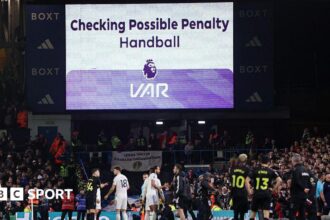
The image is seared into the memory of every football fan: a player wheels away in celebration, only to be halted by a phantom rectangle in the sky. A tense, joyous moment dissolves into agonizing uncertainty. This is the modern reality of the Video Assistant Referee, a system introduced to eradicate error but which has instead ignited football’s most visceral civil war. The recent FA Cup fourth round, a deliberate throwback to a pre-VAR age, served not as a nostalgic escape, but as a stark mirror held up to the sport’s conflicted soul. It forced a fundamental question: are we navigating a necessary teething period, or are we witnessing the failure of a fundamentally flawed experiment?
The FA Cup’s Raw Echo: A Weekend of Chaos and Charm
For the 2023-24 season, the FA Cup delayed the introduction of VAR until the fifth round, creating a unique, league-wide controlled experiment. The result was a weekend of unfiltered, often chaotic, football. Goals were celebrated with immediate, unbridled passion, not hesitant glances towards a distant official. The tempo was relentless, unbroken by lengthy forensic reviews. Yet, this came at a cost. Controversial handballs, potential offsides, and robust challenges flew under the radar. Wayne Rooney’s explosive critique of a non-call on Lucas Digne’s handball for Aston Villa—“one of the worst decisions I’ve ever seen”—epitomized the double-edged sword. Without VAR, a clear error stood uncorrected, directly influencing a match’s outcome. The weekend proved that a world without VAR is not a utopia of pure football; it is a return to the raw, often infuriating, human drama of instant and irrevocable decisions.
Dissecting the Diagnosis: Where VAR’s Promise Falls Short
The theory was sound: use technology to correct “clear and obvious errors” in game-changing situations. The practice, however, has been mired in controversy. The issues are not merely operational but philosophical, creating a new layer of friction within the sport.
- The Erosion of Spontaneous Joy: The most common fan complaint. The primal scream of a last-minute winner is now tempered by a 90-second anxiety attack, checking for a stray armpit or a toenail in an offside position. The emotional currency of the game is being devalued in real-time.
- The “Clear and Obvious” Paradox: This founding principle has become VAR’s greatest weakness. What is clear and obvious to one official is subjective to another. We now witness millimeter offside calls drawn with digital lines, a forensic examination that contradicts the spirit of the law and leaves fans and players baffled by the precision of a process never intended for such granularity.
- Atmosphere and Authority: The referee on the field is diminished, their authority constantly second-guessed. The connection between fans in the stadium and the decision-making process is severed, as crowds are left in the dark during lengthy reviews, amplifying frustration.
VAR has not removed controversy; it has simply relocated and bureaucratized it. We now argue about frame rates, line thickness, and the interpretation of a “deliberate” handball with the same fervor we once argued about a straight red card.
The Path Forward: Evolution, Not Abolition
Scrapping VAR entirely, as the FA Cup weekend showed, is a romantic but flawed solution. The genie of technology cannot be put back in the bottle. The goal now must be radical evolution—changing its scope and application to serve the game, not stifle it. Here is where the debate must turn to practical, impactful reform.
First, implement a time limit. If a review takes longer than 60 seconds for anything other than a complex multi-incident check, the original on-field decision stands. This preserves flow and reinforces the “clear and obvious” standard—if it takes five minutes and six angles to find, it wasn’t obvious.
Second, overhaul the offside protocol. Adopt a “thick line” or daylight margin of error, akin to goal-line technology’s certainty. If the lines overlap, the attacker gets the benefit. This ends the farce of “armpit offsides” and restores the intent of the offside rule: to prevent goal-hanging, not to punish anatomical precision.
Third, empower on-field officials. The referee should be required to review any subjective decision (red cards, penalties, violent conduct) on the pitch-side monitor. This maintains their authority, allows them to contextualize the incident with what they saw live, and makes the process transparent for the stadium.
Finally, transparency is non-negotiable. Live audio between officials must be broadcast, as in rugby and cricket. Hearing the discussion demystifies the process, builds understanding (even in disagreement), and holds officials accountable to a logical standard.
The Verdict: A Necessary Tool in Need of a Radical Redesign
The FA Cup’s VAR-free interlude was a valuable, if jarring, reminder. It showed that pure, unmediated football carries an unacceptable rate of game-altering errors. But it also highlighted the visceral energy and connection we have sacrificed. The answer, therefore, is not a binary choice between with or without.
The future of VAR must be a third way: a drastically changed scope. Its role should be that of a lightning-fast safety net for egregious mistakes, not a microscopic audit of every contested moment. Football’s soul lies in its flow, its emotion, and its human drama. The current system suffocates those qualities. A reformed VAR, with strict time limits, a sensible offside margin, and empowered referees, can protect the fairness of results while preserving the game’s beating heart. The technology is not the villain; its application is. The debate must now move from abolition to innovation, crafting a system that corrects clear errors without corroding the very essence of the sport it was meant to protect.
Source: Based on news from BBC Sport.