Collina’s Corner: Why FIFA’s VAR Vision for Corners is a Game of Inches, Not Minutes
The image is iconic: the piercing gaze, the imposing bald head, a figure who commanded the pitch as much as any superstar. Pierluigi Collina, long retired from the whistle, remains the most recognizable referee in football history. Today, as FIFA’s Head of Referees, his authority is of a different kind, shaping the very technological future of officiating. His latest mission? To convince the football world that using the Video Assistant Referee (VAR) to review corner kicks is not the bureaucratic, flow-killing nightmare many fear. In a bold move, Collina insists this precision will come without the price of delay, setting the stage for a fundamental clash between purity of flow and pursuit of accuracy.
The Ifab Impasse: Why Leagues Said “No” to Corner Checks
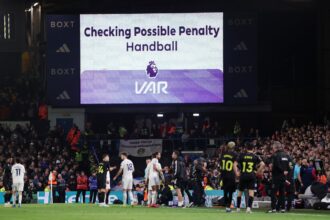
At a pivotal meeting of the International Football Association Board (Ifab) in October, a proposal from FIFA to integrate corner-kick decisions into the VAR protocol was met with firm resistance from domestic leagues. The core objection was predictable: match tempo. The Premier League, Bundesliga, and others envision a slippery slope of constant stoppages, where every 50-50 ball tossed into the box triggers a lengthy forensic review. For leagues that have already weathered storms of controversy over VAR’s implementation—its speed and its impact on spontaneous celebration—adding another layer of scrutiny was a step too far. They rejected the idea, protecting what they see as the essential, high-intensity rhythm of their competitions.
This rejection, however, reveals a fascinating philosophical divide. Domestic leagues operate in a crucible of weekly drama, where momentum and fan experience are paramount. FIFA, tasked with overseeing global tournaments like the World Cup, often prioritizes tournament integrity and the elimination of clear errors above all else. For Collina and FIFA, a wrongly awarded corner is not a trivial matter; it can be the direct precursor to a match-deciding goal. The question becomes: at what point does the pursuit of perfect justice undermine the very soul of the sport?
Collina’s Counter: The Seamless “Silent Check” Explained
Pierluigi Collina’s argument is not that these checks won’t happen, but that we, the viewers, simply won’t notice them. He champions a process already embedded in VAR’s framework: the “silent check.” Here’s how it would work for a contested corner:
- Phase 1: The Incident. A ball deflects off an attacker and out of play. The on-field referee awards a goal kick.
- Phase 2: The Immediate, Concurrent Review. As the players position themselves and the ball is retrieved, the VAR team instantly reviews the deflection using available broadcast angles.
- Phase 3: The Communication. If the VAR confirms the referee’s call was correct, nothing happens. Play continues. If the VAR identifies a clear and obvious error—conclusive evidence the ball came off a defender—they quickly inform the referee to award a corner.
- Phase 4: The Correction. The referee halts play briefly, signals for the corner, and the game restarts.
The critical point, as Collina stresses, is that the review happens in the natural downtime of the game. “We are talking about something that would take a few seconds,” he has argued. The VAR is not waiting for a stoppage; they are using the stoppage that already exists. In this model, the dreaded “delay” is only the few extra seconds it takes for the referee to change the call, not the minutes of static waiting associated with offside or penalty reviews.
The 2026 World Cup Laboratory: A Global Trial Run
Undeterred by domestic league skepticism, FIFA is pushing forward. The plan is to use the 2026 World Cup in the United States, Mexico, and Canada as a living laboratory for corner VAR checks. This is a strategic masterstroke. The World Cup is FIFA’s domain, allowing for a controlled implementation without needing domestic approval. It also presents the perfect showcase: the world’s most-watched sporting event, where the stakes for every single decision are astronomically high.
A successful trial at World Cup 2026 would have massive implications. It could force a recalibration at the domestic level, pressuring leagues that resist to explain why a tool that works seamlessly on the global stage is untenable at home. The trial will test Collina’s theory under the most intense scrutiny imaginable. Key metrics will be:
• Average Decision Time: How many seconds are truly added?
• Correction Rate: How many clear errors are caught?
• Game Flow Impact: Does the perceived rhythm of the match suffer?
The data gathered will either vindicate Collina’s vision or prove the leagues’ fears correct.
Analysis: The Broader Battle for VAR’s Soul
This debate about corners is a microcosm of the larger, ongoing battle for VAR’s soul. Since its introduction, VAR has been caught between two poles: the desire for 100% accuracy and the preservation of football’s emotional flow. The expansion of its remit into subjective areas like “clear and obvious error” has been messy. Corners, however, are different. They are often factual decisions: did the ball touch Player A or Player B?
Collina’s push represents a refinement, not a revolution. It aims to use technology for what it’s best at: solving black-and-white problems quickly. The resistance from leagues may be less about this specific application and more about scope creep—the fear that approving corners opens the door for throw-ins, minor fouls, and a hyper-judicial match environment. They are drawing a line in the sand, insisting the human error inherent in a fast-moving sport must be allowed to persist in some facets of the game.
Conclusion: Precision vs. Pulse – The Final Whistle
Pierluigi Collina, the former referee who embodied decisive authority, is now the architect of a system that seeks to remove doubt from every possible angle. His assurance that VAR corner checks won’t cause delays is a promise rooted in process and technology. The 2026 World Cup trial will be the ultimate proof of concept. If executed as he envisions—with swift, silent checks that correct clear errors in the game’s natural pauses—it could be a quiet but significant victory for accuracy, normalizing a new layer of precision without the painful trade-off of tempo.
Yet, football is not just a game of facts; it’s a game of feeling. The domestic leagues’ rejection is a defense of that intangible pulse. As the sport marches inevitably toward a more technologically-assisted future, the corner kick has become an unlikely battleground. The outcome will determine whether the pursuit of perfect justice can finally be reconciled with the beautiful game’s relentless, beating heart. Collina’s gaze is now fixed on 2026, ready to show the world that in the quest for truth, every inch of the pitch matters—and checking those inches need not cost a single second of magic.
Source: Based on news from BBC Sport.
Image: Source – Original Article