Mercedes’ 2026 Gamble: Can the Silver Arrows Conquer F1’s New Era?
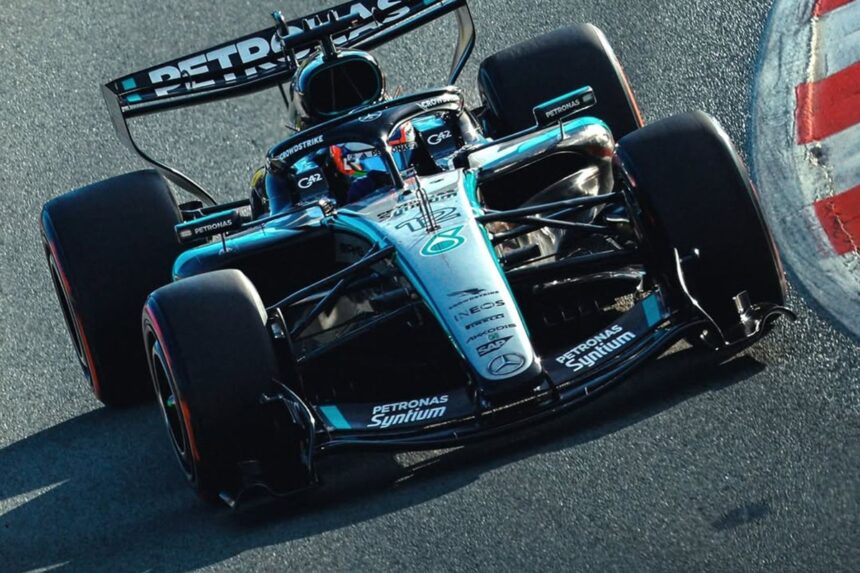
Five long years. In the relentless, high-stakes world of Formula 1, half a decade can feel like an eternity. For Mercedes-AMG Petronas, a team that defined a generation of dominance, the stretch since their last constructors’ crown in 2021—and Lewis Hamilton’s final drivers’ title in 2020—has been a profound test of identity. As the team unveils its W17 challenger for the 2026 season, it does so not from a position of reigning supremacy, but as a storied institution in a critical phase of reinvention. The launch is more than a reveal; it’s the opening gambit in Mercedes’ most crucial campaign in over a decade, set against the backdrop of F1’s sweeping new technical revolution. With continuity in its leadership and driver line-up, but seismic change in its regulations, the question looms: can the once-dominant force rediscover its winning formula?
The 2026 Reset: A Golden Opportunity or a Final Stand?
The 2026 season represents the ultimate reset in Formula 1. New power unit regulations, a radical overhaul of chassis aerodynamics, and a significant increase in electrical power are not mere evolutions; they are a revolution. For Mercedes, this is a double-edged sword. It offers a clean slate to erase the memory of the flawed “zero-sidepod” concept that derailed their last regulatory cycle in 2022. However, it also resets the competitive order, offering no guarantees based on past glory. The 2026 technical rules are the great equalizer, and Mercedes’ challenge is to be the first to decode them.
The team’s approach is one of calculated stability. In Toto Wolff, they possess one of the sport’s most resilient and strategically astute leaders, a constant since 2013. The driver pairing of George Russell and Andrea Kimi Antonelli is a bold statement of faith in youth and internal development. Russell, now a seasoned race-winner, must evolve into a consistent title challenger. Antonelli, the prodigious talent fast-tracked into Hamilton’s seat, carries immense expectation. This line-up provides continuity, but also immense pressure to deliver from the outset of the new era.
Internal Dynamics: The Allison Era Faces a Critical Test
Beneath the surface of continuity, there has been significant churn in the technical department. The W17, like its predecessors, bears the intellectual imprint of the brilliant James Allison, who returned as technical director to steer the ship. Alongside deputy Simone Resta, Allison forms a formidable brain trust. However, the recent resignation of long-serving car design director John Owen is a substantial loss. Owen was a foundational pillar of the championship-winning years, and his departure severs a direct link to that golden technical era.
His replacement, Giacomo Tortora, promoted from engineering director, now faces the monumental task of translating Allison and Resta’s vision into a tangible, championship-winning car under all-new rules. This internal shift underscores a broader challenge:
- Technical Leadership Transition: Can Tortora fill Owen’s void seamlessly during F1’s biggest regulatory shift in a generation?
- Cultural Evolution: The team must foster a culture of aggressive innovation, not just iterative refinement, to beat rivals like a resurgent Ferrari and Adrian Newey’s revolutionary 2026 Aston Martin.
- Simulation vs. Reality: Mercedes’ prowess in simulation will be tested like never before. The correlation between wind tunnel data and on-track performance must be flawless from day one.
The Biggest Challenge: Overcoming a “Winning DNA” Hangover
Paradoxically, Mercedes’ greatest hurdle may be its own illustrious past. The eight consecutive constructors’ titles from 2014 to 2021 created a “winning DNA” that became a straitjacket during the last regulatory change. The team’s initial misstep with the W13 was rooted in an overconfidence that their unique interpretation of the rules was superior—a mindset forged in years of being right. The challenge for 2026 is psychological as much as technical.
Wolff and Allison must ensure the organization avoids the trap of intellectual arrogance. They must cultivate a mindset of paranoia, not presumption. This means:
- Ruthlessly questioning every assumption, even those that brought past success.
- Embracing a more agile development path, ready to pivot if a concept proves sub-optimal.
- Ensuring the driver feedback loop from Russell and Antonelli is integrated faster than ever before. The young duo’s adaptability will be a crucial asset.
Furthermore, the 2026 power unit is a colossal unknown. With the MGU-K harvesting significantly more energy and the internal combustion engine running on 100% sustainable fuel, Mercedes HPP (High Performance Powertrains) must not only deliver brute power but also seamless integration and drivability. Any deficit here could undermine the best chassis on the grid.
Predictions for the Season Ahead: Realistic Expectations
Setting expectations for Mercedes’ 2026 campaign requires a balance of optimism and realism. The team has the resources, the leadership experience, and the raw talent to get it right. However, the scale of the regulatory change and the strength of the competition make a immediate return to 2014-style dominance highly unlikely.
A more probable trajectory is a season of intense development. The early races may see Mercedes in a tight battle with Ferrari, Red Bull (who remain a threat despite their own changes), and the wildcard of Aston Martin. The key will be the team’s in-season development rate. Under Allison, Mercedes has historically been strong in this area. If the W17 has a solid, adaptable base concept, they could peak at the right time to challenge for victories in the second half of the season and lay a foundation for a 2027 title assault.
The driver dynamic will be fascinating. Russell must assert himself as the de facto team leader, while guiding the phenomenally talented but rookie Antonelli. How quickly the Italian adapts to F1’s new-gen cars will be a major subplot. Podiums for Russell and points consistency for Antonelli would constitute a successful launch phase for the new partnership.
Conclusion: A Defining Chapter for the Silver Arrows
Mercedes stands at a crossroads. The 2026 season launch is not merely about a new car; it is the commencement of a defining chapter that will shape the team’s identity for the next decade. The challenges are multifaceted: mastering unprecedented technical regulations, managing a crucial internal technical transition, and, most importantly, shedding the psychological baggage of past triumphs to embrace a new, uncertain future with humility and hunger.
The continuity provided by Wolff, Allison, and Russell is a stabilizing force, while the injection of fresh talent like Antonelli and Tortora brings new energy. The pieces are in place. The question is whether they can be assembled into a cohesive, winning whole faster than their rivals. The road back to the summit is steeper than it was in 2014, but for a team with the institutional knowledge and resource of Mercedes, the 2026 revolution is not a threat—it is the opportunity they have been waiting for to silence the doubters and reclaim their throne. The five-year wait ends not with a whimper, but with the roar of a new beginning. The gamble has been placed. Now, we see if the Silver Arrows have played their cards right.
Source: Based on news from Yahoo Sports.