Formula One Revs Back to Life: The Algarve’s Portimão Secures Grand Prix Return for 2027-2028
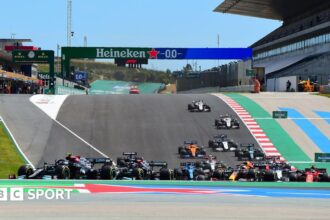
The relentless rhythm of Formula One’s global expansion often sees historic circuits fade into memory, replaced by gleaming new facilities in untapped markets. But in a thrilling plot twist for purists, the sport has announced a nostalgic and strategic homecoming. The FIA and Formula 1 have confirmed that the Portuguese Grand Prix will roar back onto the calendar for the 2027 and 2028 seasons, with the stunning Autódromo Internacional do Algarve in Portimão reclaiming its spot. This move sees Portugal replace the Dutch Grand Prix at Zandvoort, whose contract concludes after the 2025 season, signaling a dynamic reshuffle in the European leg of the championship.
From Pandemic Stand-In to Permanent Prospect: Portimão’s Ascent
Portimão’s journey to this multi-year deal is a testament to seizing opportunity. For many, the circuit was a glorious discovery during the disrupted 2020 and 2021 seasons. As the COVID-19 pandemic forced last-minute cancellations, Formula One’s European backup strategy thrust the Algarve track into the spotlight. Its rapid elevation from a respected MotoGP and testing venue to hosting the pinnacle of four-wheeled racing was a revelation. The world watched as Lewis Hamilton, then in his dominant Mercedes era, mastered the track’s challenges to win both the 2020 and 2021 editions, clinching his record-equaling seventh world title at the former.
But it wasn’t just the results that captivated fans. The circuit itself became the star. Unlike many modern “Tilke-dromes,” Portimão is a rollercoaster of elevation change, blind crests, and technical complexity. Its location in the Algarve provides a breathtaking backdrop of rolling hills and proximity to the coast, creating a visual spectacle unmatched on the calendar. The overwhelmingly positive reception from drivers, teams, and fans established Portimão not as a mere filler, but as a grade-one circuit worthy of a permanent place in the conversation.
- Historic Pedigree: Portugal’s F1 history is rich, with past races at the Circuito da Boavista in Porto, the Monsanto Park street circuit, and the beloved Estoril, which hosted Ayrton Senna’s first Grand Prix victory in 1985.
- Modern Marvel: The Autódromo, opened in 2008, offers state-of-the-art facilities combined with an old-school, challenging layout that demands driver skill.
- Fan & Driver Favorite: The 2020/21 events were praised for their organization, passionate local support, and the pure, uncompromising racing the track produced.
Strategic Calendar Calculus: Why Portugal Replaces the Netherlands
The decision to slot Portimão in place of Zandvoort is a fascinating piece of Formula One commercial and logistical strategy. Zandvoort’s return in 2021, driven by the “Max Verstappen effect,” has been a commercial triumph, selling out instantly with an orange-sea of fervent Dutch support. However, its contract is finite, and F1’s management is perpetually balancing heritage with growth.
Analysts point to several factors. Firstly, the calendar is increasingly congested, and maintaining a sustainable number of European races is a constant challenge. Portugal offers a geographically sensible alternative in the Iberian peninsula, potentially creating a more efficient back-to-back with Spain (Barcelona) or even a revived race elsewhere in the region. Secondly, while the Dutch audience is profoundly loyal, it is also somewhat singularly focused. The Portuguese Grand Prix taps into a broader Southern European and global tourist market, leveraging the Algarve’s status as a world-class holiday destination to create a “destination Grand Prix” experience.
Most crucially, this two-year deal is a classic F1 maneuver: it rewards a circuit that proved its worth, injects fresh variety into the schedule, and maintains a competitive tension among race promoters. It sends a clear message that no event’s place is guaranteed, encouraging all hosts to continuously innovate and invest.
The 2027 Preview: A New Era Meets an Old-School Challenge
Projecting ahead to the 2027 season is an exercise in high-speed speculation, which makes Portimão’s return even more compelling. By 2027, the sport will likely be deep into its next regulatory cycle. The 2026 power unit revolution—featuring increased electrical power and 100% sustainable fuels—will have bedded in, potentially reshuffling the competitive order. The cars will be machines of a new generation, and Portimão will provide a brutal and beautiful benchmark for their capabilities.
Will the next generation of ground-effect cars, with their reliance on aerodynamic stability, handle the violent elevation changes and blind crests of Turn 1 and the final sector? How will the new power units deliver their power over the circuit’s significant gradient shifts? The track is a comprehensive test of chassis, power, and driver courage.
Furthermore, the driver landscape will be utterly transformed. Lewis Hamilton, the circuit’s only F1 winner to date, will have long retired. The grid could be led by a new wave of stars—perhaps an established champion like Max Verstappen or Charles Leclerc hunting more titles, or a rookie phenom we have yet to meet. Portimão 2027 won’t be a nostalgia trip; it will be a statement of intent for the sport’s future, played out on a canvas that respects its past.
A Victory for the Sport’s Soul
The return of the Portuguese Grand Prix is more than a calendar entry; it is a meaningful victory for the sporting essence of Formula One. In an era of street circuits in city centers, Portimão represents a commitment to pure, driver-focused racing on a dedicated track where elevation and camber, not concrete walls, define the limit. It proves that with the right combination of challenge, beauty, and fan engagement, a circuit can force its way back into the elite club.
For Portugal, it is a chance to build a lasting legacy beyond its pandemic-era cameo. For the fans, it is the promise of a unique and visceral spectacle under the Algarve sun. And for Formula One, it is a savvy blend of honoring a proven hit while dynamically evolving its global roadmap. As the engines fire up in Portimão in 2027, the roar will signify more than just the start of a race; it will be the sound of a beloved classic, triumphantly revived for a new generation.
Source: Based on news from Yahoo Sports.