The Uncomfortable Podium: How F1, Football, and NFL Titans Maintained Epstein Links
The release of millions of pages from the Jeffrey Epstein case continues to send shockwaves through the worlds of finance, politics, and royalty. But the latest document dump has carved a new and uncomfortable path directly into the boardrooms and paddocks of global sport. While many public figures have long claimed to have severed ties with the convicted sex offender after his 2008 guilty plea, the newly revealed emails and texts paint a more complicated, and damning, picture. They reveal that senior executives in Formula 1, European football, and the National Football League maintained direct contact and explored business ventures with Epstein long after his conviction for soliciting prostitution from a minor—a stark contradiction to the narrative of distanced remorse.
The Post-Conviction Network: Names in the Frame
Beyond the glittering galas and high-profile friendships of Epstein’s pre-conviction life, the recent files expose a more transactional, yet persistent, network that operated in the shadows of his notoriety. This network included individuals whose influence shapes the modern sports landscape. Their continued engagement suggests a calculated assessment that association with Epstein, a man branded a sex offender, was a risk worth taking for potential financial or strategic gain.
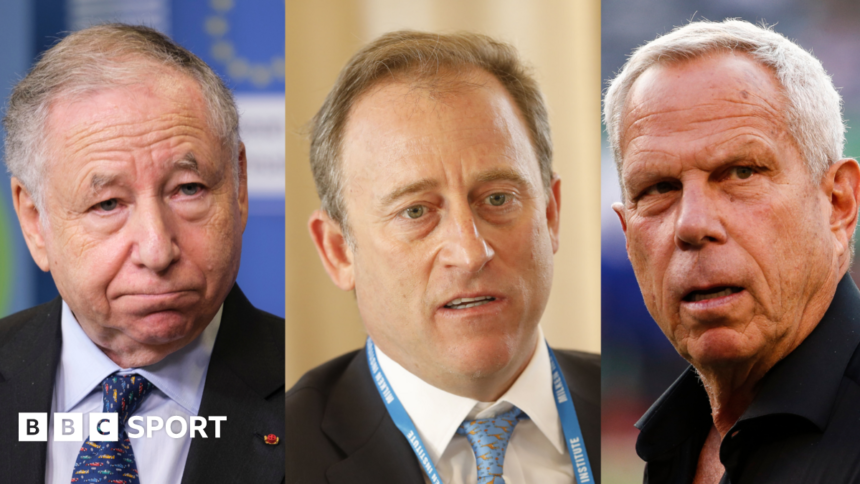
Key figures identified in the documents include:
- Jean Todt: The former Ferrari team principal and FIA President, a titan of motorsport. Documents indicate communication and meetings with Epstein well into the 2010s, including discussions about potential investments.
- Josh Harris: Billionaire co-owner of the NFL’s Philadelphia Eagles and the NBA’s Philadelphia 76ers, and a limited partner in the NFL’s Pittsburgh Steelers. The files show Harris sought Epstein’s advice on a major yacht purchase years after the conviction.
- Steve Tisch: Chairman and co-owner of the NFL’s New York Giants and a prominent film producer. Correspondence reveals Epstein attempted to facilitate an introduction between Tisch and the Crown Prince of Saudi Arabia, Mohammed bin Salman, in 2019.
These interactions, often framed as mundane business, fundamentally challenge the public stance of these individuals. They underscore a harsh reality: in certain elite circles, Epstein’s financial acumen and connections were still considered a valuable currency, even when the cost of that currency was public knowledge of his criminal past.
Business as Usual: Deals, Yachts, and Introductions
The substance of the communications goes beyond casual check-ins. They reveal a pattern of Epstein actively inserting himself into high-stakes sports business and leveraging his infamous “black book” of contacts for his associates.
For Jean Todt, the discussions reportedly revolved around potential investments in a technology company. This places the then-FIA president, the head of global motorsport’s governing body, in a position of seeking or entertaining capital from a convicted sex offender. The ethical firewall one would expect from a leader in his position appears, in these documents, to be absent.
In the case of Josh Harris, the inquiry about a superyacht—a vessel synonymous with ultra-wealth and seclusion—is particularly telling. Turning to Epstein for counsel on such a purchase indicates a level of trust and ongoing rapport that contradicts the idea of a clean break. It suggests Epstein was still viewed as an operator within the realm of elite asset acquisition.
Perhaps the most geopolitically charged revelation involves Steve Tisch and the attempted Saudi introduction. In 2019, with Saudi Arabia aggressively pursuing investments in global sport through its Public Investment Fund (which now owns Newcastle United), Epstein positioned himself as a gatekeeper. His offer to connect Tisch with the Crown Prince reveals his perceived influence and the lengths to which sports magnates might go, or be asked to go, to access the highest echelons of wealth and power.
Expert Analysis: Reputation, Power, and the Moral Blind Spot
“This isn’t about guilt by association,” notes Dr. Laura Pembroke, a sociologist who studies elite networks and institutional ethics. “It’s about conscious association after conviction. These documents show a deliberate choice to maintain a relationship with a known predator because his utility was deemed to outweigh the profound reputational risk. In the calculus of ultra-high net worth individuals, access often trumps morality.”
The sports industry, built on brand value, public trust, and often family-friendly marketing, finds itself in a uniquely compromised position. Team owners and league executives are not just businesspeople; they are stewards of civic institutions. The revelation that some engaged with Epstein forces a difficult question: did their moral compass fail, or was it simply recalibrated to a different set of priorities—those of capital and connection?
This pattern also highlights Epstein’s modus operandi in his later years. Having lost much of his social sheen, he pivoted to acting as a shadow broker, using his remaining connections to facilitate deals and introductions between powerful people. For sports executives looking for an edge, an unconventional route, or access to opaque pools of capital, Epstein presented a backchannel—one that came with a monstrous, and known, caveat.
Predictions: Reckoning and Repercussions in the Sports World
The fallout from these revelations will be slow-burning but significant. We are unlikely to see immediate firings or forced sales, but the damage will be reputational and regulatory.
First, expect increased scrutiny from league offices. Both the NFL and FIFA (governing body of world football) have personal conduct policies for owners and officials. While typically applied to direct misconduct, the public and media pressure may force commissioners to examine whether such sustained associations violate the spirit of those policies and bring the league into disrepute.
Second, sponsorship and partnership deals will come under the microscope. Major global brands are hypersensitive to ESG (Environmental, Social, and Governance) criteria and ethical alignment. Being indirectly linked to the Epstein scandal through a team owner is a PR nightmare most corporations will seek to avoid, potentially influencing future deal flow.
Finally, this episode will fuel the growing call for transparency in sports ownership. The opaque structures of private ownership and investment funds have long been criticized. This scandal provides a potent case study for why the sources of wealth and the nature of an owner’s associations matter to the integrity of the sport itself.
Conclusion: The Stain on the Beautiful Game and Beyond
The latest Epstein files have done more than just add names to a list. They have exposed a chilling continuum of engagement between a convicted sex offender and the architects of our most popular sports. The communications reveal a world where past atrocities can be compartmentalized if the individual in question holds a key to a deal, a yacht, or a royal court.
For fans, this is a profound betrayal. It pulls back the curtain on a layer of sports governance where the rules of decency seem suspended. The figures implicated now face a long-term challenge to their legacies. Their achievements on the track, field, and balance sheet will forever be shadowed by a simple, damning question: Why, knowing what you knew, did you choose to keep talking? The answer, it seems, lies in the relentless pursuit of advantage—a pursuit that, for some, blinded them to an inescapable moral truth.
Source: Based on news from BBC Sport.