F1’s Financial Pit Stop: The £54 Million Hole Left by Middle East Race Cancellations
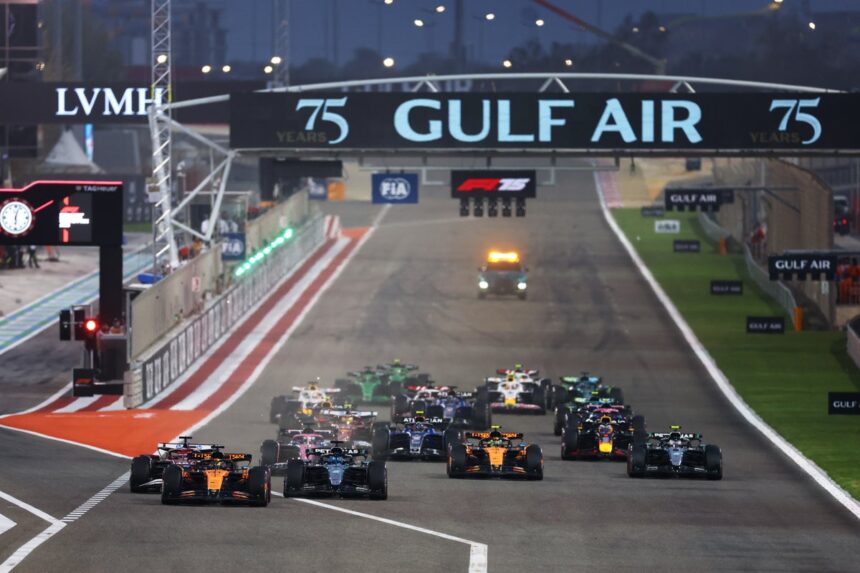
The high-octane world of Formula 1 is facing a sudden and costly grid penalty. As geopolitical tensions violently escalate across the Middle East, the sport is on the brink of cancelling two cornerstone events of its 2026 calendar: the Bahrain and Saudi Arabian Grands Prix. Beyond the immediate disruption to the championship narrative, the decision carries a staggering financial impact. Formula 1 stands to forfeit an estimated £54 million in hosting fees alone, a direct hit to the commercial engine that powers the global circus and exposing the delicate balance the sport strikes in its geopolitical calendar.
- The Inevitable Cancellation: Security Trumps All
- Decoding the Astronomical Hosting Fees: Why the Middle East Pays Premium
- The Ripple Effect: Beyond the Balance Sheet
- Expert Analysis: A Precarious Balancing Act
- Predictions: The Long-Term Grid for F1’s Future
- Conclusion: A Costly Lesson in a High-Stakes World
The Inevitable Cancellation: Security Trumps All
Confirmation is expected imminently, but sources within the paddock treat the cancellation as a foregone conclusion. The catalyst was a series of missile strikes targeting locations in both host nations, with Iran claiming responsibility. The abstract risk that always shadows events in volatile regions became a concrete and immediate threat. In Bahrain specifically, a hotel in the capital of Manama – a key hub for F1 personnel – was targeted, bringing the danger uncomfortably close to the sport’s heart. With major regional airports shuttered and security assessments turning increasingly red, F1’s principle of “safety first” left no room for negotiation.
Logistically, the window for hope has slammed shut. The Bahrain Grand Prix was scheduled for April 12th, with Saudi Arabia following on April 19th. Replacing two races at such short notice, especially with the entire freight operation already en route or in the region, is a logistical impossibility. Unlike the COVID-19 era, where European double-headers were hastily arranged, the specialized infrastructure and sheer scale of a modern F1 event make a last-minute swap unfeasible. The calendar will simply contract, leaving a four-week gap and a significant financial vacuum.
Decoding the Astronomical Hosting Fees: Why the Middle East Pays Premium
The term “hosting fee” barely does justice to the financial commitments made by Bahrain and Saudi Arabia. These are not simple venue rentals; they are multi-million-pound investments in global visibility, tourism, and a statement of national transformation. The projected losses reveal the top-tier financial league these nations play in:
- Saudi Arabia: The Joint Top Payer (£30m) – Alongside Qatar, the Saudi Grand Prix sits at the pinnacle of F1’s hosting fee structure, paying an estimated £30 million (approx. $55m). This figure reflects the Kingdom’s aggressive and well-funded “Vision 2030” strategy to become a global hub for mega-events.
- Bahrain: The Pioneering Investor (£24m) – As the trailblazer for F1 in the Middle East with its first race in 2004, Bahrain’s estimated £24 million (approx. $45m) fee is a testament to its long-term commitment to the sport. It’s a cornerstone of the nation’s international identity.
These fees are just the entry ticket. They do not include the hundreds of millions spent on building and maintaining state-of-the-art circuits, nor the ancillary costs of security, promotion, and local organization. For the host nations, the return on investment is measured in global TV exposure, prestige, and tourism dollars. For F1 and its owner, Liberty Media, these fees are critical, guaranteed revenue streams that underpin the sport’s financial model and shareholder value.
The Ripple Effect: Beyond the Balance Sheet
While the £54 million headline loss is stark, the repercussions cascade through the F1 ecosystem. The cancellation is a multi-layered financial blow with wide-ranging victims.
Local Economies & Businesses: Grand Prix weekends are economic bonanzas for host cities. Hotels, restaurants, transportation services, and local vendors that rely on the influx of tens of thousands of international visitors will see that revenue evaporate overnight. The targeted hotel in Manama symbolizes this broader economic casualty.
Teams & Sponsors: While the top teams are insulated from direct revenue loss (their prize money is calculated annually), the mid-field and backmarker teams feel the pinch of lost hospitality and activation opportunities. More acutely, sponsors who have paid millions for branding and client entertainment in these key markets are left with a void. The value of their partnership is partially tied to global reach, and two fewer races diminishes that reach.
The Sporting Narrative: From a purely competitive standpoint, a compressed calendar alters the rhythm of the championship. It reduces opportunities for teams to fight back, changes the points distribution landscape, and could unfairly advantage or disadvantage teams based on their early-season form. The loss of Bahrain’s unique track characteristics and Saudi’s high-speed street circuit also removes crucial data points for car development.
Expert Analysis: A Precarious Balancing Act
This crisis underscores the inherent tension in F1’s expansion strategy. The sport has deliberately pivoted towards markets willing to pay premium fees for the prestige and soft power F1 confers. This model has been wildly successful commercially, filling Liberty Media’s coffers and increasing the sport’s overall value. However, it has also increased F1’s exposure to geopolitical instability.
“F1 has become a geopolitical weather vane,” notes a veteran team principal speaking on background. “We follow the money, but the money is often in regions where stability cannot be guaranteed. The fee from Saudi or Bahrain is irreplaceable from a traditional European venue. But this is the risk you run.” The sport now faces the unenviable task of weighing its lucrative commitments in volatile regions against the safety of its personnel and the integrity of its schedule. Insurance will cover some of the direct loss, but the reputational and strategic cost is harder to quantify.
Predictions: The Long-Term Grid for F1’s Future
Looking ahead, the 2026 cancellations will force a strategic recalibration, but not a retreat.
- No Exodus from the Middle East: F1 will not abandon the region. The financial incentives are too great, and the long-term contracts too ironclad. Instead, expect even more robust (and costly) private security protocols and contingency planning for future events.
- The “Replaceable Race” Concept Will Be Scrutinized: This event may accelerate discussions within F1 about identifying one or two “reserve” circuits, likely in Europe, that could theoretically step in with minimal notice. The logistical and commercial hurdles remain immense, but the need for a Plan B is now glaring.
- Fee Structures May Evolve: Could we see clauses related to force majeure and geopolitical instability become more nuanced in future host contracts? While nations are unlikely to agree to reduced fees, the negotiation around risk and cancellation may become more central.
Conclusion: A Costly Lesson in a High-Stakes World
The expected cancellation of the Bahrain and Saudi Arabian Grands Prix is more than a scheduling headache; it is a multi-million-pound stress test of F1’s commercial and geopolitical model. The loss of £54 million in hosting fees is a direct and painful financial impact, but the true cost encompasses shattered local economies, disrupted sponsor partnerships, and an altered championship. This episode proves that while F1 cars are designed to be aerodynamically stable, the business of F1 is increasingly conducted on shifting sands. The sport’s future growth is inextricably linked to regions of high reward and high risk. Navigating that complex track, as this weekend’s events show, may be the greatest challenge facing the sport’s commercial directors—one where the price of a misstep is measured in millions and the safety of its people. The race for stability, it seems, is now as critical as the race for the championship.
Source: Based on news from Yahoo Sports.