Max Verstappen’s F1 2026 Warning: “It’s Like Formula E on Steroids”
The serene desert skies of Bahrain’s Sakhir circuit have become the backdrop for a brewing storm. As Formula 1 teams put their 2025 machinery through its paces in pre-season testing, the sport’s most dominant force has turned his focus—and his formidable candor—toward the future. Max Verstappen, the four-time world champion, has delivered a verdict on the 2026 technical regulations so damning it threatens to overshadow the present. His description? The new cars feel like “Formula E on steroids,” a vision he labels fundamentally “anti-racing.” In a sport built on the razor’s edge of competition, Verstappen’s critique strikes at the very heart of F1’s identity.
The 2026 Revolution: A Radical Leap into the Unknown
Dubbed the biggest regulatory shake-up in Formula 1’s 76-year history, the 2026 rules represent a profound philosophical and technical pivot. The changes are twofold, targeting both power units and chassis design with the stated goals of increasing sustainability, reducing car size and weight, and boosting overtaking.
The core engine changes are seismic:
- 50/50 Power Split: The hybrid power units will draw near-equal energy from the internal combustion engine and the electrical Energy Recovery System (ERS).
- Manual Deploy & “Overboost”: Drivers will manually deploy a significant burst of electrical energy, creating a potential “push-to-pass” dynamic, but with a heavy strategic cost.
- 100% Sustainable Fuels: A complete move to advanced, carbon-neutral fuels for the ICE component.
Simultaneously, the cars will become smaller, lighter, and feature active aerodynamics. The front and rear wings will have adjustable flaps to reduce drag on straights and maximize downforce in corners. Yet, it is the intricate, driver-managed dance between these aero modes and the finite electrical energy that has sparked Verstappen’s ire. The fear is that racing becomes a hyper-complex game of resource conservation, not flat-out combat.
Verstappen’s Damning Verdict: Management Over Manhandling
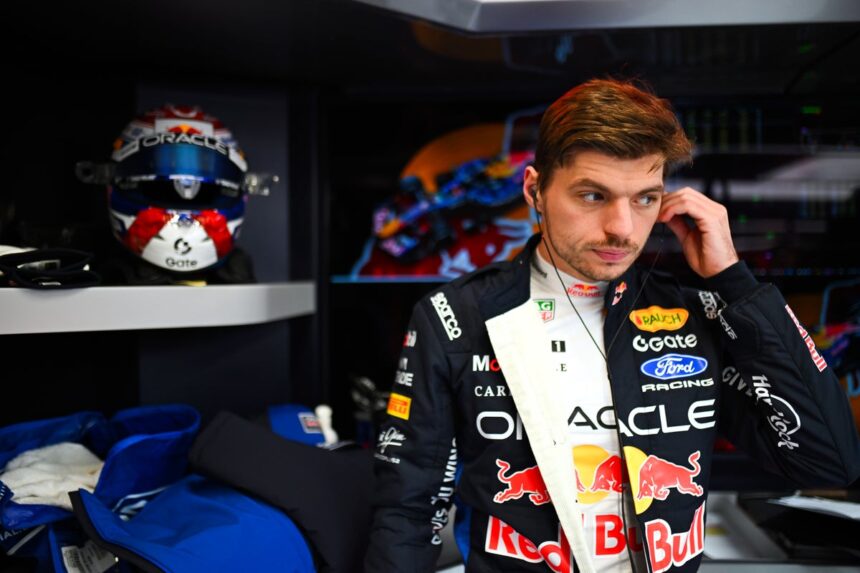
Despite Red Bull’s own impressive early development of its new Red Bull Ford Powertrains, Verstappen pulled no punches when assessing the simulated 2026 experience. “To drive, not a lot of fun to be honest,” he stated bluntly in Bahrain. He expanded, pinpointing the critical issue: “I would say the right word is management.”
For a driver renowned for his aggressive, limit-pushing style, the prospect of a formula where energy management supersedes raw car control is anathema. His “Formula E on steroids” analogy is particularly loaded. Formula E is a championship where energy conservation is the central, defining skill. By adding “on steroids,” Verstappen suggests F1 is amplifying that core principle with more power and speed, but at the cost of the visceral, foot-to-the-floor racing that defines the current era. He fears the spectacle will become one of drivers lifting and coasting for large portions of a lap to recharge the battery, only for fleeting moments of full power.
“It sounds like you have a lot of power, which you do, but if you have to just drive around on 50 percent of it for most of the straight, that’s not working,” Verstappen explained. This creates what he sees as an “anti-racing” scenario, where defending or attacking is hamstrung by a battery’s state of charge, not just braking skill or courage.
A Grid Divided: Innovation vs. The Spirit of Racing
Verstappen is not a lone voice, but his stature makes his criticism resonate loudest. The F1 grid is deeply divided. Some engineers and drivers see 2026 as a necessary and exciting technological frontier, aligning with global automotive trends and attracting new manufacturers like Audi. They argue that mastering this new complexity is the pinnacle of motor sport.
However, a growing chorus of veterans shares Verstappen’s concern. The central tension lies in a potential performance paradox. Early simulations suggest the 2026 cars could be terrifyingly fast in corners due to reduced drag and active aero, but alarmingly slow on straights when the electrical energy depletes. This could lead to a dangerous speed differential between cars at different points on the track and make overtaking on straights—a key goal of the rules—counterintuitively harder.
Furthermore, the manual energy deployment system risks turning races into a strategic chess match where the fastest car doesn’t necessarily win. While strategy is part of F1, an over-reliance on battery management could alienate fans who crave wheel-to-wheel duels. The FIA and F1 management, having invested immense political capital in this framework, now face the challenge of tuning these rules before they are locked in, balancing innovation with pure sporting contest.
The Road to 2026: Predictions for a Sport at a Crossroads
The next 18 months will be a critical period of simulation, lobbying, and potential adjustment. Based on the current trajectory, several predictions can be made:
- An “Adjustment Period” Will Be Inevitable: The first season under the new rules, 2026, will likely be a year of extreme volatility. Reliability will be a huge factor, and we may see unusual winners as teams grapple with the new paradigm.
- The Driver Hierarchy Could Shift: A new skillset prioritizing hyper-efficient energy management and strategic button-pushing may benefit a different type of driver. The pure “racers” like Verstappen may need to adapt profoundly.
- Regulatory Tweaks Are Coming: The FIA has already acknowledged the speed differential concerns. Expect revisions to the energy deployment curves, battery regulations, or active aero parameters before 2026 to ensure the racing product is viable.
- Manufacturer vs. Privateer Divide: The astronomical cost of developing these new power units could widen the gap between manufacturer-backed teams and independent squads, potentially threatening the grid’s competitive health.
Ultimately, Verstappen’s outburst is less a complaint and more a clarion call. It is a champion defending what he believes is the essence of his sport’s appeal: the gladiatorial fight between man and machine, pushed to its absolute limit. The 2026 regulations promise a greener, more technologically advanced Formula 1. But as the sport’s brightest star warns, that progress must not come at the cost of the soul-stirring, unpredictable, and flat-out racing that has captivated generations of fans. The journey to 2026 is now not just an engineering challenge, but a philosophical battle for Formula 1’s future identity.
Source: Based on news from Yahoo Sports.