Formula 1’s Grand Bargain: Has the Pursuit of Action Compromised the Sport’s Soul?
The opening salvos of the 2026 Formula 1 season have delivered a spectacle both electrifying and unnerving. Grandstands have roared at wheel-to-wheel battles and daring overtakes, a direct result of the most radical technical overhaul in the sport’s history. Yet, as the championship enters an unplanned, war-enforced hiatus, a profound and contentious question hangs in the air: In its relentless quest for closer racing, has F1 engineered a version of itself that risks undermining the very essence of elite motorsport? The thorny issues now facing the sport—spanning the nature of racing itself, the sanctity of qualifying, and fundamental safety concerns—suggest the 2026 rules are a Faustian pact with unpredictable consequences.
The Mario Kart Effect: Artificial Racing or Necessary Evolution?
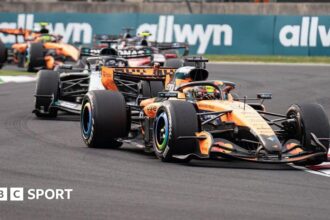
The core of the controversy lies in the new power unit formula. The mandated 50-50 power split between internal combustion and hybrid energy, while a technical marvel, has introduced gimmickry that purists decry. Drivers now have access to pre-programmed “overtaking modes” and temporary “boost functions,” deployable at the push of a button on the steering wheel. This has transformed race strategy into a high-speed game of resource management, where timing your “power-up” is as crucial as braking points.
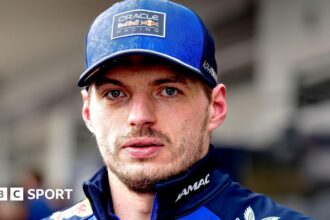
The criticism has been blistering and led by the sport’s biggest star. Four-time world champion Max Verstappen didn’t mince words, stating, “It feels artificial. You wait for the mode to be available, you press the button, and you sail past. It takes the skill out of the actual overtake. It’s becoming a joke, like something out of Mario Kart.” This sentiment echoes through a segment of the fanbase and veteran observers who believe overtaking should be earned through driver bravery, strategic tire management, and aerodynamic ingenuity, not granted by a standardized software function.
Proponents, however, argue this is the necessary price for the action fans demanded. “For years we heard the chorus: ‘F1 is boring, no one can pass,'” notes a senior team strategist. “Now we’ve given them passing on demand, and a portion says it’s too easy. The engineering challenge has shifted from creating a car that can follow to creating a team that can optimize these power modes within the rules. It’s a different kind of purity.”
Qualifying Conundrum: The Saturday Spectacle Under Threat
If the racing has been transformed, qualifying—traditionally a pure, single-lap showcase of ultimate car and driver performance—has been turned on its head. The new aerodynamic regulations, designed to make cars less sensitive to dirty air, have had a dramatic side-effect: a drastic reduction in tow dependency. While great for racecraft, this has shattered the delicate, unspoken alliances that defined Q3 shootouts.
The chaotic and controversial qualifying sessions in Bahrain and Jeddah revealed the new reality:
- Strategic Gridlock: No team wants to lead the train, sacrificing their own clean air to give a rival a tow. This has led to absurd games of “chicken,” with cars crawling on out-laps or even stopping at the end of the pit lane.
- Increased On-Track Risk: The logjams created by these tactics have resulted in near-misses and impeding incidents, dangerously mixing cars on slow preparation laps with those on flat-out qualifying pushes.
- Erosion of Ultimate Pace: The focus has shifted from extracting the absolute limit of the car to playing a high-stakes positional game. The fastest car/driver combination is no longer guaranteed pole, undermined by strategic misfortune.
“Qualifying was a sacred day,” laments a former race engineer. “It was the raw truth of performance. Now, it’s become a second race of gamesmanship before the Sunday gamesmanship. We’ve solved the racing problem by creating a qualifying problem.”
Safety in the Speed Shop: Unintended Consequences at 200mph
Most alarmingly, the quest for spectacle has collided with the immutable priority of safety. The 2026 cars, with their aggressive ground-effect aerodynamics and hybrid power bursts, are exhibiting unpredictable behaviors in close combat. The incident-packed first three races featured several major shunts that have raised red flags within the FIA.
The primary concern is a phenomenon dubbed “energy reclamation instability.” When following closely, the intricate floor of a chasing car can be starved of clean airflow, causing a sudden, dramatic loss of downforce. Coupled with the instant torque delivery from the hybrid system, this creates a car that is both prone to losing rear grip and capable of violently overcorrecting. The result is a higher likelihood of high-speed, sudden snaps that can launch cars into barriers.
“The drivers are reporting that the car feels ‘nervous’ or ‘binary’ in the wake,” reports a leading technical analyst. “One moment you have grip, the next you’re a passenger. The safety structures are better than ever, but we’re putting drivers in crash situations more frequently. The biggest rule change in history has, predictably, created a new set of accident dynamics we are only beginning to understand.”
The Road Ahead: Can F1 Find Its New Equilibrium?
As the sport reflects during this forced pause, the path forward is fraught with complexity. The genie of enhanced overtaking cannot be put back in the bottle, nor would the majority of fans want it to be. However, refinement is not just possible; it is imperative.
Predictions for the sport’s evolution post-hiatus include:
- Immediate Regulatory Tweaks: Expect swift action from the FIA on qualifying procedures, potentially mandating minimum out-lap speeds or introducing a “maximum delta time” to prevent dangerous stacking.
- A Power Mode Rethink: The scope and duration of overtake and boost functions will likely be curtailed, making them a scarcer resource to be used more tactically rather than as a frequent passing aid.
- Aero Evolution for Safety: Teams and the FIA will collaborate on subtle aerodynamic tweaks, particularly to the floor edges and diffuser, to make the loss of downforce in dirty air more progressive and less sudden.
- A Driver Revolt: The vocal discontent from figures like Verstappen will grow into a unified front if changes are not made. The Grand Prix Drivers’ Association (GPDA) will become a powerful lobby for reining in the perceived artificiality.
The ultimate conclusion is that Formula 1 is in a painful but necessary period of adolescence. It boldly addressed its primary critique—a lack of racing—with revolutionary technology. In doing so, it has inevitably created a suite of new problems. The soul of F1 has always been a tension between sporting purity and technological spectacle. The 2026 rules have violently shifted that balance. The task now is not to abandon the pursuit of excitement, but to temper it with the nuanced stewardship that protects qualifying integrity, driver safety, and the authentic skill that separates a grand prix driver from a gamer. The season’s opening act provided thrills, but the sport’s long-term health depends on mastering the thorny issues it has so dramatically sown.
Source: Based on news from BBC Sport.