Tiger Woods’ TGL Return Fuels Masters Speculation: A Health Update Analyzed
The aura of Tiger Woods walking the fairways of Augusta National is a singular force in sports, a phenomenon that transcends the tournament itself. As the azaleas prepare to bloom, that aura intensified this week, not on the hallowed grounds of Georgia, but within the high-tech arena of TGL. Woods’ long-awaited return to competitive action—even in a simulator-based team format—has provided the most compelling clue yet about his readiness for The Masters, sending shockwaves of analysis and anticipation through the golf world.
From Simulator to Sanctuary: The Significance of the TGL Cameo
For Tiger Woods, the TGL final for his Jupiter Links GC side was never about the trophy. It was a litmus test. Following his seventh back surgery last October—a subtalar fusion procedure to address arthritis from a past injury—the competitive landscape for the 15-time major champion has been a question mark. His stated goal at February’s Genesis Invitational was clear: to make a return at The Masters. The TGL offered a controlled, yet pressurized, environment to gauge his body’s response to tournament-like intensity.
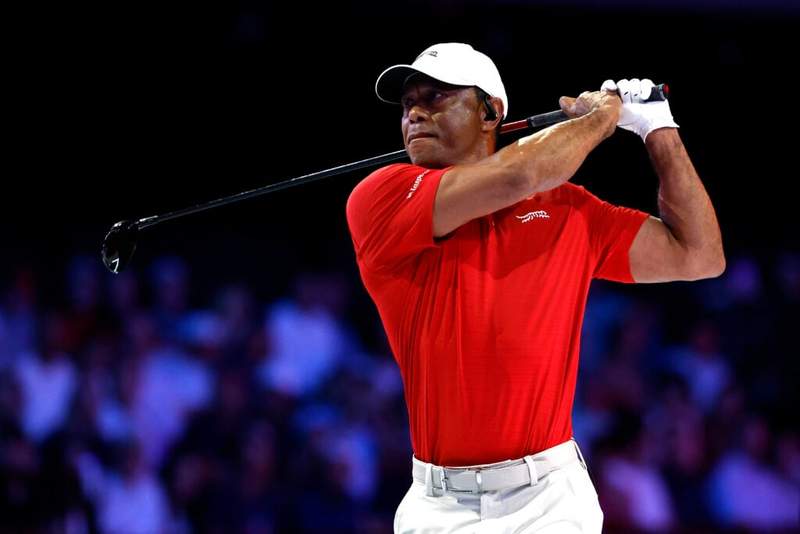
The results were immediately electrifying. On his very first swing, Woods launched a three-wood a staggering 270 yards, registering a ball speed of 170 mph. For context, that ball speed would rank competitively on the PGA Tour. This wasn’t a gingerly swing; it was a full, unleashed motion that screamed of regained physical capability. More than the numbers, it was the familiar, fluid sequence of the swing—the controlled torque, the explosive release—that offered the most potent visual evidence of progress.
The Critical Health Update: Between the Lines of Tiger’s Assessment
Following the TGL match, Woods provided the update everyone was parsing. He stated he felt “pretty good” physically afterward, a deceptively simple phrase that carries immense weight. For an athlete with his injury history, the day-after recovery is often more telling than performance in the moment.
This update allows for expert analysis that trends optimistic:
- Controlled Environment Success: The TGL format, hitting off a simulator screen to a short-game complex, eliminates the uneven lies and miles of walking that challenge Augusta. It purely tested his rotational health and swing mechanics—and they passed.
- Pain Management vs. Structural Integrity: Woods’ recent surgeries have aimed not just at pain relief but at creating a stable, fused foundation. His ability to generate elite speed suggests the structure is holding, a critical factor for the violent demands of a full tournament.
- The “Pretty Good” Benchmark: For Tiger, “pretty good” after a competitive outing is a significant step up from the guarded optimism of recent years. It implies manageable soreness, not debilitating pain.
However, the unspoken challenge remains: translating this simulator success to the undulating, 7,500-yard walk that is Augusta National. The TGL test was a single, two-hour session. The Masters is a four-day marathon of physical and mental endurance.
Augusta Odds: Does the TGL Performance Make Him More Likely to Play?
Unequivocally, yes. Prior to this showing, the golf world was operating on hope and Tiger’s word. Now, there is tangible evidence. The TGL return serves as a successful dress rehearsal, increasing the likelihood of a Masters start from a question mark to a probable check mark. Here’s why:
The Psychological Hurdle is Cleared: Competing again, in any format, removes the rust of inactivity. Facing live crowds, cameras, and the need to execute under lights was a necessary step in his process. The confidence gained from seeing his ball perform at an elite level cannot be understated.
It Validates the Timeline: His team’s reported plan has always been a slow build toward Augusta. This public step fits perfectly into that schedule, suggesting his rehabilitation is on or ahead of track.
It Was a Strategic Revelation: Woods and his inner circle are meticulous. They would not have agreed to this TGL appearance if there was a high risk of a negative physical outcome or a poor performance that would seed doubt. This was a calculated reveal, designed to show strength.
The primary variable now is not his swing, but his stamina. Can his body withstand 72 holes at one of the world’s most demanding walking courses? The prediction here is that Woods will tee it up, understanding that making the cut is a victory in itself, and that any weekend play is a bonus that builds foundation for the rest of the season.
Beyond the Drive: What to Watch for at Augusta National
If, as expected, Tiger Woods arrives at The Masters, the analysis will shift from “if” he can play to “how” he is playing. Key indicators will extend far beyond his famous drives:
- The Walk: Observers will scrutinize his gait, especially in the late afternoon and on Augusta’s steep slopes. Any hint of a limp or stiffness will be a telling sign of fatigue.
- Recovery Between Rounds: The true test may come on Saturday morning. How his body rebounds from Friday’s 18 holes will be the ultimate indicator of his capacity to contend.
- Short Game Precision: Augusta’s greens are a mental and physical puzzle. The delicate feel required for chips and putts can be the first thing compromised by back stiffness or pain medication.
- Course Management: A wiser, more physically limited Woods may employ a more conservative strategy, relying on iron play and legendary course knowledge to offset any distance loss to younger rivals.
His presence alone alters the tournament’s gravitational pull, drawing energy, crowds, and narrative focus. For fellow competitors, it’s a reminder of the sport’s ultimate benchmark. For fans, it’s a chance to witness history, however it unfolds.
The Final Verdict: A Cautious Step Toward a Historic Walk
Tiger Woods’ TGL return was far more than a promotional event for a new league. It was a strategically timed, powerfully executed health update delivered not in a press conference, but through the language he speaks best: golf shots. The 270-yard three-wood with 170 mph ball speed was a resounding statement that his surgically repaired body can still produce the artistry his mind demands.
While the hills of Augusta present a challenge of a different magnitude, the path to getting there now looks clearer. The TGL performance makes him significantly more likely to play, transforming his Masters participation from a hopeful rumor into a likely reality. The question is no longer about his swing, but about his endurance. Expect to see Tiger Woods on the first tee at Augusta National, not as the prohibitive favorite, but as the sport’s most compelling variable—a living legend testing the limits of his resilience against the game’s greatest test. His walk will be measured, his rounds will be scrutinized, but his mere presence will, once again, make The Masters feel complete.
Source: Based on news from Yahoo Sports.