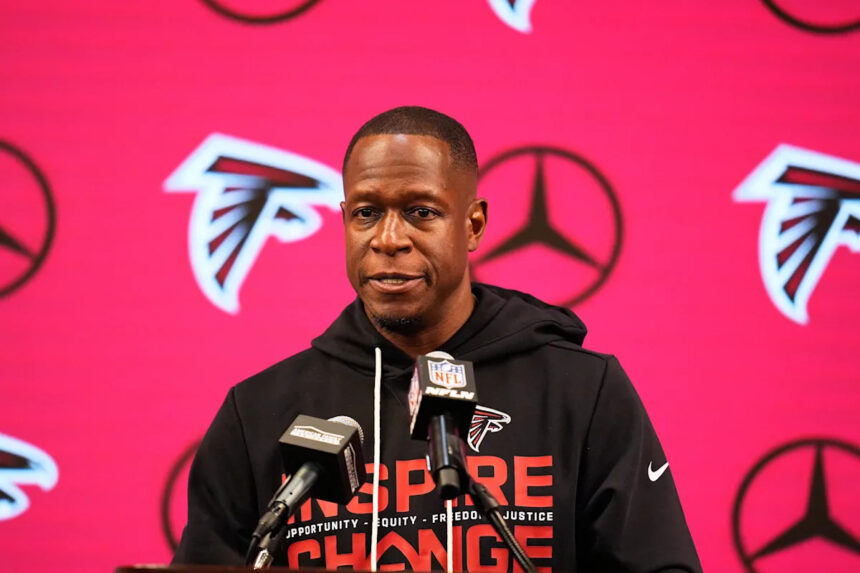
Titans Cast Wide Net, Interview Former Falcons Coach Raheem Morris in Ongoing Search
The Tennessee Titans’ methodical hunt for their next head coach continued into a new week, adding a candidate with a unique blend of experience and recent success. According to a person familiar with the interview schedule who spoke to The Associated Press on condition of anonymity, the team interviewed former Atlanta Falcons head coach Raheem Morris on Monday. This move underscores the franchise’s commitment to a thorough, wide-ranging search as they look to replace Mike Vrabel and steer the organization into a new era.
Morris, 47, becomes at least the eighth candidate to sit down with Titans controlling owner Amy Adams Strunk and general manager Ran Carthon. His interview follows a first week that concluded with a high-profile meeting with two-time AP Coach of the Year Kevin Stefanski, who is under contract with the Cleveland Browns. The Morris interview reveals a fascinating layer to Tennessee’s process: a willingness to consider a coach fresh off a dismissal, but one whose recent work has significantly bolstered his resume.
The Raheem Morris Dossier: A Story of Resilience and Reinvention
Raheem Morris presents one of the more intriguing profiles in this coaching cycle. His career is a tale of two head coaching tenures, separated by a decade of invaluable defensive seasoning.
His first opportunity came with the Tampa Bay Buccaneers in 2009, making him, at 33, the NFL’s youngest head coach at the time. The results were uneven, culminating in a 17-31 record over three seasons with no playoff appearances. That experience, often labeled as “too much, too soon,” could have defined his career. Instead, Morris embarked on a deliberate journey of reinvention.
He rebuilt his reputation as a defensive backs coach and defensive coordinator, most notably contributing to the Los Angeles Rams’ Super Bowl LVI victory under Sean McVay. This period of growth positioned him for his second act in Atlanta.
Morris returned to the Falcons, first as an assistant head coach and later as the defensive coordinator. He took over as interim head coach for the final 11 games of the 2020 season after Dan Quinn’s dismissal, going 4-7. His full-time tenure began in 2021, where he compiled a 16-18 record over the last two seasons. While the overall win-loss tally didn’t meet Atlanta’s immediate expectations, leading to his firing on Jan. 4, context is crucial. Morris navigated challenging quarterback and cap situations, often fielding competitive teams with a roster in transition. His players consistently praised his leadership and communication skills.
Why Morris Fits the Titans’ Current Blueprint
On the surface, interviewing a coach just let go by a division rival might seem curious. But a deeper look reveals several compelling alignments with Tennessee’s apparent needs.
- Defensive Acumen for a Rebuilding Unit: The Titans’ defense, once a fearsome identity, regressed in recent seasons. Morris is a defensive-minded leader with a proven scheme and a history of developing secondary talent—a major area of need for Tennessee. His energy could reignite a unit looking to rediscover its disruptive edge.
- Leadership in a Culture Reset: Following the strong, established culture under Mike Vrabel, the Titans may value a leader known for strong player relationships and modern communication. Morris’s reputation as a “players’ coach” who connects across generations could be vital in a locker room facing turnover.
- Collaboration with the Front Office: General Manager Ran Carthon is entering his second year and will be on his first head coaching hire. The Titans may prioritize a coach willing to work in a collaborative, structured partnership where personnel decisions are shared. Morris’s experience in various organizational structures could be a positive here.
- Development of a Young Quarterback: While Will Levis showed promise as a rookie, his development is paramount. Morris’s recent experience overseeing the ups and downs of Desmond Ridder in Atlanta, and his work with Matthew Stafford in L.A., provides relevant insight into managing a young QB’s growth amidst pressure.
Navigating a Crowded and Competitive Field
The interview with Raheem Morris is a single data point in a expansive search. The Titans have cast an exceptionally wide net, speaking to candidates from various backgrounds:
- Offensive innovators (like Texans OC Bobby Slowik, Bengals OC Brian Callahan)
- Defensive stalwarts (like Ravens DC Mike Macdonald, Cowboys DC Dan Quinn)
- Experienced head coaches (like Morris, and requested interviews with established names)
This strategy suggests the Titans are not locked into one specific profile. They are testing philosophies, gathering information, and likely determining what kind of partnership—between owner, GM, and coach—will define the next decade. The inclusion of a candidate like Kevin Stefanski, though a complicated acquisition requiring a trade, signals ambition. The interview of Morris signals thoroughness and an appreciation for coaches who have evolved from past experiences.
The risk for Tennessee is a drawn-out process where top candidates accept jobs elsewhere. However, the benefit is a more informed, deliberate decision that considers multiple visions for the franchise’s future.
Prediction: A Decision Rooted in Partnership and Vision
While it is too early to label Raheem Morris the frontrunner, his interview is far from a mere box-ticking exercise. He represents a specific path: the retread head coach who has genuinely grown, proven his adaptability, and earned a second chance not on past potential, but on recent, tangible improvement.
The Titans’ eventual choice will likely hinge on two factors beyond the X’s and O’s:
1. The Carthon Connection: This hire will be the defining partnership of Ran Carthon’s GM tenure. Chemistry and a shared vision for roster construction between the GM and head coach will be paramount.
2. The Offensive Question: However the Titans proceed, they must present a concrete, modern plan for Will Levis and the offense. Even if they hire a defensive-minded coach like Morris, his offensive coordinator choice will be scrutinized as heavily as the head coach himself.
Morris checks many boxes for a team in need of a cultural refresh and defensive stability. His candidacy will be measured against offensive-minded coaches who might promise a more dramatic schematic shift for Levis.
Conclusion: A Search Defining a New Titans Era
The Tennessee Titans’ coaching search, now extended with the interview of Raheem Morris, is a critical inflection point for the franchise. It is not merely about finding a replacement for Mike Vrabel; it is about defining the identity of the post-Vrabel, Carthon-led Titans. By interviewing a diverse slate that includes both the hottest offensive assistants and a seasoned, defensive-minded leader like Morris, the organization is doing its due diligence.
Raheem Morris brings to the table a compelling narrative of resilience, a respected defensive mind, and a leadership style that resonates with today’s player. Whether that is the precise recipe Tennessee settles on remains to be seen. But his presence in this process confirms that the Titans are leaving no stone unturned, seeking a leader capable of both learning from the past and building a sustainable winner for the future. The decision, when it comes, will reveal not just who the Titans want to lead their team, but who they believe they are as an organization moving forward.
Source: Based on news from Yahoo Sports.