Trae Young Trade Fallout: Winners, Losers, and the New NBA Reality for Hawks and Wizards
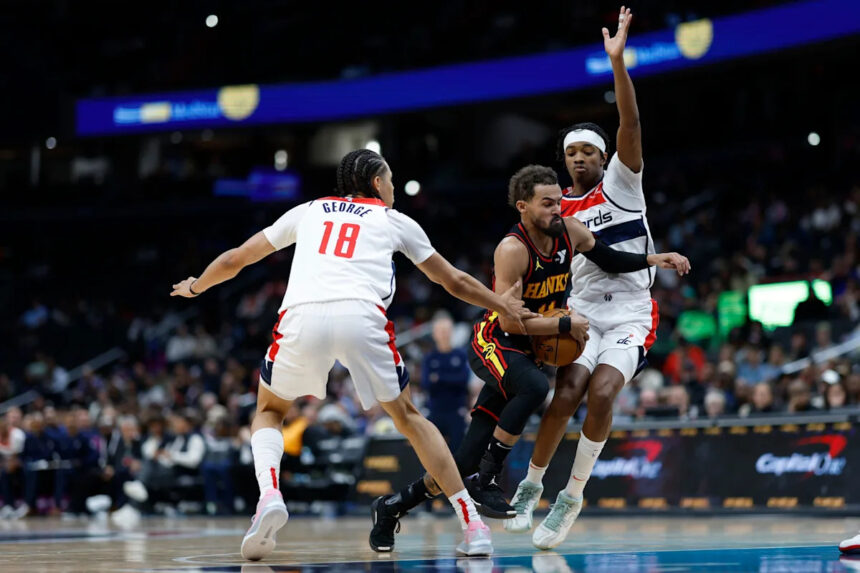
The NBA’s trade season has officially exploded into life with a seismic, conference-altering move. In a stunning pre-deadline blockbuster, the Atlanta Hawks have traded four-time All-Star guard Trae Young to the Washington Wizards. The deal, confirmed by a person with direct knowledge under condition of anonymity, sends Young to the nation’s capital in exchange for veteran guard CJ McCollum and sharpshooting forward Corey Kispert. This isn’t just a player swap; it’s a philosophical earthquake for both franchises, a rare intra-divisional gamble that will define their trajectories for the next half-decade. While the current standings—Washington languishing near the East’s basement and Atlanta stuck in Play-In purgatory—might suggest lateral moves, the implications are profound. Let’s break down the clear winners and losers from a deal that changes everything in the Southeast Division.
- Winner: The Washington Wizards’ Rebuild Gets Its North Star
- Loser: The Atlanta Hawks’ “Big Bet” Era Ends With a Whimper
- Winner: Dejounte Murray and the Hawks’ New Identity
- Loser: The Eastern Conference’s Middle Class
- Expert Predictions: What’s Next for Both Franchises?
- Final Verdict: A Necessary Divorce, But an Uneven Settlement
Winner: The Washington Wizards’ Rebuild Gets Its North Star
For years, the Washington Wizards have meandered through a directionless rebuild, lacking a true franchise cornerstone. In acquiring Trae Young, they have unequivocally found one. This is the quintessential high-risk, high-reward move a moribund franchise must make.
- Instant Offensive Supernova: Young is one of the league’s most potent offensive engines, a career 25.5-point, 9.5-assist player who commands constant defensive attention. He will supercharge an offense that has desperately needed a creative genius.
- Marketing and Relevance: Young is a superstar, complete with the iconic hairstyle, deep shooting range, and flair that sells tickets and jerseys. For a franchise struggling to capture the D.C. sports spotlight, he is a godsend.
- A Clear Path Forward: Pairing Young with last year’s lottery pick, Bilal Coulibaly, gives Washington an exciting, high-upside backcourt to build around. The front office can now aggressively shape the roster, seeking specific defensive-minded and athletic pieces to complement Young’s unique skill set.
The Wizards have willingly taken on the defensive concerns that come with Young, but for a team at rock bottom, securing a 25-year-old All-NBA talent is an undeniable victory. Their rebuild now has a face and a furious pace.
Loser: The Atlanta Hawks’ “Big Bet” Era Ends With a Whimper
This trade is a stark admission of failure for the Atlanta Hawks. The grand experiment of pairing Trae Young with Dejounte Murray—a move designed to balance offense with defense, flair with steadiness—has officially collapsed. Trading Young within the division is a particularly brutal footnote.
While acquiring assets for a disgruntled star is often necessary, the return of CJ McCollum and Corey Kispert feels underwhelming for a player of Young’s caliber. McCollum, 32, is a fine professional scorer but represents a significant downgrade in ceiling and playmaking. Kispert is a valuable role player—a lethal catch-and-shoot threat—but not a centerpiece. The Hawks did not secure a young, blue-chip prospect or a haul of draft picks, which raises questions about their leverage and long-term vision. This deal feels less like the start of a bold new direction and more like a retreat, leaving the franchise in a murky middle ground without its most transformative player since Dominique Wilkins.
Winner: Dejounte Murray and the Hawks’ New Identity
Paradoxically, the biggest on-court winner in Atlanta might be Dejounte Murray. The tension in the Hawks’ backcourt over roles and leadership has been an open secret. With Young gone, the keys to the franchise are handed unequivocally to Murray. He will now operate as the primary ball-handler and offensive initiator, a role that better suits his methodical, mid-range heavy game.
This trade allows head coach Quin Snyder to build a system that prioritizes size, defensive activity, and a more balanced offensive attack. The lineup of Murray, McCollum, Kispert, Jalen Johnson, and Onyeka Okongwu offers more positional size and shooting versatility. While the star power diminishes, the fit improves. Murray gets a chance to prove he can be the best player on a playoff team, and the Hawks get to evaluate the rest of their roster under a new hierarchy.
Loser: The Eastern Conference’s Middle Class
The immediate ripple effect of this trade is a fascinating power shift. The Wizards, while not instant contenders, have added a player capable of single-handedly winning 10 extra games a season. The Hawks, meanwhile, have likely taken a step back in the short term.
- Play-In Chaos: This injects chaos into the already congested Eastern Conference Play-In race. Teams like the Chicago Bulls, Brooklyn Nets, and Toronto Raptors now see a potential opening as Atlanta recalibrates.
- Washington’s Ascent: The Wizards immediately become more dangerous and a tougher out every night. Young’s presence accelerates their competitive timeline, putting pressure on other rebuilding teams in the East.
- Trade Deadline Domino: Most importantly, this move signals the start of a potentially frenzied trade deadline. Other teams with star players on the fence may feel pressure to act, knowing the market has been set.
The balance of power in the East hasn’t been overturned, but the foundation of the middle tier has been shaken.
Expert Predictions: What’s Next for Both Franchises?
The trade is done, but the fallout is just beginning. Here’s what to expect next:
For the Washington Wizards: The focus shifts to protection. Their immediate mission will be to surround Young with defensive stalwarts and rim-runners. Look for them to be active at the deadline, potentially moving veterans like Kyle Kuzma for assets that fit the new timeline. The draft strategy also becomes clearer: target high-character, defensive-oriented players. Success won’t be measured in wins this season, but in the establishment of a cohesive, exciting identity.
For the Atlanta Hawks: This cannot be the final move. The presence of McCollum, another ball-dominant guard in his 30s, alongside Murray is clunky. Expect CJ McCollum to be heavily shopped before the deadline or this summer. The Hawks likely see him as a valuable expiring contract and a tradeable asset. The true evaluation of this deal will come in the subsequent trades Atlanta makes. If they can flip McCollum and others for young talent and picks, the narrative softens. If not, this becomes a historic misstep.
Final Verdict: A Necessary Divorce, But an Uneven Settlement
The Trae Young trade marks the end of an era in Atlanta and the birth of a hopeful new one in Washington. For the Wizards, it’s an unambiguous win. They paid a modest price for a superstar, embracing the thrilling volatility he brings. For the Hawks, it’s a complex and painful divorce from a player who delivered them to the Eastern Conference Finals. The return feels light, suggesting a market that was cooler than anticipated or a front office desperate for a change.
In the grand calculus, both teams needed a drastic shift. Washington needed a star, and Atlanta needed to end a partnership that had run its course. The Wizards emerge with a brighter, clearer future. The Hawks walk away with flexibility and questions. The true winner of this deal will be determined not by the headlines it generated today, but by the next moves each franchise makes in its shadow. The first domino has fallen, and the entire NBA is now watching to see what else comes crashing down.
Source: Based on news from Yahoo Sports.