Uefa Calls Crisis Summit: The VAR Over-Reach and the Fight for Football’s Soul
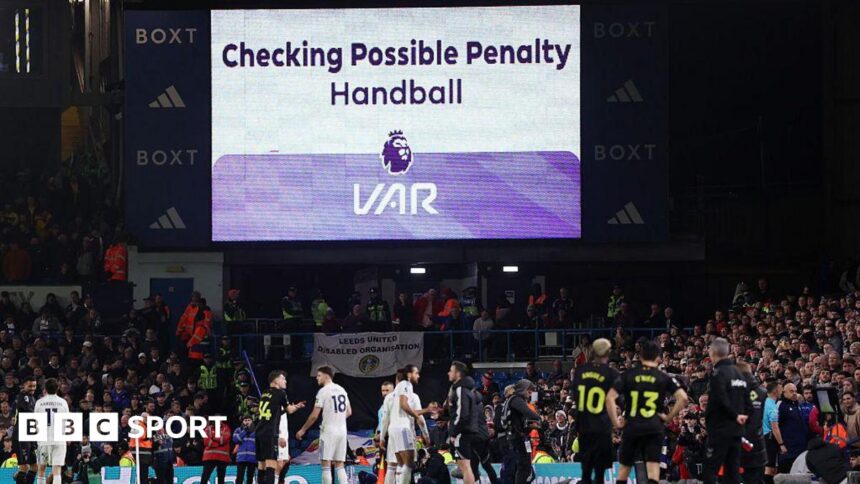
The video assistant referee was ushered in as football’s saviour, a technological shield against glaring injustice. Yet, six years after its widespread introduction, a new consensus is emerging: the cure may be becoming worse than the disease. In a dramatic move that signals a pivotal moment for the modern game, Uefa has summoned the chiefs of Europe’s elite leagues to a summer summit with a singular, urgent mission: to halt the slide towards what it terms “microscopic” VAR interventions and reset the technology to its original purpose. This isn’t a tweak; it’s an intervention on the interventionist, a call to pull football back from a precipice of perpetual analysis.
The “Microscopic” Problem: When Precision Erodes Passion
The catalyst for this unprecedented gathering is Roberto Rosetti, Uefa’s head of referees and a respected former official. Last month, Rosetti issued a stark warning that has resonated across the continent. He argued that the game must not “go in this direction of microscopic VAR interventions.” This phrase, “microscopic,” is the key to understanding the crisis. It describes a state where offside decisions are determined by pixelated lines drawn from a player’s armpit, where fouls are dissected frame-by-frame to find minimal contact, and where the celebration of a goal is now a hesitant pause, shrouded in anxiety rather than erupting in pure joy.
Uefa’s concern, shared by a growing legion of fans, players, and managers, is that VAR has over-reached. Conceived to correct “clear and obvious errors,” the system has morphed into a tool for seeking forensic perfection—an impossible standard in a sport built on fluidity, human interpretation, and pace. The over-reach of VAR is seen in the interminable delays, the erosion of the on-field referee’s authority, and the sterile celebration culture it has fostered. The summit aims to address this by refocusing on the intended interpretation: that VAR is a safety net for howlers, not a magnifying glass for marginal minutiae.
The Summit Agenda: Recalibrating the Threshold of Intervention
The meeting will bring together the referee chiefs from the Premier League, La Liga, Serie A, the Bundesliga, and Ligue 1. Their task is not to discuss abolishing VAR, but to strategically recalibrate its application. The core discussion will revolve around thresholds applied by VAR officials. Think of it as raising the bar for what constitutes an error worthy of review.
Key areas for debate will likely include:
- Offside: Moving from “clear and obvious” to a “thicker line” or daylight principle, effectively building a margin of error to favour the attacker and restore immediate goal celebrations.
- Subjective Decisions: Re-emphasizing that incidents like soft fouls in the buildup to a goal or minimal contact in penalty areas should only be overturned if the on-field decision is deemed *egregiously* wrong.
- Speed of Review: Implementing stricter time limits for checks to maintain the game’s rhythm, accepting that a quick, confident decision is often better than a “perfect” one arrived at after three minutes of analysis.
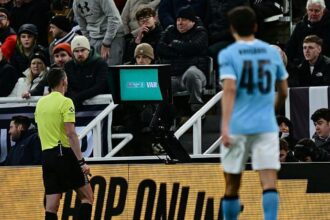
- Referee Authority: Encouraging more on-field review (the referee going to the monitor) for subjective calls, putting the final judgment back in the hands of the official on the pitch.
This summit represents a crucial collaboration between Uefa and leagues. While Uefa runs its own competitions (Champions League, Europa League), it lacks direct authority over domestic league protocols. This meeting is a persuasive effort to create a unified philosophical front, ensuring a more consistent experience for players and fans across all elite football.
Expert Analysis: The Cultural Shift in Officiating
The issue runs deeper than mere protocol; it’s a cultural shift in officiating. VAR was introduced to a generation of referees and officials who now operate with the knowledge that every decision will be scrutinized in ultra-slow motion. This has bred a risk-aversion, a tendency to defer to the technology for cover, effectively making VAR the primary decision-maker in key moments. Rosetti’s initiative is an attempt to reverse this psychology, to re-empower the on-field referee to make bold calls with the understanding that VAR will only step in for monumental mistakes.
Furthermore, the microscopic VAR interventions have altered the fan’s relationship with the game. The raw, immediate emotional response—the roar for a goal—has been compromised. In its place is a fragmented, confused experience where moments are provisional. Restoring this emotional flow is as important to the sport’s health as any technical accuracy. Uefa seems to understand that football is a human drama, not a clinical science experiment.
Predictions: What a “Reset” Could Look Like on the Pitch
If the summit is successful, what tangible changes might fans see by the start of the 2024/25 season?
First, we can predict a noticeable reduction in offside overturns. Goals where a player is “a toe offside” will likely stand, with broadcasters no longer drawing lines with millimetric precision. The emphasis will return to what the naked eye can see in real time.
Second, the pace of the game will improve. Fewer, faster checks will mean less cooling of momentum and less time for players to surround the referee. Third, we may see a return of the “benefit of the doubt” going to the attacking side in ambiguous penalty box incidents, a fundamental principle that had been lost in the search for infallibility.
However, challenges remain. The most significant will be achieving true uniformity. Will the Premier League, with its intense media scrutiny and financial stakes, adopt the same thresholds applied as other leagues? Differences in application could lead to accusations of inconsistency on a European scale. Furthermore, communicating this reset to fans will be critical; a non-intervention for a tight call must be understood as the system working as intended, not as a failure.
Conclusion: A Crossroads for the Beautiful Game
Uefa’s summit is a recognition that football stands at a crossroads. One path leads towards a sanitized, hyper-analytical sport where every action is reviewed and passion is secondary to precision. The other path aims to reclaim the game’s soul—its flow, its emotion, its human essence—while retaining a technological safeguard against genuine travesties.
This is not about turning back the clock, but about steering the ship to safer, saner waters. By summoning the power leagues to confront the over-reach of VAR, Roberto Rosetti and Uefa are launching the most important off-field campaign in recent memory. The goal is clear: to restore faith, restore flow, and ensure that VAR serves the game, rather than the game serving VAR. The outcome of this summer summit will resonate in every stadium, living room, and pub where the beautiful game is loved, defining its character for a generation to come.
Source: Based on news from BBC Sport.