Dalot’s Derby Escape: The VAR Non-Intervention That Could Have Redrawn the Manchester Battle
The narrative of Manchester United’s galvanizing 2-0 victory over Manchester City is one of defiant defense, tactical discipline, and a seismic shift in the Premier League title race. Yet, beneath the roar of a triumphant Old Trafford, a quiet, 10th-minute incident involving Diogo Dalot and Jeremy Doku threatens to become the defining ‘what if’ of the entire contest. The consensus emerging from pundits, former referees, and a magnanimous Pep Guardiola is stark: in another competition, on another day, United would have faced an 80-minute siege with ten men.
The Incident: A Tackle Under the Microscope
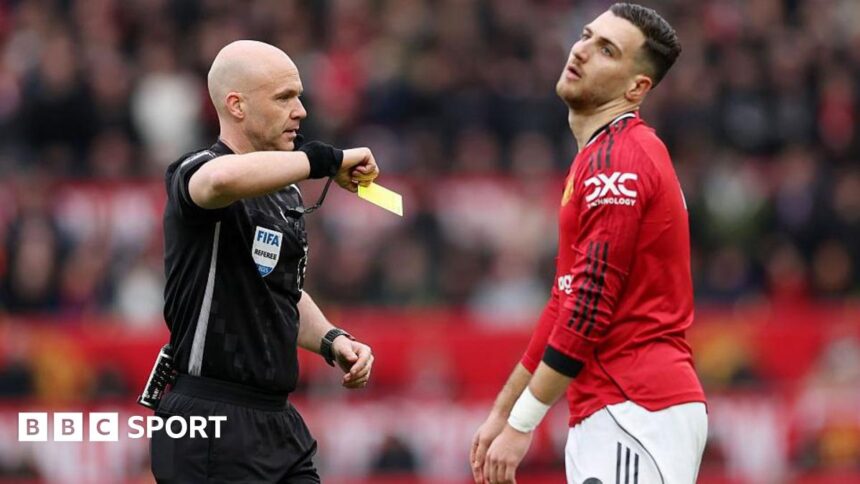
With the game scoreless and the early tension palpable, Manchester City’s Jeremy Doku received the ball wide on the left flank. Diogo Dalot, United’s ever-reliable right-back, closed in. What transpired next was a split-second action that VAR exists to adjudicate. Dalot, stretching to block a potential cross or clearance, extended his right leg. His studs made clear, upward contact with Doku’s knee, a vulnerable area. Referee Anthony Taylor, with a partially obstructed view, deemed it a yellow-card offense. The game continued, the caution was logged, and the moment seemed to pass.
However, the replays told a more dangerous story. The key factors that define a red card for serious foul play were present:
- Studs-up contact: Dalot’s boot was raised, with the studs exposed.
- Point of contact: The impact was directly on Doku’s knee, a sensitive joint.
- Force and intensity: While not a wild, lunging tackle, the action carried significant force and a lack of control.
According to IFAB laws, a challenge that endangers the safety of an opponent with excessive force or brutality is a sending-off offense. By this definition, the decision not to at least send Taylor to the pitchside monitor for a review has sparked intense debate.
The Guardiola Gambit: Magnanimity or Misdirection?
In the aftermath of a disappointing defeat, Pep Guardiola’s reaction was notably diplomatic. “I don’t want to talk about that,” he stated when pressed on the Dalot incident. He refused to blame the officiating, instead focusing on his own team’s uncharacteristically sluggish performance. This public stance is classic Guardiola—a strategic deflection to protect his players from external criticism and to maintain a unified focus.
But to interpret this as acceptance would be naive. Guardiola, a football obsessive who dissects every detail, will undoubtedly harbor private frustrations. He knows the colossal mathematical and psychological advantage a red card would have bestowed upon City. At 0-0, against a United side low on confidence, dominating possession against ten men for 80 minutes is a scenario City are built to exploit. His magnanimity was a product of the result; a City victory would have likely rendered the incident a footnote. In defeat, highlighting it would have been construed as sour grapes. His silence on the matter speaks volumes about what he truly believes its significance to be.
The European Standard: Would VAR Have Acted Differently?
The most damning indictment of the non-call comes from comparisons with UEFA competitions. Former Premier League referee Keith Hackett stated unequivocally that in a Champions League match, “Dalot walks.” This sentiment is echoed across the analysis sphere. European refereeing, influenced heavily by UEFA’s directives, tends to adopt a stricter, more literal interpretation of challenges involving studs to the knee or above.
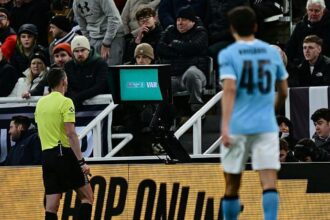
The critical difference lies in the VAR’s threshold for intervention. In England, the “clear and obvious error” bar is often set perplexingly high, leading to a reluctance to overturn subjective on-field calls, especially in the opening stages of a major fixture. In Europe, there appears to be a greater willingness for the VAR to advise a review for any potential red-card incident, trusting the referee to make a final judgment after seeing slowed, multi-angle replays. The question for Anthony Taylor and VAR official Simon Hooper is: was the decision not to send Dalot off so clearly *correct* that it didn’t even warrant a second look? For many, the answer is a resounding no.
Ripple Effects: How the Game—and Season—Might Have Changed
Speculation is a dangerous game, but the potential ramifications of a red card are too significant to ignore. Let’s project the alternate timeline:
- Tactical Cataclysm for United: Erik ten Hag would have been forced into an immediate, desperate reshuffle. Likely sacrificing an attacker, the game plan of compact defense and swift counter-attacks would have become a pure, backs-to-the-wall survival mission.
- City’s Relentless Onslaught: With a numerical and psychological advantage, City’s possession game would have become a suffocating stranglehold. The spaces that United eventually exploited on the break would have ceased to exist.
- Psychological Momentum: The entire emotional fuel of Old Trafford—the underdog spirit—would have been severely dampened. Conversely, City would have been infused with calm, methodical confidence.
In this context, United’s heroic victory becomes almost unimaginable. The result doesn’t just change three points; it alters the narrative of both clubs’ seasons, the momentum of the title race, and the pressure on both managers. It transforms a statement win into a probable, if valiant, defeat.
Conclusion: A Victory Shadowed by Controversy
Manchester United’s derby win will rightly be celebrated as a masterpiece of resilience. Bruno Fernandes’ leadership, Kobbie Mainoo’s breathtaking goal, and a collective defensive effort were all monumental. However, the specter of Diogo Dalot’s early challenge looms over it. The incident has exposed, once again, the inconsistent and often overly cautious application of VAR in the Premier League, particularly when contrasted with European norms.
While Pep Guardiola opts for a dignified silence, the football world is left to ponder the fine margins that define elite sport. United seized their reprieve with both hands, crafting a legendary performance. City, meanwhile, were left to rue a missed opportunity that was, ironically, never officially given. The debate over the incident is not an attempt to strip United of their credit, but rather a stark reminder that in the modern game, pivotal moments are not always decided by players or managers, but sometimes in a quiet VAR hub, with a decision not to decide. The title race may well have turned not on a moment of brilliance, but on one of bureaucratic restraint.
Source: Based on news from BBC Sport.