Ukrainian Skeleton Racer’s Tribute Helmet for Fallen Athletes Sparks IOC Controversy
In the high-speed, ice-cool world of skeleton racing, where athletes fly face-first down a frozen track, a single piece of equipment has become the focal point of a heated debate about remembrance, politics, and the boundaries of sport. Ukrainian slider Vladyslav Heraskevych, 27, arrived at the Winter Olympics in Cortina d’Ampezzo with more than medals on his mind. His helmet, a solemn tribute to Ukrainian athletes killed during the ongoing war, has been banned from use by International Olympic Committee officials, igniting a firestorm of criticism and raising profound questions about the place of personal tributes in global competition.
A Helmet of Honor: The Design and Its Intent
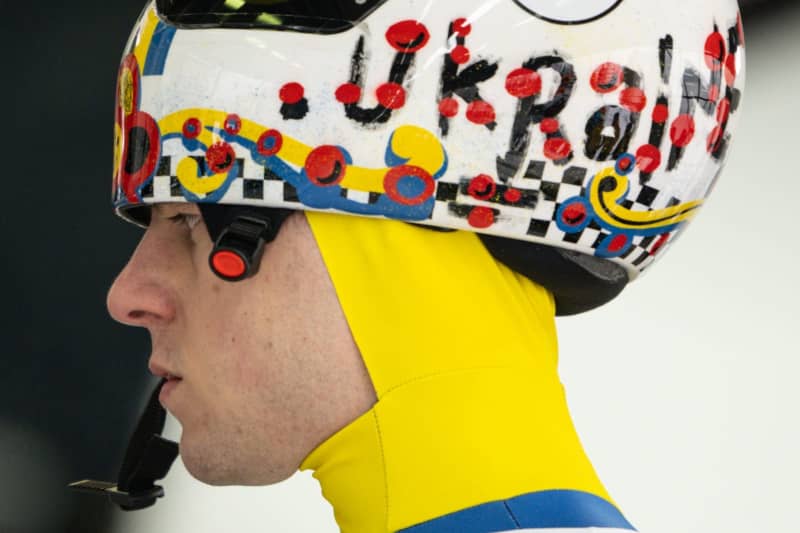
Vladyslav Heraskevych is no stranger to using his platform for poignant statements. At the 2022 Beijing Winter Games, he famously held up a sign reading “No War in Ukraine” after his run. His latest act of remembrance is more personal, more permanent, and etched directly onto his racing gear. The helmet in question is not a flashy corporate logo or a national symbol, but a somber memorial. It features the faces of approximately half a dozen Ukrainian athletes who lost their lives as a result of Russian attacks since the full-scale invasion began in February 2022.
These were not just names to Heraskevych; they were colleagues, peers, and fellow members of Ukraine’s tight-knit sports community. The design was conceived as a profound tribute to fallen athletes, a way to carry their memory and spirit with him as he represents their nation on the world stage. “It is very important for me,” Heraskevych stated, emphasizing the personal nature of the gesture. He wore the helmet during official training on Monday, a powerful visual statement that was quickly noticed by officials.
The IOC’s Intervention: Rule 50 and a Clash of Principles
The confrontation came swiftly. According to Heraskevych, a representative from the IOC’s Athletes’ Commission informed him that the helmet was not permitted for use in either training or competition. The decision appears to hinge on the IOC’s Rule 50 of the Olympic Charter, which states: “No kind of demonstration or political, religious or racial propaganda is permitted in any Olympic sites, venues or other areas.”
This rule, historically used to maintain neutrality at the Games, now finds itself in a moral gray area. Heraskevych, in a video posted to Instagram, expressed a cautious hope: “I hope it is the position of one person and not the IOC.” The central question becomes: Is a memorial for dead colleagues a “political demonstration,” or is it a fundamental human act of remembrance? The IOC’s stance suggests they view it as the former, likely concerned about the helmet being interpreted as a direct commentary on the ongoing conflict and thus violating the principle of political neutrality.
This incident is part of a broader, ongoing tension within the Olympic movement:
- Rule 50 Guidelines: The IOC has relaxed these guidelines slightly since 2020, allowing athletes to express views in mixed zones and on social media, but maintaining restrictions on the field of play and during ceremonies.
- Precedent for Tributes: Athletes have historically been allowed moments of silence, black armbands, or helmet decals for non-political tragedies, such as the death of a teammate or a national disaster.
- The War Exception: The conflict in Ukraine presents a unique challenge, as the IOC itself has banned Russian and Belarusian athletes from competing under their national flags due to the war.
Expert Analysis: The Thin Line Between Memory and Politics
Sports governance experts are divided on the IOC’s move. “The IOC is in an impossible position,” says Dr. Anya Petrova, a professor of sports diplomacy. “Their entire model is built on the idea of a political neutral space, but events in the real world inevitably crash the gates. Banning a memorial for the dead is a terrible optic, but allowing it opens the door for other athletes to wear symbols related to any global conflict, which could quickly fragment the atmosphere of the Games.”
Other analysts see a failure of moral clarity. “This isn’t a protest sign; it’s an obituary,” argues journalist and author Mark Brennan. “By conflating a tribute to the dead with political propaganda, the IOC is effectively sanitizing the reality of the war and asking Ukrainian athletes to compartmentalize their trauma. It highlights the inherent contradiction in modern Olympism—asking athletes to represent their nations passionately while forbidding them from acknowledging why that representation might feel more poignant, or more painful, than ever.”
The key distinction lies in intent versus interpretation. Heraskevych’s intent is memorial. The IOC’s interpretation, likely fearing a cascade of similar actions related to other global conflicts, is political. This gap underscores the immense difficulty of governing a global sporting spectacle in a fractured world.
Predictions and Potential Outcomes for Heraskevych and the IOC
As of now, it remains unclear whether Heraskevych will defy the ban and wear the helmet in competition later this week, risking potential disqualification. Several outcomes are possible:
- Quiet Reversal: Under mounting public and media pressure, the IOC could walk back the decision, perhaps reclassifying the helmet as a “personal tribute” exempt from Rule 50. This would be the cleanest solution but could set a precedent they wish to avoid.
- Symbolic Compromise: The IOC may suggest an alternative, such as a moment of silence for fallen athletes globally, or allow Heraskevych to display the helmet in the mixed zone but not during his actual run.
- Strict Enforcement: The IOC holds firm, and Heraskevych competes with a standard helmet. The story then shifts from the track to the press conferences, where Heraskevych’s words and the images of the banned helmet will dominate the narrative, arguably giving the issue even more attention.
- Athlete Solidarity: Athletes from other nations may show subtle support, wearing Ukrainian colors or symbols, testing the boundaries of the IOC’s rules and demonstrating a unified sports community stance.
Regardless of the immediate outcome, this incident will fuel the ongoing debate about athlete expression at the Olympic Games. The conversation is moving toward a future where the rules may need to be more nuanced, recognizing that for athletes from nations in crisis, their identity and their message cannot be easily separated.
Conclusion: More Than a Helmet, a Question of Conscience
The image of Vladyslav Heraskevych’s helmet, now sidelined, is a powerful metaphor. It represents the uncomfortable intersection of sport and reality, of ceremony and sacrifice. In seeking to protect the Olympic bubble from geopolitical strife, the IOC risks appearing callous, prioritizing a strict interpretation of neutrality over basic human empathy. For Heraskevych and the Ukrainian team, the war is not an abstract political concept; it is a daily reality that has devastated their homes and stolen their friends.
This is not about making a political point on the podium; it is about carrying the memory of fallen comrades into the arena. By banning this tribute, the IOC has inadvertently made the helmet’s message louder. The story is no longer just about Ukrainian athletes lost to war; it is about whether the Olympic stage has room for their memory. The final turn in this controversy is yet to come, but it has already revealed that some lines on the ice are far more difficult to navigate than the track itself.
Source: Based on news from Yahoo Sports.