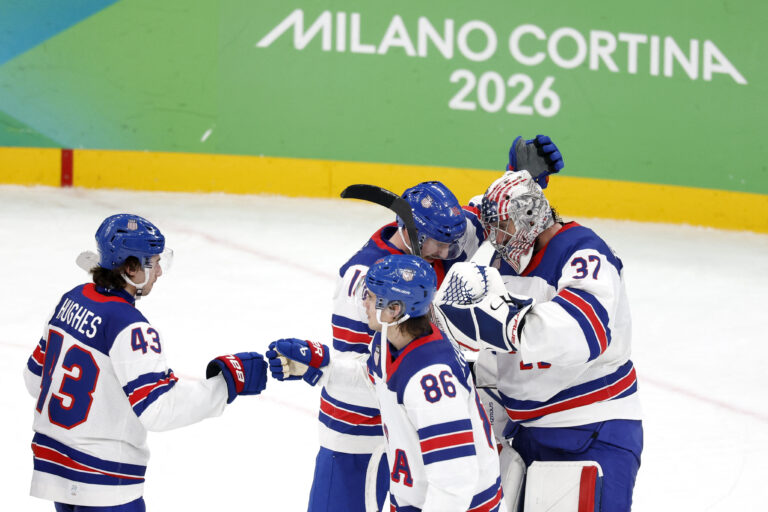
Golden Dawn: How USA’s Olympic Hockey Triumph Shattered TV Records and Captured a Nation
The roar that echoed from Milan-Cortina to living rooms across America wasn’t just for a gold medal; it was the sound of a 46-year-old ghost being exorcised in real-time. When the final puck slid into the empty Canadian net, securing the USA men’s hockey team’s first Olympic gold since the “Miracle on Ice,” it did more than complete a storybook ending. It triggered a television event of historic, unprecedented scale. With an average of over 20.7 million viewers and a peak soaring past 26 million, the early-morning thriller didn’t just win a time slot—it redefined what’s possible for American sports broadcasting, proving that in the streaming age, a shared national moment still holds unparalleled power.
A Miracle for the Modern Era: The Game That Stopped a Nation
For decades, the 1980 victory in Lake Placid stood as an untouchable cultural and sporting monument. The 2026 team, facing a powerhouse Canadian rival in the gold medal final, carried that immense weight. The game itself was a masterpiece of tension: back-and-forth action, legendary goaltending, and a heart-stopping overtime period that culminated in a breakaway, gold-clinching goal. The drama was perfectly crafted for a massive audience. But the context made the record-shattering viewership even more remarkable. As noted by sports reporter Joe Pompliano, this wasn’t a primetime showcase. The puck dropped in the pre-9 a.m. ET window on a weekday, a slot traditionally challenging for live viewership. Yet, Americans woke up early, called in late to work, and gathered around screens in unprecedented numbers. This wasn’t passive viewing; it was an appointment, a communal experience that cut through the fragmented media landscape.
Decoding the Record-Breaking Ratings: More Than Just a Game
The staggering NBC TV number—the largest ever for an American sporting event in that early time slot—is a data point rich with meaning. Analysts point to a confluence of factors that transformed this game into a viewership juggernaut:
- The 46-Year Narrative: The “golden drought” since 1980 provided a powerful, easy-to-understand storyline that captivated casual and hardcore fans alike. This wasn’t just another tournament; it was the chase for a legacy.
- The Perfect Rivalry: A final against Canada is the sport’s purest, most intense rivalry. The cross-border animosity and history guaranteed a high-stakes, emotional product.
- The Overtime Effect: The sudden-death format acted as a viewership vacuum, pulling in viewers via social media alerts and word-of-mouth as the game extended. The peak audience of 26 million Olympic watchers likely hit in those climactic OT minutes.
- Multi-Platform Mobilization: NBC’s presentation leveraged every tool: cutting-edge on-ice technology, seamless streaming on Peacock for the at-work audience, and masterful storytelling that highlighted the players’ journeys. This was a sports media coverage blitz that left no screen untouched.
The result was a broadcast that functioned as both a thrilling game and a national event, a rarity in today’s niche sports world.
Ripple Effects: What the Gold Means for Hockey’s Future
The impact of this victory extends far beyond a medal count or a single night of ratings glory. The “Air Force One party” that followed—where the team celebrated with the President—symbolized a cultural penetration the sport hasn’t seen in generations. For the NHL, which has had a strained relationship with the Olympics, the numbers are a deafening argument. Sending the world’s best players to the Games is no longer a concession; it’s a business imperative and the ultimate marketing tool. We can expect:
- Increased youth participation across the United States, a “Sydney Crosby effect” but on a national team scale.
- Greater leverage for American stars in the NHL, with newfound mainstream recognition.
- Intensified pressure for the NHL to commit to the 2030 Olympics, with networks now able to point to a proven, massive audience.
- A revitalized Team USA men’s hockey brand, transforming from underdog to a sustained global powerhouse expected to contend for gold every cycle.
The victory has reset expectations and economics for Olympic hockey in America.
Looking Ahead: Can the Momentum Last?
The challenge now is sustaining the energy. The 2026 team has achieved a legendary status, but sports memory is fickle. The key will be capitalizing on this surge to build deeper, more structural fan engagement. The NHL and USA Hockey must work in concert to keep these Olympic heroes in the spotlight and bridge the connection to the domestic league. Furthermore, the women’s national team, a consistent gold-medal force, deserves a commensurate surge in coverage and support off the back of this hockey mania. Predictively, the 2030 Olympic hockey tournament will face immense scrutiny and expectation. The overtime victory against Canada has set a new benchmark, not just for performance, but for audience size. Networks will demand it, and fans will now expect it.
Conclusion: A New Benchmark Forged in Gold
The 2026 USA men’s hockey gold medal was more than a championship. It was a broadcast phenomenon that demonstrated the enduring power of the Olympics to unite the country around a singular, patriotic sporting narrative. By shattering viewership records in an unlikely time slot, the game proved that when narrative, rivalry, and excellence collide, America will still stop and watch. The players didn’t just bring home gold; they delivered a clarion call to the sports industry about the value of national teams and the undiminished appeal of a true, unscripted moment of glory. The record books now show a new largest viewership champion, and American hockey has its first, full-fledged modern miracle—one witnessed by a captivated nation, one early morning at a time.
Source: Based on news from Yahoo Sports.