VAR’s Biggest Ever Decision? Analysing the Controversy That Shook the Premier League
In the pantheon of Premier League controversies, few moments have split opinion quite like the decision that ruled out West Ham’s late equaliser against Arsenal. The moment itself was chaotic, the aftermath was seismic, and the analysis has been relentless. But was this the single most consequential VAR decision in the history of the competition? Let’s break down the incident that has left fans, pundits, and former officials debating its legitimacy, and more importantly, its impact on both the title race and the relegation battle.
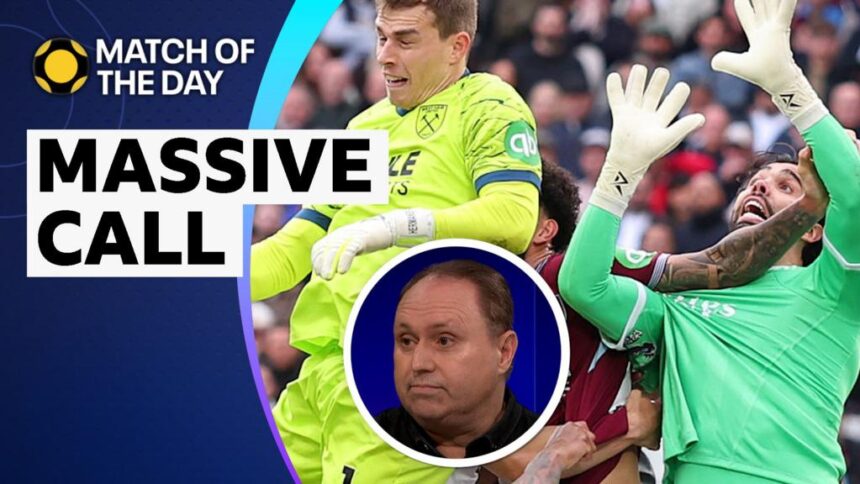
The match at the London Stadium was poised for a dramatic finish. Arsenal, clinging to a 1-0 lead, faced a desperate West Ham onslaught. In the dying embers of stoppage time, the ball found its way into the net. Bedlam ensued. But the celebrations were cut short. The Video Assistant Referee (VAR) intervened, ruling out the goal for a foul on Arsenal goalkeeper David Raya. The decision, as Match of the Day pundits Shay Given and Danny Murphy later dissected, was not just about a single moment of contact; it was about the interpretation of a rule that could define an entire season.
The Incident: A Frame-by-Frame Breakdown
To understand the scale of the controversy, we must revisit the sequence of events. A corner kick was swung into the Arsenal box. As the ball travelled, West Ham’s Tomas Soucek and Arsenal’s David Raya both challenged for it. Raya, attempting to punch clear, made contact with Soucek. The ball fell loose, and West Ham’s Jarrod Bowen stabbed it home. The referee initially allowed the goal. Then came the VAR check.
Former Premier League assistant referee Darren Cann, speaking on Match of the Day, provided a forensic analysis. He argued that the key question was whether Soucek had impeded Raya’s ability to make a play on the ball. “The goalkeeper is protected,” Cann stated. “If there is any contact that prevents him from getting to the ball, it’s a foul. The issue here is whether the contact was initiated by the goalkeeper or the attacker.” Cann’s verdict? The contact was minimal, but the referee’s on-field decision to award the goal was overturned because the VAR deemed it a “clear and obvious error.” This is where the debate ignites.
Key factors in the decision:
- Positioning: Raya was moving forward to claim the ball. Soucek was stationary but in his path.
- Contact: The collision was shoulder-to-shoulder, but Raya’s arm was raised, making it look more dramatic.
- Precedent: Similar challenges in other matches have often been allowed to stand, creating inconsistency.
- Outcome: The goal was disallowed, awarding Arsenal three points they might not have otherwise earned.
The punditry panel was divided. Shay Given, a former Premier League goalkeeper, sympathised with Raya. “As a keeper, you have to be protected. If you feel contact, you go down. But did he need to go down? That’s the grey area.” Danny Murphy, however, was more critical. “I think it’s a soft foul. In real time, it’s a goal. VAR has to be absolutely certain. I’m not certain.” This split opinion mirrors the wider footballing world.
The Title Race: How One Decision Changed the Trajectory
Now, let’s zoom out and examine the title race implications. Arsenal, under Mikel Arteta, are in a fierce battle with Liverpool and Manchester City. Every point is gold dust. By securing a 1-0 win at West Ham, the Gunners moved to within two points of the league leaders. Had West Ham’s goal stood, the result would have been a 1-1 draw. That single point lost could be the difference between lifting the trophy and finishing second.
What the decision meant for Arsenal:
- Momentum: Winning a gritty away game builds character. A draw would have felt like a defeat.
- Confidence: David Raya’s clean sheet, however controversial, boosts his standing as the number one.
- Title odds: Bookmakers immediately shortened Arsenal’s odds after the win. A draw would have lengthened them.
For Arsenal, this decision felt like justice. For their rivals, it felt like a gift. Liverpool fans will point to this as a moment where the league’s officiating tilted the balance. Manchester City, who have been on the receiving end of controversial VAR calls themselves, will watch with a wry smile. The margin for error in a title race is razor-thin, and this one decision has effectively handed Arsenal a critical advantage.
Prediction: If Arsenal go on to win the league by one point, this match will be remembered as the turning point. If they fall short, it will be a footnote. But the psychological impact cannot be overstated. Arsenal now believe they can win ugly. That belief is dangerous for their competitors.
The Relegation Battle: West Ham’s Heartbreak and Survival Hopes
While the title race grabs the headlines, the relegation battle is where this decision could have the most visceral, real-world impact. West Ham, under David Moyes, are flirting with danger. They sit just three points above the relegation zone. A point against Arsenal would have been a massive boost. Instead, they walk away with nothing.
How the decision hurts West Ham:
- Points lost: A draw would have moved them to 10th place, creating a buffer. Now they remain vulnerable.
- Morale: The players gave everything. To have a legitimate goal stolen by a technicality is devastating.
- Fixture difficulty: West Ham’s upcoming run includes matches against Liverpool, Manchester City, and Chelsea. Dropping points here makes those games must-win.
Danny Murphy summed it up perfectly on Match of the Day: “For West Ham, this is a knife in the back. They needed that point. The manager will be furious, and rightly so. The VAR has effectively punished them for a 50-50 challenge.” Shay Given added: “If West Ham go down by a point or two, this decision will haunt them for years. It’s that big.”
The mathematics of survival are brutal. With 10 games remaining, West Ham now face a psychological hurdle. They must overcome the feeling of injustice. The club’s supporters will feel cheated, and that noise can seep into the dressing room. David Moyes’ ability to rally his squad will be tested like never before.
Prediction: West Ham will survive, but only just. The emotional hangover from this decision could cost them in the short term. However, the team has Premier League experience and a strong home record. They will likely scrape to safety, but the margin will be uncomfortably close.
Was It VAR’s Biggest Ever Decision?
This is the question that has dominated talkSPORT, social media, and pubs across London. To answer it, we must consider the context. VAR has made many controversial calls: the “ghost goal” in the Champions League, offside calls by millimetres, and penalty decisions that defied logic. But this one feels different because it directly impacts two polar opposite objectives: winning the title and avoiding relegation.
Arguments for it being the biggest:
- Dual impact: It affects both the top and bottom of the table simultaneously.
- Timing: Late in the season, with everything to play for.
- Subjectivity: The foul was soft, making the intervention controversial.
- Emotion: The raw reaction of West Ham players and fans was visceral.
Arguments against:
- Precedent: Goalkeeper protection has always been a grey area.
- Consistency: Similar decisions have been made before, though not with this much at stake.
- VAR protocol: The system worked as intended—the referee was called to the monitor. The error, if any, was in interpretation.
Darren Cann offered a balanced view: “I’ve seen hundreds of VAR checks. This one was marginal. In a normal game, it might be allowed. But because it was a late winner, the scrutiny is magnified. It’s not the biggest error, but it’s the biggest consequence.”
Ultimately, the decision will be debated for years. It has become a litmus test for how fans view VAR. Those who hate technology will point to it as proof that the game has lost its soul. Those who support VAR will say it was a correct application of the rules. The truth lies somewhere in between.
Conclusion: A Season Defined by a Single Whistle
As the dust settles on this extraordinary moment, one thing is clear: the Premier League season now has a defining narrative. For Arsenal, it is a story of resilience and good fortune. For West Ham, it is a tale of injustice and what-might-have-been. For the neutral, it is a reminder that football’s beauty often lies in its brutal, unpredictable chaos.
The VAR decision to rule out West Ham’s equaliser was not just a technical call; it was a moment that could reshape the entire campaign. The title race now has a new layer of tension, and the relegation battle has a fresh wound. Whether you believe it was the right call or a travesty, you cannot deny its significance. This was not just a decision. It was a statement. And it will be remembered long after the final whistle of the season.
In the end, the biggest decision in VAR history may not be about the technology at all. It’s about the human element—the players, the managers, the fans—and how they react to the game’s most controversial moments. West Ham will feel robbed. Arsenal will feel vindicated. And the rest of us will be left arguing until the next seismic intervention. That, after all, is the Premier League.
Source: Based on news from BBC Sport.