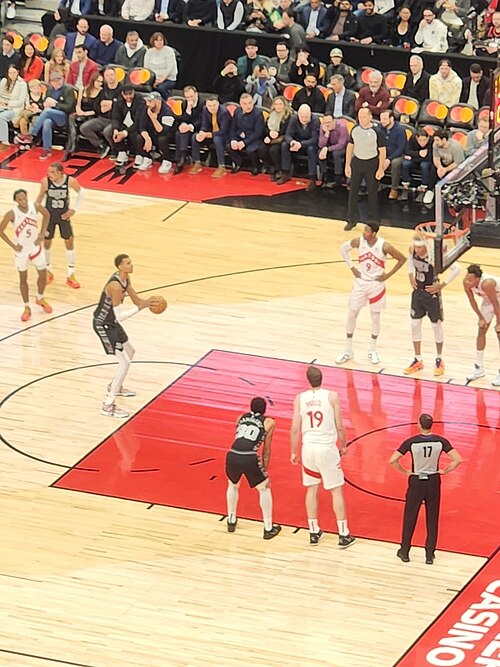
Victor Wembanyama Too Much for Wolves in Game 3: A Masterclass in Two-Way Dominance
The Minnesota Timberwolves came into Game 3 with a game plan. They had size. They had length. They had Rudy Gobert, a four-time Defensive Player of the Year. None of it mattered. Victor Wembanyama was simply too much for the Wolves in a performance that felt less like a basketball game and more like a coronation. The San Antonio Spurs’ phenom didn’t just win the game; he rewired the physics of the series, turning the Target Center into his personal laboratory of impossibilities.
From the opening tip, the energy was different. The Wolves, desperate to steal home-court advantage, brought physicality. Anthony Edwards attacked the rim with ferocity. Karl-Anthony Towns tried to establish position. But every time they looked up, there he was—a 7’4” silhouette with a 8-foot wingspan, altering shots before they left the hand, and gliding to the rim for finishes that defied logic. This wasn’t just a win; it was a statement. The rookie (if you can still call him that) has officially arrived as the primary force that will dictate the Western Conference hierarchy for the next decade.
The Defensive Spectacle: Erasing the Paint
Let’s talk about the defensive end first, because that’s where Wembanyama’s impact was most suffocating. The Timberwolves entered Game 3 averaging over 50 points in the paint per game in the series. Tonight? They were held to just 36. That’s not a statistical anomaly; that’s a direct result of one player’s gravitational pull.
- Altered Shots: Wembanyama recorded 5 blocks officially, but the stat sheet is a liar. He altered at least 12 more shots, forcing Gobert and Towns into awkward floaters and rushed hooks.
- Perimeter Containment: When Minnesota tried to pull him out to the three-point line, he showed stunning lateral quickness, swallowing up drives before they could develop.
- Help Defense: His ability to recover from the weak side is unprecedented. Edwards would blow by his defender, only to find Wembanyama materializing like a phantom, forcing a pass into the stands.
The Wolves’ offensive flow was completely disrupted. They settled for contested mid-range jumpers and desperation threes. Rudy Gobert, the Defensive Player of the Year, looked mortal on the other end. He couldn’t seal deep position because Wembanyama’s long arms denied the entry pass. When Gobert did catch the ball, he was met with a contest that no 7-footer should be able to provide from three feet away. The Spurs’ defense was not a system; it was a singular alien presence.
Offensive Evolution: From Unicorn to Galactic Center
While the defense was the headline, Wembanyama’s offensive performance was a masterclass in efficiency. He finished with 34 points on 14-of-22 shooting, including 4-of-7 from deep. But the numbers don’t capture the sheer variety of his scoring.
In the first quarter, he punished the Wolves from the perimeter, hitting two step-back threes over a helpless Gobert. In the second, he went to work in the post, using a feathery hook shot and a turnaround jumper that seems to release from the rafters. By the third quarter, he was facilitating, drawing double-teams and finding open cutters for easy layups. The Wolves tried everything: Gobert one-on-one, double-teams, even a box-and-one zone. Nothing worked.
Key offensive adjustments by Gregg Popovich were evident. The Spurs ran more pick-and-rolls with Wembanyama as the screener, forcing the Wolves’ defense into impossible decisions. If they dropped, he popped for a three. If they hedged, he slipped to the rim for a lob. If they trapped, he found the open man. This is the evolution of a superstar: not just scoring, but reading the game at a higher speed than everyone else.
The most devastating sequence came midway through the fourth quarter. With the Wolves within four points, Wembanyama grabbed a defensive rebound, pushed the ball himself in transition, crossed over Jaden McDaniels at the three-point line, and finished with a one-handed dunk over a backpedaling Gobert. The crowd went silent. The bench erupted. The series shifted.
Why the Wolves Have No Answer (And What They Can Try)
The Timberwolves are not a bad team. They are a very good team with a glaring, existential problem: they have no one who can match Wembanyama’s physical profile. Rudy Gobert is elite, but he is a traditional rim protector. He is not equipped to guard a player who can shoot from 30 feet, handle the ball like a guard, and finish over the top of any contest.
What can Chris Finch do in Game 4?
- Go Small: Play Naz Reid at center and try to run Wembanyama off the floor with speed. The risk? He will feast on smaller defenders in the post.
- Aggressive Double-Teams: Send the second defender earlier, before he catches the ball. The risk? The Spurs’ role players (Devin Vassell, Keldon Johnson) are shooting 48% from three on catch-and-shoot looks in this series.
- Foul Him Hard: A desperate strategy, but making him earn it at the free-throw line (where he shot 8-for-9) might be the only way to disrupt his rhythm.
Frankly, there is no perfect solution. The Wolves’ best hope is that Anthony Edwards goes nuclear for 45 points and forces a shootout. But even that feels fragile. Edwards finished with 28 points, but he took 27 shots to get there, many of them contested. The efficiency gap was stark: Wembanyama was a plus-19 in plus/minus; Edwards was a minus-12.
The psychological toll is also mounting. You could see the frustration in Towns’ body language after a third-quarter sequence where Wembanyama blocked his shot, grabbed the rebound, and threw a 70-foot outlet pass for an assist. The Wolves are not just losing a game; they are losing belief.
Predictions: The Series is Over
I don’t say this lightly. The Timberwolves are a resilient team with a championship-level defense. But after watching Game 3, I am convinced that Victor Wembanyama has broken this series. The Spurs now lead 2-1, and they have all the momentum.
Prediction: Spurs win in 5 games.
Here is why: The Wolves are out of adjustments. They have tried size (Gobert), they have tried athleticism (McDaniels), they have tried switching everything. Nothing stops the fundamental problem: a 7’4” player who is faster, more skilled, and more intelligent than any defender they can throw at him. The Spurs, meanwhile, are only getting more confident. Wembanyama is now playing with a swagger that borders on arrogance—the good kind. He is calling for the ball in clutch moments. He is directing traffic on defense. He is the best player on the floor by a wide margin, and he knows it.
Look for San Antonio to close out Game 4 with a similar blueprint: let Wembanyama dictate the tempo, force the Wolves into isolation basketball, and dare their role players to beat them. Minnesota will win a game at home (likely Game 5), but the series will end in San Antonio. The Timberwolves’ championship window is not closed, but it has officially been cracked open by a rookie who is rewriting the rules of the game.
Conclusion: The Future is Now
We have been waiting for the moment when Victor Wembanyama would announce himself as the league’s next dominant force. That moment arrived in Game 3 against the Minnesota Timberwolves. It was not subtle. It was not a slow build. It was a tidal wave of skill, length, and basketball IQ that left one of the best defenses in the NBA looking helpless.
Victor Wembanyama was too much for the Wolves—and that is the understatement of the playoffs. He is not just a rookie sensation; he is a paradigm shift. The Spurs are back in contention sooner than anyone expected, and the rest of the Western Conference is now on notice. The alien has landed, and he is here to stay.
Game 4 will be a formality. The real question is not whether the Wolves can win this series, but how the rest of the league will adapt to the new reality: there is a player in San Antonio who can do things no one has ever done before. And he is only getting started.
Source: Based on news from Yahoo Sports.
Image: CC licensed via commons.wikimedia.org