Vinesh Phogat Defies WFI Ban, Arrives in Gonda for Comeback: A High-Stakes Showdown Looms
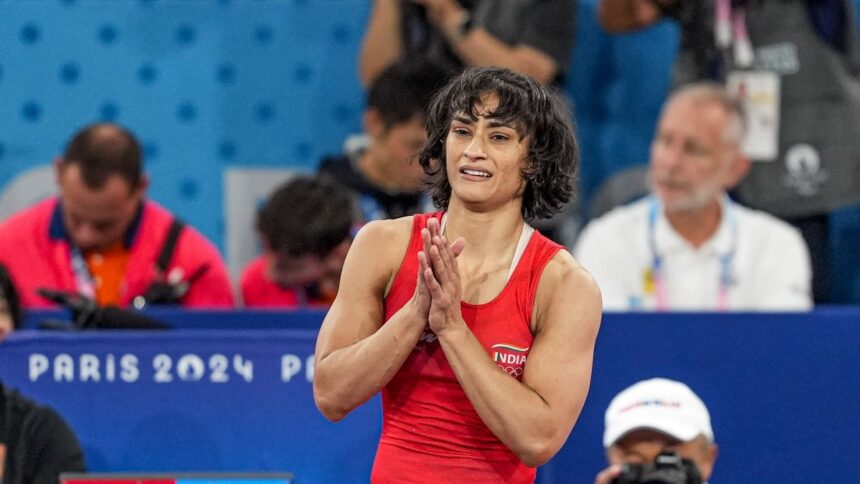
The wrestling arena in Gonda, Uttar Pradesh, has become the epicentre of a dramatic power struggle. In a move that has sent shockwaves through Indian sports, Olympic hopeful Vinesh Phogat has physically arrived at the National Open Ranking tournament, directly contesting a ban imposed by the Wrestling Federation of India (WFI). Her arrival on Monday marks the most aggressive step yet in her controversial comeback, setting the stage for a legal and procedural clash that could redefine the rules of athlete retirement in India.
Vinesh, a three-time Olympian and Commonwealth Games gold medallist, did not just show up. She immediately fired a legal salvo, responding to the WFI’s show-cause notice with a detailed defence. Her central argument? The federation’s ban is based on a misinterpretation of anti-doping rules, and she is fully compliant with international regulations. The atmosphere is tense, with the outcome likely to be decided not on the mat, but in the corridors of the National Anti-Doping Agency (NADA) and the courts.
The Core Conflict: Six-Month Ban vs. WADA Rule 5.6.1
The WFI’s position is clear and uncompromising. The national federation declared Vinesh ineligible for domestic events until June 26, 2026. This penalty stems from a mandatory six-month notice period required for athletes returning from retirement under the World Anti-Doping Agency (WADA) Code. The WFI argues that Vinesh did not provide this notice in time, rendering her ineligible to compete in the ongoing tournament. Furthermore, the federation insists she cannot step onto the mat until disciplinary proceedings against her are fully concluded.
Vinesh’s legal team has countered with surgical precision. In her reply to the show-cause notice—submitted immediately after landing in Ayodhya—she invoked Rule 5.6.1 of the WADA Code. This specific rule outlines the conditions for retired athletes returning to competition. Vinesh’s argument is that this rule does not apply to her because she had already informed United World Wrestling (UWW), the international governing body, back in June about her decision to resume competition.
This is the crux of the dispute. Vinesh claims she complied with the international notification process, thereby bypassing the national federation’s domestic six-month requirement. The WFI, however, maintains that national rules take precedence, and that her notification to the UWW does not negate her obligations under the National Anti-Doping Agency (NADA) guidelines.
Expert Analysis: A Legal Minefield with High Stakes
From a sports law perspective, this is a fascinating and dangerous tangle. The WFI’s position is rooted in domestic governance—the authority to regulate its own tournaments. However, Vinesh’s reliance on WADA’s international framework is a powerful counter. Rule 5.6.1 is designed to prevent athletes from retiring to avoid testing, then returning without notice. It typically requires a six-month waiting period. But the rule also has exceptions, particularly if the athlete can prove they were compliant with testing during their retirement.
Here is the expert breakdown of the key factors at play:
- Notification Timeline: Vinesh claims she informed the UWW in June. If she can produce documentary evidence (email receipts, official correspondence), her case strengthens significantly. The WFI’s ban is based on a domestic interpretation, but international bodies often override national federations in such matters.
- Testing History: Vinesh has maintained that she was never out of the testing pool. If she submitted her whereabouts and was available for random testing during her “retirement,” the six-month notice period becomes moot. A clean testing history is her best weapon.
- Disciplinary Proceedings: The WFI’s statement that she cannot compete until proceedings are complete is a procedural hurdle. In legal terms, this is called a “status quo” order. Vinesh’s arrival in Gonda is a direct challenge to that order. If she is physically prevented from entering the venue, it could lead to a contempt of court situation or an immediate appeal to the High Court.
Prediction: This will not be resolved overnight. Expect a temporary restraining order from a civil court allowing Vinesh to compete, followed by a lengthy legal battle. The WFI is playing a game of bureaucratic attrition, hoping the delay breaks her momentum. Vinesh is playing a game of presence—showing up forces a decision.
The Comeback Narrative: More Than a Wrestling Match
Vinesh Phogat’s return is not just about a tournament in Gonda. It is a deeply political and emotional comeback. After a heartbreaking exit at the Paris 2024 Olympics, where she was disqualified for being 100 grams overweight, she announced her retirement. Many believed that was the end of her storied career. But within months, she reversed course, citing unfinished business and a desire to compete at the 2028 Los Angeles Olympics.
Her presence in Gonda is a statement of resilience. She arrived directly from Ayodhya, a symbolic journey that underscores her connection to grassroots India. For her legion of fans, she is a warrior fighting not just opponents, but a system she believes is stacked against her. The WFI, under its current leadership, has been embroiled in controversies, including allegations of misconduct and administrative overreach. Vinesh, along with other top wrestlers like Bajrang Punia and Sakshi Malik, has been at the forefront of protests against the federation.
This context makes the Gonda event a proxy war. A win for Vinesh—even a procedural one—would be a massive blow to the WFI’s authority. A loss would set a precedent that athletes cannot unilaterally decide their own return to the sport.
What Happens Next: Scenarios for the Gonda Tournament
As Vinesh sits in her camp in Gonda, three distinct scenarios are possible for the coming days:
- The Legal Injunction: Vinesh’s lawyers will likely file an urgent petition in the Lucknow Bench of the Allahabad High Court or the Supreme Court. If they get an interim order allowing her to compete, the WFI will be forced to let her wrestle. This is the most likely outcome, given the strength of her WADA argument.
- The WFI Backdown: The federation could face pressure from the Sports Ministry or the Indian Olympic Association (IOA) to resolve the matter amicably. A backroom deal allowing Vinesh to compete under “protest” is possible, though unlikely given the WFI’s hardline stance.
- The Physical Blockade: The most dramatic scenario. WFI officials could physically bar Vinesh from entering the arena. This would trigger a massive media firestorm, police intervention, and almost certainly a court case that would embarrass Indian wrestling on the global stage.
Strong Conclusion: Vinesh Phogat’s arrival in Gonda is a masterstroke of pressure tactics. She has taken the fight from the boardroom to the wrestling hall. By being physically present, she has forced the WFI to either enforce its ban publicly—risking a PR disaster—or blink. Regardless of the outcome of this specific tournament, the battle over Rule 5.6.1 and the rights of returning athletes is just beginning. For Vinesh, this is not about one competition. It is about reclaiming her career on her own terms. The next 48 hours will determine whether the mat in Gonda sees a comeback, or a constitutional crisis in Indian wrestling. One thing is certain: Vinesh Phogat is not going quietly.
Source: Based on news from India Today Sport.