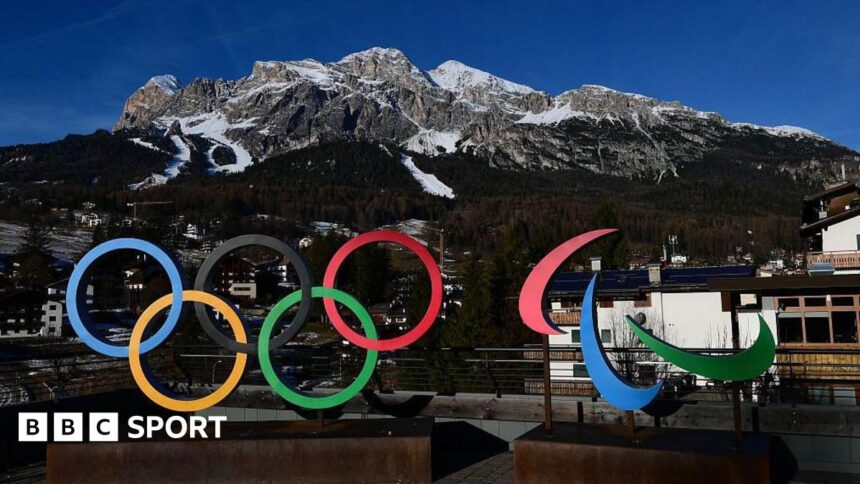
Watershed Moment: Russia’s Sporting Exile Ends at the Winter Paralympics
The world of sport is poised for a seismic shift. In a decision rippling with political and ethical implications, Russia’s long exile from world sports events is about to end. For the first time since the 2014 Sochi doping scandal, Russian athletes will march under their own flag at a major global gathering: the upcoming Winter Paralympics. This move, arriving more than four years into Russia’s full-scale war against Ukraine, marks a watershed moment in sports diplomacy, one that threatens to fracture the unified front once presented by international sporting bodies. The return of the Russian tricolor to the parade of nations is not merely a procedural change; it is a deeply symbolic and contentious reversal that raises profound questions about the relationship between sport, politics, and war.
The Road to Reintegration: From Neutrality to National Symbols
Following the invasion of Ukraine in February 2022, a near-total ban was imposed. Russian and Belarusian athletes were barred from competing under their flags, anthems, or colors at most major events, including the Paralympics. They were permitted only as “neutral” individuals, a status that stripped them of national identity. The upcoming Winter Paralympics shatters that precedent. The International Paralympic Committee (IPC), following the lead of the International Olympic Committee (IOC), has greenlit the full return of national symbols. This pivot is framed by governing bodies as a step toward “peace through sport” and the protection of athletes’ rights to compete. However, critics condemn it as a premature and morally bankrupt capitulation, arguing it provides the Kremlin with a potent platform for propaganda and normalizes a nation engaged in ongoing conflict. The controversial reinstatement hinges on a crucial condition: athletes must not have actively supported the war or be contracted to military or state security agencies. The enforcement and verification of this rule, however, remain opaque and fraught with difficulty.
The Games Themselves: A Ceremony of Controversy
So, what will this watershed moment look like on the ground? The presence of the Russian flag and anthem will transform the atmosphere. Expect:
- Politicized Ceremonies: The opening ceremony will be watched with intense scrutiny. Will other nations’ teams offer subtle protests? Will broadcasters cut away during the Russian procession? The moment the anthem plays for a Russian gold medal will be a flashpoint for global reaction.
- Heightened Security: Organizers are braced for potential protests from Ukrainian athletes, other delegations, or spectators. Security will be visibly tightened around the Russian contingent to ensure safety and prevent disruptive incidents.
- Media Frenzy: The mixed zone interviews will become a geopolitical battleground. Journalists will relentlessly question Russian athletes on the war, their neutral status, and their personal views, placing them in an impossible position.
- A Ukrainian Boycott? The most powerful protest may be an absence. It remains a possibility that Ukrainian Paralympians could refuse to compete against the Russian flag, a move that would cast the darkest shadow over the event’s credibility.
The IPC has stated that approximately 35 Russian and 10 Belarusian athletes are expected to participate across various winter sports. While these numbers are modest, their symbolic weight is colossal. Each appearance in national colors will be portrayed by Moscow as a victory and a crack in the wall of its international isolation.
Expert Analysis: The Fracturing Consensus
“This is a retreat, not a reconciliation,” argues Dr. Anya Petrova, a senior fellow in Sport and Geopolitics. “The initial bans in 2022 showed sport could take a principled stand against blatant aggression. This reversal undoes that. The IPC and IOC are not leading; they are following a path of least resistance, pressured by legal threats from Russia and a desire to avoid boycotts from nations who now support their return.”
The consensus that existed in early 2022 has irrevocably shattered. Some international federations, like those for wrestling and judo, never fully excluded Russian athletes. Others, like World Athletics, maintain a firm ban. This patchwork of policies creates a confusing and inconsistent landscape, undermining the message that sport speaks with one moral voice. The Paralympic movement, built on the foundational principles of inclusion and courage, now finds its ethics under a microscope. “Including athletes with disabilities is core to our mission,” says a former IPC official speaking anonymously. “But inclusion cannot come at the cost of condoning violence. By returning the flag, we are handing Putin a tool he will eagerly use to claim legitimacy on the world stage.”
The Domino Effect: What Comes Next for World Sports?
The Winter Paralympics is not an isolated case; it is almost certainly a precedent. The key question now is: could this lead to other attempts by sports bodies to reintegrate Russia? The answer is a resounding yes. We can predict several cascading effects:
- Pressure on Holdout Federations: Sports like athletics and swimming, which maintain bans, will face increased internal and legal pressure to fall in line with the IOC’s position, especially with the Paris 2024 Olympics looming.
- The Paris 2024 Dilemma: The Summer Olympics will be the ultimate test. The IOC is likely to use the Paralympics as a trial run for a similar, if not identical, policy in Paris. A full Russian and Belarusian presence in the French capital would trigger the largest geopolitical storm in Olympic history.
- Erosion of the “Neutral” Concept: The shift from neutral athletes to flag-bearing delegations renders the neutral athlete concept a temporary, and arguably failed, experiment. It establishes that such measures are only short-term punishments, not long-term principles.
- Empowerment of Aggressor Narratives: Other nations facing international scrutiny may now view sports bans as temporary obstacles that can be weathered, rather than meaningful consequences.
The movement towards reintegration is a calculated gamble by sports administrators who believe the purity of athletic competition must be separated from geopolitics. Yet, in doing so, they are making a profound geopolitical statement of their own.
Conclusion: A Victory for Sport or a Retreat from Principle?
The return of the Russian flag to the Paralympic stage is a watershed moment that signals not an end to conflict, but a change in sport’s response to it. It is a victory not for peace, but for persistence. The sporting exile of Russia is ending not because the war has concluded, but because the institutional will to maintain the ban has crumbled under legal, political, and practical pressures. This decision will be celebrated in Moscow as a validation of its resilience and a crack in Western unity. In Kyiv, and in many capitals worldwide, it will be seen as a betrayal that places spectacle above solidarity.
The coming games will be remembered less for the sporting achievements and more for the powerful, painful symbolism they broadcast. The arena, once a hopeful theater of dreams, is now a mirror reflecting a fractured world. The watershed has been crossed; the flood of controversy, and the dangerous precedent it sets for the future of sport in a turbulent world, has only just begun.
Source: Based on news from BBC Sport.