Anthony Joshua vs. Jake Paul: The Knockout Reality Check That Silenced the Circus
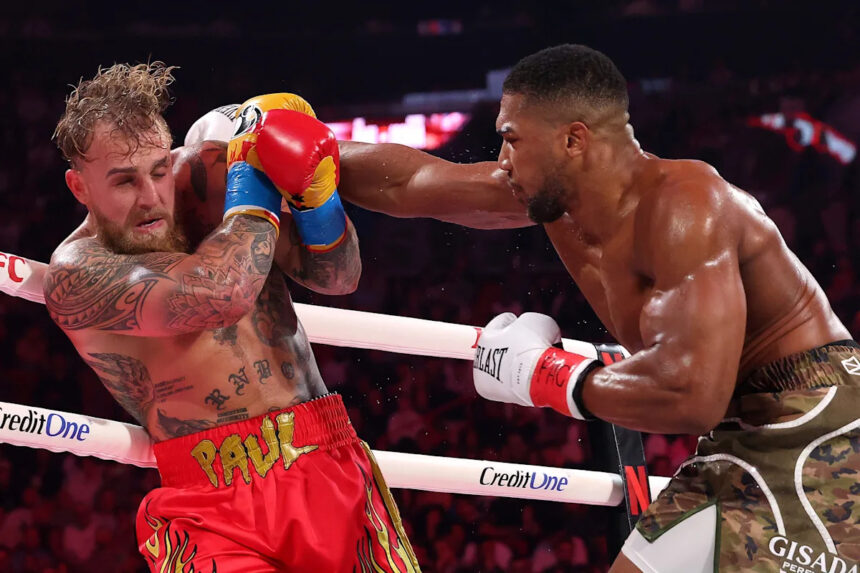
The spectacle had reached its fever pitch. The social media taunts, the Netflix cameras, the dizzying blur of celebrity and sport. But in a Riyadh ring under the desert sky, a fundamental truth of combat sports reasserted itself with brutal, concussive force: levels exist. Anthony Joshua, the two-time unified heavyweight champion of the world, delivered a chillingly clinical sixth-round knockout to Jake Paul, transforming “The Problem Child’s” grandest gamble into a stark reality check. The question was never truly who won the Jake Paul-Anthony Joshua fight; it was always about how, and when, the established world-class operator would dismantle the ambitious influencer.
The Buildup: A Collision of Two Universes
From the moment the fight was announced, it existed in a unique space. Was it a legitimate sporting contest or the ultimate pay-per-view stunt? The credentials presented a staggering mismatch on paper. Anthony Joshua (29-4, 26 KOs) brought an Olympic gold medal, a decade at the pinnacle of the heavyweight division, and frightening one-punch power in a 6’6″, 250-pound frame. Jake Paul (12-2, 7 KOs), while dedicated and surprisingly competent, had built his record against aged MMA legends and underwhelming professional boxers. He was giving up five inches in height, roughly thirty pounds in weight, and immeasurable experience in elite, championship-level combat.
Concerns about the event’s legitimacy were palpable. Critics feared a “worked” fight or a protected Paul surviving a pre-determined number of rounds. The bout was sanctioned for eight, three-minute rounds—a format that theoretically favored Paul’s endurance over Joshua’s championship distance pedigree. Yet, the underlying tension was undeniable: what happens when a disruptive force from the entertainment world steps directly into the path of a freight train from the sport’s traditional elite?
Round-by-Round: Survival, Then Oblivion
The opening bell did not bring an immediate firestorm. Instead, it revealed Jake Paul’s game plan: survive, frustrate, and drain the clock.
- Rounds 1-3: The Controversial Clinch. Paul employed a tactic that bordered on the excessive, immediately grabbing and clinching at the slightest hint of engagement. He moved awkwardly, often turning his back and inviting warnings from the referee. It was not pretty boxing, but it was effective in slowing the fight’s tempo and preventing Joshua from finding rhythm. For a fleeting moment, a question hung in the air: could he simply ugly his way to the final bell?
- Rounds 4-5: Joshua’s Adjustments. The former champion’s patience was evident. He began cutting the ring off more effectively, digging heavy, thudding body shots that started to sap Paul’s energy and will. The clinches became less frequent as Paul’s legs began to lose their spring. Joshua’s jab, a piston he had neglected in his early aggression, started to find its mark with increasing regularity. The tide was turning from survival mode to target practice.
- Round 6: The Inevitable Conclusion. Midway through the sixth, the facade crumbled. Joshua cornered Paul, feinted a jab to the body, and unleashed a monstrous right hand over the top that landed flush on Paul’s temple. Paul collapsed to the canvas, his eyes glazed, his body limp. He beat the count on unsteady legs, but the referee rightly assessed he was in no condition to continue. Anthony Joshua knockout was not just a result; it was a statement. He needed just six of the scheduled eight rounds.
Paul’s strategy, while controversial, had merely delayed the inevitable. It could not negate the vast chasm in power, technique, and championship mentality.
Expert Analysis: Dissecting the Levels at Play
This fight served as a perfect case study in the hierarchy of professional boxing. Joshua demonstrated key attributes that separate the elite from the rest:
Economic Power: Joshua did not waste punches. Even while frustrated early, he remained composed. His knockout blow was a single, fight-ending shot, not a wild flurry. This is the hallmark of a seasoned professional who understands that against a less durable opponent, one perfect connection is all that is required.
Ring IQ and Adjustment: Paul’s clinching was a smart, if unattractive, initial strategy. Joshua’s response—to attack the body, use his physical strength in the clinches, and systematically break down Paul’s resistance—showcased a veteran’s ability to solve problems mid-fight. He never panicked; he simply escalated.
The Unbridgeable Gap: Ultimately, the physical and experiential disparities were too great. Joshua’s power, cultivated over years against the hardest hitters on the planet, translates differently. The punch that felled Paul is one that top-tier heavyweights are conditioned to withstand. For Paul, it was a force he had never before encountered.
The Aftermath: What’s Next for Both Men?
The fallout from this event will send ripples through both the traditional boxing landscape and the influencer boxing scene.
For Anthony Joshua, this victory, while expected, re-establishes his aura as a destructive force. It was a dominant, headline-grabbing performance on a global stage. He immediately pivots back to the heavyweight title picture, with a potential showdown against the winner of Tyson Fury vs. Oleksandr Usyk firmly in his sights. This fight served as a high-profile, financially lucrative tune-up that reminded the world of his marketability and power.
For Jake Paul, this is a pivotal crossroads. He faced his greatest fear—a devastating knockout—and showed undeniable courage by stepping into the ring. The path forward is less clear:
- Return to Influencer Boxing: A likely step back to fights against fellow celebrities or retired MMA stars, where the financial rewards remain high and the physical risk is lower.
- Commit to the Traditional Path A far more difficult route. It would require fighting legitimate, ranked cruiserweights or light heavyweights his own size and age, a grueling process with less guaranteed fame.
- The Purse Takeaway: While the official Jake Paul Anthony Joshua purse details are sealed, reports suggest both men earned nine-figure sums. Financially, Paul’s gamble paid off handsomely, even in defeat.
His legacy from this fight will be that he dared to try, but in doing so, he provided the definitive answer to how a top heavyweight compares to the influencer boxing realm.
Conclusion: The Circus Leaves Town, The Sport Remains
The Jake Paul experiment against a prime, elite heavyweight is over. The result was both predictable and necessary. Anthony Joshua’s sixth-round knockout victory provided the sport with a moment of catharsis, a reassertion of its established order. It proved that while spectacle, promotion, and social media clout can create an event, they cannot manufacture the decade of discipline, natural physical advantages, and ingrained skill required to survive at the very top.
Jake Paul brought unprecedented attention and revenue to the table, and for that, the industry will remain altered. But in the ring, under the bright lights, a different currency is spent: the currency of proven merit. Anthony Joshua had it in abundance. Jake Paul, for all his progress and bravado, found it was not for sale. The knockout was not just a finish to a fight; it was a period at the end of a sentence. The conversation about “what if” has been replaced by the definitive, emphatic reality of what is.
Source: Based on news from Yahoo Sports.