MCG Pitch Firestorm: Vaughan’s ‘Unfair’ Verdict After 20-Wicket Boxing Day Carnage
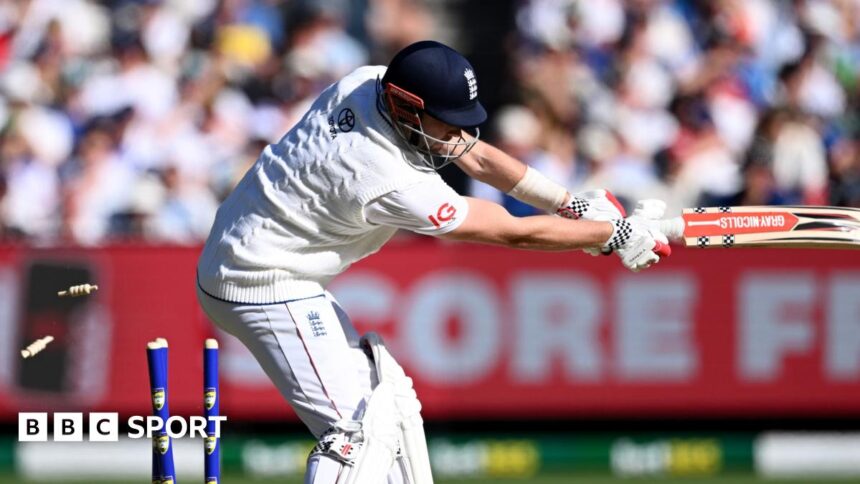
The hallowed Melbourne Cricket Ground, a cathedral of cricket built on epic battles and patient accumulation, was transformed into a theatre of chaos on Boxing Day. The fourth Ashes Test witnessed a staggering 20 wickets tumble in a single day, a carnage not seen in an Ashes opener since 1909. As the dust settled on a day where bowlers ruled with an iron fist, a fierce debate ignited, spearheaded by former England captain Michael Vaughan, who branded the MCG pitch “unfair” and accused it of having “done too much.” This was not a contest between bat and ball; it was an execution.
- A Day of Carnage: Wickets Tumble in a Historic Collapse
- The Vaughan Verdict: An “Unfair” Contest Between Bat and Ball
- Curator’s Dilemma or Spectator’s Delight? The Great Pitch Debate
- Series Implications and Predictions: Who Benefits from the Chaos?
- Conclusion: A Thrilling Spectacle at the Cost of Sporting Integrity?
A Day of Carnage: Wickets Tumble in a Historic Collapse
The statistics from Day One at the MCG read like a fever dream for bowlers and a nightmare for batsmen. Australia, winning the toss and choosing to bat on a green-tinged, heavily grassed surface, were dismantled for a paltry 152. England’s seam attack, led superbly by James Anderson and Ollie Robinson, exploited the excessive movement and inconsistent bounce with ruthless precision. Yet, any English optimism was brutally extinguished before stumps. In a mirror image of collapse, England were skittled for a meager 110, losing their last seven wickets for just 46 runs. The day’s havoc eclipsed even the 19-wicket first day in Perth, setting a grim, modern record.
Key Day One Statistics:
- Total Wickets: 20
- Australia: 152 all out (Pat Cummins top-scored with 38)
- England: 110 all out (Joe Root top-scored with 38)
- Highest Partnership: 48 (for Australia’s 7th wicket)
- Average Runs per Wicket: A shocking 13.1
The Vaughan Verdict: An “Unfair” Contest Between Bat and Ball
Michael Vaughan, commentating for the BBC, did not mince his words. His critique went beyond calling the pitch difficult; he labeled it a fundamental failure in the curator’s duty to provide a balanced sporting contest. “The pitch has done too much,” Vaughan asserted. “It’s been entertaining, but it’s not a fair contest. When you’ve got bowlers of the quality of Cummins, Starc, Anderson, and Robinson, you don’t need a pitch that’s doing that much.” His argument centers on the erosion of batting technique. On such a surface, the traditional values of leaving the ball, playing late, and building an innings become almost irrelevant. Survival becomes a lottery of which unplayable delivery has your name on it.
This perspective finds support in the mode of dismissal. Batsmen were not being outthought over long periods; they were being defeated by extravagant seam movement and occasional terrifying lift from a length. The contest between bat and ball was skewed so heavily that the batsman’s skill was largely negated. Vaughan’s criticism taps into a broader concern in Test cricket: the desire for result-oriented pitches must not sacrifice the essential balance that makes a five-day Test a true examination of all facets of the game.
Curator’s Dilemma or Spectator’s Delight? The Great Pitch Debate
The reaction to Vaughan’s comments has been split, revealing the eternal tension in pitch preparation. Defenders of the surface argue that after the flat, lifeless “road” served up at the MCG in recent years—which produced a dreary draw in the last Ashes—a pitch with life is a welcome change. They point to the engaging spectacle of constant wicket-taking action, a counterpoint to the dominance of the bat seen in many modern white-ball games.
However, there is a chasm between a “sporting pitch” and a “sub-standard” one. A sporting pitch offers something for everyone: pace and bounce for bowlers, and the promise of runs for batsmen who apply themselves. What was witnessed in Melbourne veered towards the latter. The excessive grass cover and the underlying moisture created conditions where quality seam bowling became unplayable too often. The question for curators is profound: should a pitch be designed to guarantee a result, even if it compromises the integrity of the contest? Or is the ideal a surface that gradually evolves, testing teams differently across five days?
Series Implications and Predictions: Who Benefits from the Chaos?
With Australia holding a commanding 3-0 series lead, this chaotic day has thrown a fascinating, if bizarre, twist into the final two Tests. England, despite their collapse, are still in the game—a remarkable fact given their overall performance this series. This pitch acts as a great equalizer; it reduces the gulf between the sides by making batting a lottery.
Predictions for the remainder of the Test are fraught with difficulty. A lead of 40 runs is monumental on this track. The pitch is unlikely to settle into a traditional Day 2/3 batting paradise; instead, it will likely deteriorate, with cracks widening and variable bounce becoming even more pronounced. This brings spinners Nathan Lyon and Jack Leach into the equation later on. The match prediction is simple: a result is almost guaranteed, likely within three days. The team that can scrape together a fourth-innings target of even 150 will feel overwhelmingly confident. Australia, with their potent three-pronged pace attack, remain favorites, but England’s bowlers have proven they can exploit these conditions just as effectively.
Conclusion: A Thrilling Spectacle at the Cost of Sporting Integrity?
The Boxing Day Test at the MCG has delivered a day of unforgettable, heart-in-mouth cricket. The sight of world-class batsmen looking utterly helpless is compelling in its own brutal way. Yet, Michael Vaughan’s “unfair” verdict carries significant weight. Test cricket’s greatest asset is its nuance—the slow build, the tactical duel, the battle of attrition. When a pitch removes the batsman’s ability to combat the bowler through technique and temperament, the very essence of the format is diminished.
This 20-wicket day will be etched in Ashes folklore for its sheer madness. However, it must also serve as a cautionary tale. The quest for exciting, result-oriented cricket should not lead us to surfaces where chance outweighs skill. The MCG pitch didn’t just challenge the batsmen; it mocked them. As the series moves to Sydney, the hope will be for a pitch that allows for a contest, not a collapse carnival. For the integrity of the sport, a fair fight between bat and ball must always be the curator’s true north.
Source: Based on news from BBC Sport.