Why Audi’s Audacious Early F1 2026 Shakedown Was a Masterstroke of Strategy
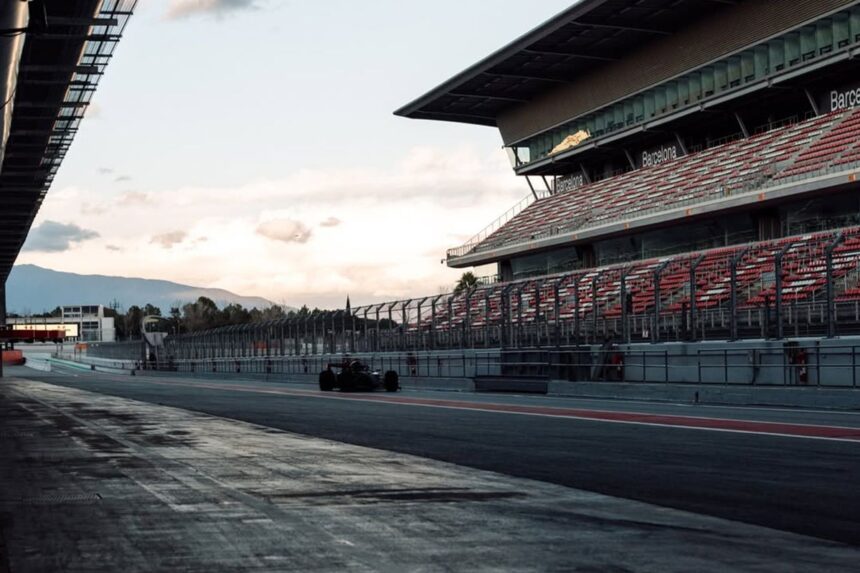
In the high-stakes, glacial-paced world of Formula 1 development, where gains are measured in milliseconds over years, a singular event in Barcelona on January 9th sent a shockwave through the paddock. There, on a cold Catalonian circuit, Audi did the unthinkably early: it became the first team to run its 2026 Formula 1 car, the R26, on track. This was not a glamorous launch or a slick marketing stunt. This was raw, hard engineering intent. While rivals were likely still finalizing CAD models, Audi was listening to the visceral bark of its bespoke hybrid power unit. This calculated, 18-month-planned move was far more than a simple shakedown; it was a colossal declaration of philosophy and a strategic masterstroke designed to shortcut Audi’s path to competitiveness from day one of its official works entry.
The Genesis of a Plan: 18 Months of Convergent Intent
To dismiss Audi’s early run as a mere publicity grab is to profoundly misunderstand the meticulous engineering culture of the German marque. As Technical Director James Key revealed, the decision to target an early-January track debut was made approximately a year and a half in advance. This timeline dictated every subsequent decision in the design, manufacturing, and assembly process. Imagine a reverse-engineered schedule where the finish line—a functioning car on track—was fixed immovably, forcing all upstream processes to align perfectly.
This approach created a powerful forcing function within the organization. It mandated unprecedented levels of synchronization between the chassis team in Hinwil, Switzerland, and the all-important powertrain division in Neuburg, Germany. Unlike a team simply designing a new chassis for existing engine regulations, Audi was building an entirely new DNA from the ground up. The early shakedown was the first true test of this complex, bi-national symbiosis. By hitting this ambitious target, Audi proved its operational backbone was not just theoretical, but capable of delivering under the intense pressure of F1’s timeline.
The Data Desert: Why Early Kilometers Were Priceless
While the Sauber-based chassis team possesses decades of historical F1 data, Audi’s powertrain division faced a stark reality: a near-total data vacuum. Supercomputers, dynos, and simulations can only extrapolate so much. The chaotic, real-world environment of a circuit—with its unique loads, temperatures, and driver inputs—is irreplaceable. For Audi, those first 50 kilometers were not about performance; they were about establishing a critical reference point.
This foundational data set is invaluable for several key development areas:
- Power Unit Correlation: Validating that the engine, energy recovery systems, and software controls behave on track as predicted in simulation.
- Systems Integration: Testing the complex dialogue between the new power unit and the car’s chassis, cooling, and electronics under real motion.
- Reliability Benchmarking: Identifying early teething issues in the most benign environment possible, far from the glare of pre-season testing.
As Key indicated, the temptation to delay and run the car for the first time at the official pre-season event was present. But that would have meant losing this precious, private, low-pressure opportunity to learn. “The car works” is a deceptively simple statement that delivers a monumental morale and technical boost, allowing the team to proceed with confirmed confidence.
Beyond the Stopwatch: The Psychological and Recruitment Advantage
Audi’s move carries a significant weight beyond gigabytes of sensor data. In the hyper-competitive talent market of Formula 1, perception is a powerful currency. By demonstrating such clear, aggressive, and successful forward momentum, Audi broadcasts a powerful message to every engineer, aerodynamicist, and strategist in the paddock: This project is real, it is ambitious, and it is executing on its promises.
This is a statement of intent visible to the entire industry. It shapes the narrative from “Audi’s upcoming F1 project” to “Audi’s progressing F1 project.” For potential recruits, seeing a physical, running car nearly two years before its competitive debut is a compelling draw compared to PowerPoint presentations about future potential. It proves the company’s commitment is tangible and that there is a live, innovative environment in which to work. Furthermore, for the hundreds of employees already toiling away, it provides a vital shot of adrenaline—a concrete reward for years of work and a tangible symbol of what they are building together.
The 2026 Landscape: How Early Running Shapes the Future Battle
The 2026 Formula 1 regulatory revolution cannot be overstated. With dramatically increased electrical power, 100% sustainable fuels, and a focus on lighter, more agile cars, it is a clean-sheet design challenge. In this context, Audi’s head start on real-world learning could yield compounding advantages.
While other manufacturers will be conducting their first on-track experiments much later, Audi will already be iterating. The learning curve in 2025—a dedicated test year for the new power units—will be steep for all. Audi, however, will be climbing that curve with a more mature understanding of its package’s fundamental behavior. This allows the team to move more quickly from basic functionality to optimization and performance refinement.
Predictions for the 2026 season are premature, but strategic postures are already being set. Audi has chosen the path of aggressive operational tempo. This early shakedown suggests a development philosophy that prioritizes rapid prototyping, real-world feedback loops, and iterative learning over keeping concepts secret in the digital realm for longer. In a new era where the integration of power unit and chassis will be more critical than ever, this hands-on approach could prove to be a significant differentiator.
Conclusion: A New Blueprint for F1 Entry?
Audi’s Barcelona shakedown was a masterclass in modern motorsport strategy. It was a move that served multiple, overlapping purposes: acquiring irreplaceable technical data, stress-testing a new organizational structure, boosting internal morale, winning the external perception war, and stealing a march on the 2026 competition. It transformed the R26 from a collection of parts into a living, breathing entity, providing a priceless reference point from which all future development will spring.
In the end, Audi didn’t just run a car early. It demonstrated a culture of decisive action and engineering confidence. While the stopwatch will tell the ultimate tale in 2026, the story of Audi’s first competitive lap may well have begun with those historic, carefully planned 50 kilometers in the quiet of a Barcelona winter. They didn’t just turn a wheel; they set a new pace for how a works manufacturer can announce its arrival on the grandest stage of them all.
Source: Based on news from Yahoo Sports.