Why Did Mike Tomlin Step Down? The End of an Era in Pittsburgh
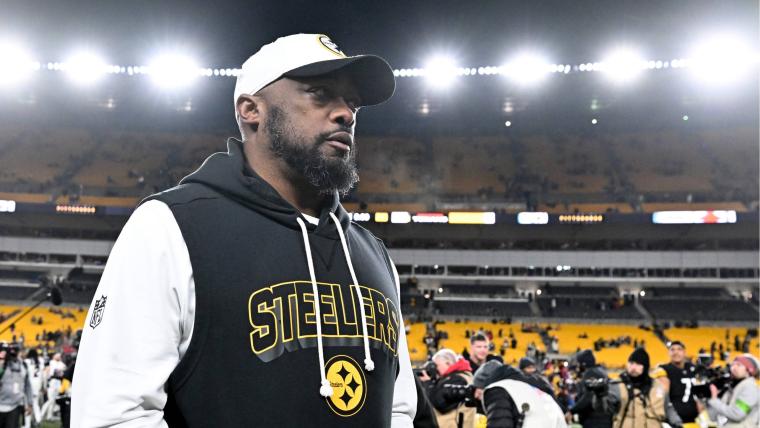
The news sent a seismic shock through the NFL landscape, a tremor felt far beyond the banks of the three rivers. Mike Tomlin, the stoic, unflappable, and perpetually successful leader of the Pittsburgh Steelers, informed the team on Tuesday that he is stepping away from coaching. After 19 consecutive seasons, 17 without a losing record, and a legacy woven into the very fabric of one of sports’ most storied franchises, the NFL’s longest-tenured head coach is walking away. This isn’t a firing, a mutual parting, or a jump to a new team. This is a surprise, self-imposed conclusion to a defining chapter, leaving a single, resonant question: Why?
The Weight of the Standard: A Legacy of Unparalleled Consistency
To understand the magnitude of Tomlin’s decision, one must first appreciate the sheer weight of the standard he upheld. Hired in 2007 at just 34 years old, Tomlin didn’t just take a job; he assumed a sacred stewardship. He followed Chuck Noll and Bill Cowher, becoming only the third head coach for the Steelers since 1969. The expectation wasn’t merely to win; it was to contend, annually, with a specific brand of tough, disciplined football.
Tomlin delivered with a consistency that borders on the absurd. His record of never suffering a losing season is his most cited and remarkable achievement, a testament to his ability to navigate injuries, quarterback transitions, and evolving rosters. He won a Super Bowl (XLIII), reached another (XLV), and captured seven AFC North titles. His tenure was defined by leadership over superstars, from Ben Roethlisberger’s prime to the “Killer B’s” era and through the recent years of defensive resurgence.
Yet, that very standard—the “Standard is the Standard” mantra he championed—carries an immense psychic toll. The pressure in Pittsburgh is unique, a constant, low-grade hum of championship-or-bust expectation. For nearly two decades, Tomlin was the focal point of that pressure, the man who answered for every shortcoming in a city where football is religion.
Reading Between the Lines: The Unspoken Factors Behind the Exit
While Tomlin has stated he intends to step away for the “foreseeable future” and does not plan to coach elsewhere this cycle, his decision is likely a complex calculus, not a single moment of frustration. Several key factors undoubtedly contributed.
- Organizational Stagnation: Despite the winning records, the Steelers have won just three playoff games in the last 13 seasons. Recent years have featured late-season collapses, offensive struggles, and first-round playoff exits. The gap between “competitive” and “champion” had widened, and the grind of trying to bridge it without a clear path forward can be exhausting.
- The Post-Roethlisberger Transition: Navigating the franchise after a franchise quarterback departs is a Herculean task. The search for a definitive answer at QB—through Kenny Pickett, Mason Rudolph, and now likely a new draft pick—has been turbulent. Tomlin may have felt the upcoming rebuild required a new voice and a longer timeline than he was willing to commit to.
- The Personal Toll: Nineteen years in one of sports’ most high-pressure jobs is a lifetime. The 24/7 nature of the modern NFL, the media scrutiny, and the year-round demands are relentless. The desire to recharge, spend time with family, and gain a new perspective is a powerful and understandable motivator.
- A Changing NFL Landscape: The AFC North has become a brutal gauntlet, arguably the league’s toughest division. With young, offensive-minded coaches and star quarterbacks now defining the conference, the weekly challenge has never been greater.
Immediate Fallout: A Steelers Franchise at a Crossroads
The impact of Tomlin’s departure cannot be overstated. The Steelers instantly become the most high-profile team in the current coaching carousel, now featuring nine vacancies. For the first time in over half a century, the organization is embarking on a true coaching search, a process unfamiliar to most within the front office.
General Manager Omar Khan faces the most critical decision of his tenure. Does he seek a continuation of the tough, defensive-minded identity? Or does he pivot to a modern, offensive architect to unlock the potential of a young roster? Candidates like former Steelers assistant and current Cowboys defensive coordinator Dan Quinn will be mentioned, as will offensive minds like Detroit’s Ben Johnson or Houston’s Bobby Slowik. The choice will signal the franchise’s direction for the next decade.
Furthermore, the stability Tomlin provided was a key recruiting tool. His presence assured free agents of a certain culture and a chance to win. That certainty is now gone, adding another layer of challenge to an offseason where critical decisions on players like Najee Harris and the quarterback position loom large.
What’s Next for Mike Tomlin and the NFL?
For Tomlin, the immediate future seems to be one of rest and reflection. At 51, he is young by coaching standards and his energy, intelligence, and leadership are undeniable assets. It is difficult to imagine him staying away from the game permanently.
Expert predictions suggest a year in a high-profile media role is a strong possibility, allowing him to stay connected to the game without the grind. Beyond that, he will undoubtedly be the most sought-after name in any future coaching cycle. A return to the sideline, perhaps with a new challenge and a refreshed perspective, seems inevitable when he chooses.
For the NFL, Tomlin’s step back marks the end of an era of remarkable coaching stability. His departure, following legends like Bill Belichick and Pete Carroll stepping away from their long-time posts this offseason, feels like a symbolic changing of the guard. The league loses one of its most recognizable and respected figures, a coach who embodied his franchise’s identity for a generation.
Conclusion: A Respectful Farewell to a Defining Figure
Mike Tomlin’s decision to step down is not an admission of defeat, but a powerful act of self-awareness. He walked away on his own terms, leaving a legacy of relentless competitiveness, profound leadership, and unwavering integrity. He didn’t just meet the Standard in Pittsburgh; for 19 years, he was the Standard.
The shockwaves of this move will reverberate through the 2024 season and beyond. The Steelers embark on an uncertain, daunting new path. The NFL loses a pillar of its coaching community. And Mike Tomlin steps into a well-earned respite, his place in the Pro Football Hall of Fame secure, his impact on a city and a sport forever indelible. His tenure wasn’t just about wins and losses; it was about a presence. And in Pittsburgh, that presence will be profoundly missed.
Source: Based on news from Yahoo Sports.