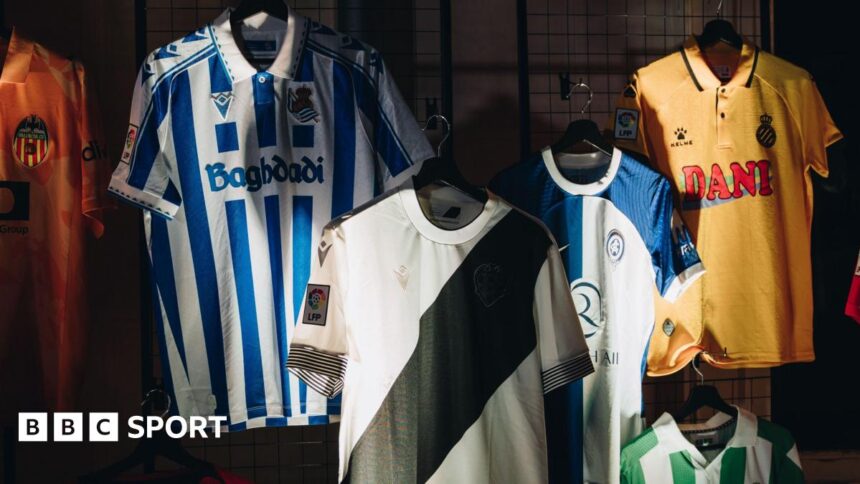
La Liga’s Time Machine: Why Spanish Football is Wearing Its History This Weekend
This weekend, Spanish football will take a deliberate, stylish step back in time. Across the country, from the sun-drenched south to the industrial north, thirty-eight of the forty-two clubs in La Liga and the Segunda División will ditch their modern kits in favor of retro shirts that tell a story. This is not a mere marketing gimmick; it is a profound, visual celebration of cultural identity, a league-wide initiative where the fabric of the past is worn in the present. For ninety minutes, players will become living monuments, their jerseys serving as canvas for tales of origin, struggle, and community pride. While the notable absences of Barcelona and Real Madrid from the kit change have sparked conversation, the overwhelming participation turns the spotlight onto the rich, diverse tapestry that makes Spanish football truly unique.
More Than a Kit: A Tapestry of Identity and Belonging
The initiative, spearheaded by La Liga, goes far beyond nostalgia. It is a deliberate act of cultural preservation. In an era of globalized football, where billionaire ownership and commercial homogenization can sometimes dilute local character, this weekend is a defiant reclamation of roots. Each retro shirt is a carefully chosen symbol, an “iconic look from the past” that represents a club’s essence.
Consider what these shirts represent:
- Community Badges: For many clubs, their earliest crests or kit designs were directly tied to the city’s industry, like shipping or mining, or a local landmark.
- Fan Traditions: Stripes, colors, and patterns that were born from fan influence or local dye availability, becoming inseparable from the club’s soul.
- Historical Milestones: Kits from promotion-winning seasons, cup finals, or eras when a local hero led the line, forever etching that design into collective memory.
By wearing these shirts, players are not just honoring past teams; they are acknowledging the generations of fans whose identities are intertwined with these colors. It’s a powerful statement that a football club is, at its core, a cultural institution.
The Absentees: Logistics, Politics, and a Lone Standout
The story of who is *not* participating is almost as telling as who is. According to reports from Spanish publication Marca, three clubs—Barcelona, Rayo Vallecano, and Getafe—are supporting the campaign’s spirit but will not wear special jerseys due to “various logistical reasons.” For global giants like Barcelona, with intricate, multi-year kit supplier contracts and massive global inventory logistics, a mid-season change poses a significant commercial and operational challenge.
Then there is Real Madrid. The reigning Spanish and European champions are the only club not participating in the initiative at all. This decision aligns with the club’s long-standing, fiercely guarded independent stance. Real Madrid historically views its iconic all-white kit as sacrosanct and above such league-wide promotions, a symbol of its own global brand that transcends even La Liga’s campaigns. Their absence, while predictable to many observers, starkly highlights the contrast between the collective, identity-focused celebration and the individualistic power of football’s elite.
Expert Analysis: The Deeper Impact of a Retro Weekend
As a football journalist, I see this initiative operating on multiple levels. On the surface, it’s a fan engagement dream and a retail bonanza. But look deeper, and the strategic brilliance emerges.
Firstly, it’s a masterclass in differentiation. By forcing a visual break from the norm, La Liga is making its product uniquely collectible this weekend. Every match becomes a visual event, driving social media buzz and media coverage that extends far beyond the pitch.
Secondly, it strengthens the emotional bond between clubs and their local fanbases. In an age where match-going supporters can sometimes feel taken for granted, this act of homage is a powerful thank you. It says, “We remember where we came from, and we know you do too.”
Finally, it provides a compelling narrative for the global audience. For international fans, these kits are conversation starters. Why does Athletic Club wear those stripes? What’s the story behind Valencia’s bat? This weekend turns every game into a history lesson, adding layers of meaning that pure sporting competition cannot.
Predictions for the weekend are twofold. On the commercial side, expect these retro shirts to sell out almost instantly, becoming coveted collector’s items. On the pitch, the psychological impact will be fascinating. Will a veteran player feel an extra surge of pride pulling on a shirt from his boyhood? Will a young star feel the weight of history? It could inject an unexpected dose of passion into crucial fixtures.
A Legacy in Stitches: What This Means for Football’s Future
La Liga’s retro weekend is a bold experiment that other leagues will watch closely. Its success could spark a global trend of deliberate, league-sanctioned heritage celebrations. Imagine the Premier League or Serie A embarking on a similar journey—the visual and emotional impact would be enormous.
More importantly, this initiative sets a precedent. It argues that a league’s value isn’t just in its star power or television deals, but in the depth of its stories. By empowering its clubs to visually tell those stories, La Liga is investing in its most valuable asset: authentic identity.
This weekend, when the players walk out, take a moment to look beyond the names on the back. Look at the shirt itself. See the faded stripe, the vintage crest, the color born from a local river or flag. In that fabric, you’ll see the soul of Spanish football—not a global product, but a collection of hometown hearts, beating strong across generations. The absence of a few giants only serves to amplify the chorus of the many, proving that in football, as in life, true culture is woven from the ground up.
Source: Based on news from BBC Sport.