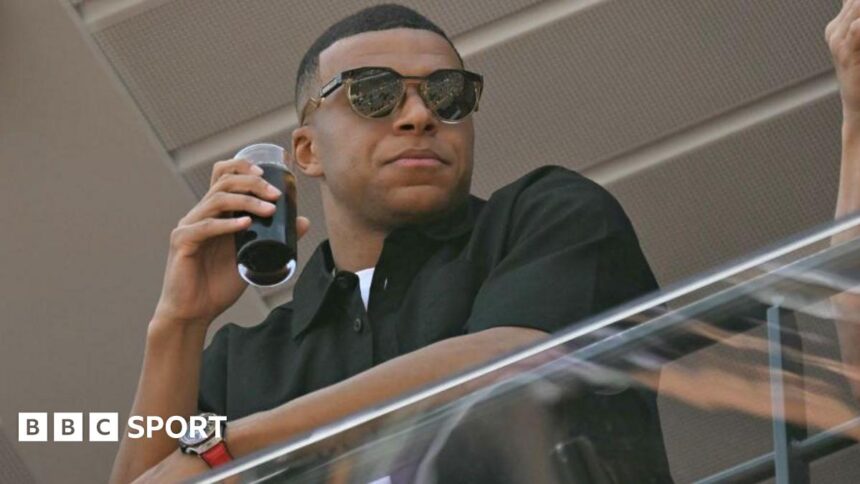
The £1.3m Ethics Bonus: Decoding Mbappe’s PSG Contract and a French Football Quirk
The saga of Kylian Mbappe’s departure from Paris Saint-Germain was a modern football epic, featuring a galactic transfer, acrimonious legal battles, and eye-watering sums of money. While the headline figure of a £52.5m settlement for unpaid wages and bonuses stunned the sport, one line item captivated and confused fans worldwide: a £1.3m “ethics bonus.” For supporters outside France, the term sparked bemusement and satire. Was this a reward for simply being a good person? In the high-stakes, often controversial world of elite football, the concept seemed almost quaint. Yet, this clause is not a quirky one-off but a standard, legally significant feature of French sports contracts, and its role in Mbappe’s victory over PSG reveals a fascinating intersection of law, culture, and the unique pressures facing superstar athletes.
Beyond the Headlines: What is a French “Ethics Bonus”?
To understand the Mbappe case, we must first demystify the ethics bonus itself. Known in French as a “prime de comportement” or “prime d’assiduité,” it is a standard clause written into the contracts of most professional athletes in France, not just footballers. Far from a vague reward for moral fortitude, it is a contractual performance incentive with very specific, often binary, conditions. In essence, it is a substantial sum of money an athlete can earn by avoiding serious disciplinary breaches throughout the season.
Think of it not as a bonus for good behavior, but as a retained penalty for bad behavior. The money is typically held back and only paid out if the player meets the agreed criteria by the contract’s end. Common triggers for losing all or part of this bonus include:
- Unjustified absences from training or club commitments.
- Serious on-field disciplinary actions, like a straight red card for violent conduct.
- Public statements that severely damage the club’s image.
- Legal convictions or actions bringing the sport into disrepute.
For a club, it is a risk-management tool, a financial lever to encourage professionalism. For a player, it is a significant portion of annual compensation contingent on their conduct. In Mbappe’s stratospheric contract, this bonus was a mere fraction of his total earnings, but the principle—and the legal obligation for PSG to pay it—was paramount.
Mbappe vs. PSG: The Ethics Bonus as a Legal Battleground
The context of Mbappe’s acrimonious exit is crucial. In the summer of 2023, after refusing to trigger a one-year extension, Mbappe was effectively exiled from the first-team squad by PSG, believing he had an agreement with Real Madrid. He was forced to train separately and was left out of the club’s pre-season tour. This period of exile became the core of the dispute. PSG likely argued that his exclusion from the group constituted a breach or made the bonus criteria unfulfillable.
However, the legal victory for Mbappe suggests the arbitration body, the French Professional Football League’s (LFP) legal commission, saw it differently. Their ruling implies that Mbappe’s professionalism during exile was key. By reporting for training as directed, maintaining fitness, and crucially, avoiding public outbursts or actions that would independently violate the ethics clause, he upheld his side of the contractual bargain. The club’s decision to sideline him was deemed not a result of his ethical failings, but a strategic choice by the employer.
This case echoes the earlier revelation from Neymar’s PSG contract, leaked in 2021, which detailed a similar €2.3m ethics bonus. That clause listed specific fines for misconduct, such as €250,000 for arriving late to treatment. These precedents show that French courts and arbitration panels treat these bonuses as serious, enforceable salary components, not discretionary gifts. PSG’s obligation to pay Mbappe’s £1.3m was a clear legal affirmation that his conduct, even during a bitter standoff, did not violate the defined ethical standards of his contract.
Cultural Contrast: Why the “Ethics Bonus” is Uniquely French
The bewilderment in the UK and elsewhere highlights a cultural divide in sports contracting. In many leagues, conduct clauses are embedded differently—often as fines for specific misdemeanors or as broad termination clauses for “bringing the game into disrepute.” The French model formalizes this into an upfront, positive incentive. This system is rooted in France’s stronger labor law protections for employees, where athletes are treated as salaried staff with robust rights. The prime de comportement is a structured, transparent way to regulate behavior within that protective framework.
Furthermore, French football has a historical and cultural emphasis on collective discipline and educational values (“formation”). The ethics bonus can be seen as a contractual reflection of this philosophy, incentivizing players to be model professionals for the sake of the team and the club’s public image. For a global icon like Mbappe, whose every move is scrutinized, this clause also protects the club’s billion-euro investment from the reputational damage a superstar can cause.
Expert Analysis: The Wider Implications for Football
“The Mbappe ethics bonus ruling is far more significant than the sum involved,” notes a leading European sports lawyer familiar with French contract law. “It reinforces the principle that clubs cannot unilaterally withhold contracted payments by redefining a player’s professional status. By paying the bonus, PSG is legally acknowledging that Mbappe, despite the political war, fulfilled his basic professional obligations. This will be cited in future disputes where clubs attempt to use financial pressure to force a player’s hand or punish them for non-footballing decisions.”
This case also highlights the increasing legal sophistication of player representation. Mbappe’s team understood the leverage every clause provided. In a dispute over tens of millions, securing the ethics bonus was a tactical victory that strengthened their overall position, proving PSG was in breach across multiple fronts.
Prediction: A Dying Clause in the Age of the Superstar?
Looking forward, the prevalence of such explicit ethics bonuses for the very top tier of players may diminish. Why? The Mbappe and Neymar cases have exposed these clauses to public scrutiny, making them a potential public relations liability for clubs. It appears unseemly for a club to withhold a “good behavior” bonus from a player they have voluntarily exiled.
For megastars with unprecedented power, like Mbappe, future contracts may pivot toward more sophisticated structures: higher guaranteed signing bonuses, image rights arrangements with even greater player control, and performance incentives tied solely to on-pitch metrics like goals, assists, and Ballon d’Or placements. The behavioral expectations will remain, but they may be governed by more traditional fine systems or broader morality clauses, rather than a headline-grabbing “ethics bonus.” However, for the vast majority of professional footballers in France’s Ligue 1 and other sports, the prime de comportement will remain a standard, practical tool of contract management.
Conclusion: More Than a Quirky Footnote
Kylian Mbappe’s £1.3m ethics bonus is not a amusing anecdote from football’s financial circus. It is a revealing lens into French sporting culture, contractual law, and the power dynamics at the very pinnacle of the game. Its payment, enforced by legal ruling, was a symbolic defeat for PSG’s strategy and a victory for the principle that even in a bitter divorce, contracted professional standards must be objectively judged. As football’s financial and legal battles grow ever more complex, this curious clause reminds us that a player’ value is judged not only on goals and trophies, but on their conduct in the storm—and in France, that conduct has a very specific, and enforceable, price tag.
Source: Based on news from BBC Sport.