Why the Seahawks’ Controversial Two-Point Conversion Was Rightfully Overturned
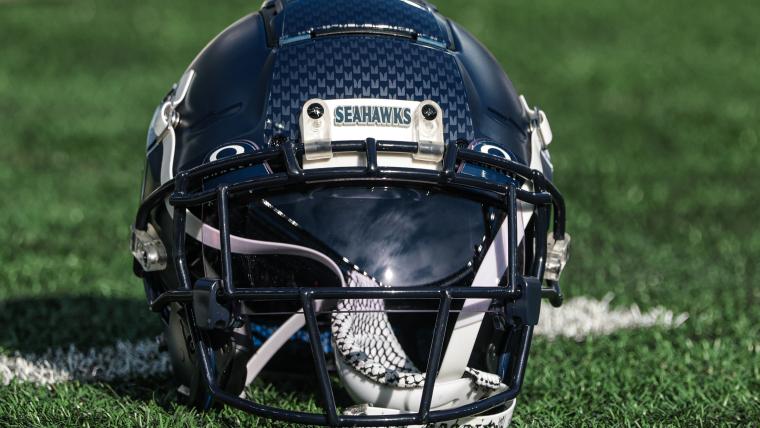
In the high-stakes crucible of an NFL fourth quarter, a single play can pivot an entire season. For the Seattle Seahawks, clinging to playoff hopes in Week 16 against the Los Angeles Rams, that moment arrived not with a thunderous touchdown, but with a batted ball, a desperate lunge, and a replay review that ignited immediate controversy. An initial ruling of an incomplete pass on a critical two-point attempt was overturned, gifting Seattle two points and a lifeline. To the casual fan, it seemed like a gift from the officiating gods. But a closer examination of the NFL rulebook reveals this wasn’t a break; it was a correct, if exceptionally rare, application of the law.
The Crucible: A Season on the Line in Seattle
With just over two minutes remaining in the game, Seahawks quarterback Sam Darnold found rookie wide receiver Jaxon Smith-Njigba for a touchdown, pulling Seattle within two points of the Rams, 30-28. The decision was automatic: go for the two-point conversion to tie the game. The play call sent Darnold rolling to his right, under immediate pressure. His throw, aimed for tight end Will Dissly near the goal line, was brilliantly batted at the line of scrimmage by Rams defensive tackle Kobie Turner.
The ball took an awkward, dying quail trajectory. As it fluttered downward, a scrum of players converged. Seahawks wide receiver DK Metcalf, reading the play with veteran instinct, dove from his position and appeared to secure the ball just as it hovered above the turf. The on-field officials, however, ruled the pass incomplete, signaling a stop by the Rams’ defense. The Lumen Field crowd groaned, believing their team’s comeback bid had been shattered. But the play was automatically reviewed by the NFL’s replay center in New York, setting the stage for a dramatic reversal.
Rulebook Forensics: Decoding the Overturn
Why did the call change? The answer lies in the precise, often misunderstood NFL rules governing passes and possession. The key was the classification of the play after the bat. This was not a simple incomplete pass; it became a unique, live-ball scenario.
- The Deflection is Key: Because the pass was batted at the line of scrimmage and not by a defensive back further downfield, the ruling did not fall under typical “touched by a defender” incompletion guidelines. The bat by Turner was treated as a deflection, not an intentional swat away. This kept the ball alive as a legal backward pass.
- Backward Pass vs. Forward Pass: Once the ball is batted laterally or backwards, it is no longer considered a forward pass. It is treated like a fumble or a lateral—a live ball that can be recovered and advanced by either team.
- Recovery, Not Reception: This is the most critical distinction. Metcalf did not need to make a “catch” as defined by the NFL’s stringent completion process (control, two feet/body part, time). He simply needed to demonstrate clear recovery and control of the live ball before it hit the ground and while he was in the end zone.
Replay officials in New York, armed with multiple angles, determined that Metcalf did exactly that. He gained control of the ball before it touched the turf. Since the ball was in the end zone and was recovered by an offensive player, the result was a two-point conversion. It was a stunning example of situational awareness from Metcalf and a textbook application of a seldom-seen rule by the officials.
Expert Analysis: Beyond the Initial Confusion
The immediate reaction, even from some broadcast analysts, was one of bewilderment. “How can that be a catch if it was batted down?” was the common refrain. This highlights the gap between perception and the NFL’s complex legal framework. Former NFL referee and rules analyst Gene Steratore later clarified the decision, emphasizing the backward pass element.
“The moment that ball is batted, it’s no longer a forward pass. It’s a live ball,” Steratore explained. “Metcalf is not making a catch; he’s making a recovery in the end zone. That’s a touchdown, or in this case, two points.”
This play also underscores the strategic awareness of players. DK Metcalf’s decision to dive into the fray wasn’t just hustle; it was rulebook intelligence. He understood the ball was live and that a recovery was possible. Conversely, the Rams’ defenders, after the initial bat, momentarily treated the play as dead, a lapse that proved costly. In a league where games are decided by inches, knowledge of the rules’ nuances is a tangible competitive advantage.
Ripple Effects and Playoff Implications
The overturned call had immediate and profound consequences. Instead of trailing by two and needing an onside kick recovery to have a chance, the game was now tied at 30-30. The Seahawks’ defense subsequently forced a Rams punt, and Seattle drove into field goal range. While Jason Myers missed a potential game-winning 55-yard field goal as time expired, sending the game to overtime where the Rams ultimately won, the conversion kept their hopes alive in regulation.
Had the initial incomplete call stood, the Seahawks’ playoff odds, already slim, would have evaporated entirely in that moment. The ruling extended their season for an extra period and, more importantly, demonstrated a resilience and savvy that can define a team’s identity. For the Rams, it was a harsh lesson in playing to the whistle and understanding that no ball is dead until it is definitively ruled dead.
Conclusion: A Lesson in Football’s Fine Print
The Seahawks’ two-point conversion will be logged in the box score as a simple, unremarkable play: “Two-point conversion: Darnold pass to Metcalf.” But its story is anything but simple. It was a chaotic, game-altering moment born from a defensive play, offensive awareness, and officiating precision. Far from being a controversial “gift,” the overturn was a victory for rulebook accuracy.
This play serves as a perfect microcosm of modern NFL football: a game where milliseconds, millimeters, and meticulous legal interpretations separate euphoria from despair. It reminds fans, players, and coaches alike that until the whistle blows, the ball—and the game—is alive. For the Seattle Seahawks, it was a fleeting reprieve that showcased the importance of playing through the echo of the whistle, a lesson that will resonate long after the final outcome of their season is decided.
Source: Based on news from Yahoo Sports.